







Argentina’s Industrial Sector Cuts Jobs as Production Falls

President of the UIA, Martín Rappallini, at the 31th Industrial Conference. Photo: X/ @UIAok
December 5, 2025 Hour: 3:17 am
🔗 Comparte este artículo
Argentina’s industrial sector is facing a deepening crisis, with over one-fifth of companies cutting jobs in October as production and domestic demand continue to fall under President Javier Milei’s economic policies.
Twenty-one percent of Argentinian industrial companies cut staff in October amid a widespread drop in production, according to the quarterly survey by the Center for Studies at the Argentinian Industrial Union (UIA, in Spanish), which consulted more than 700 firms.
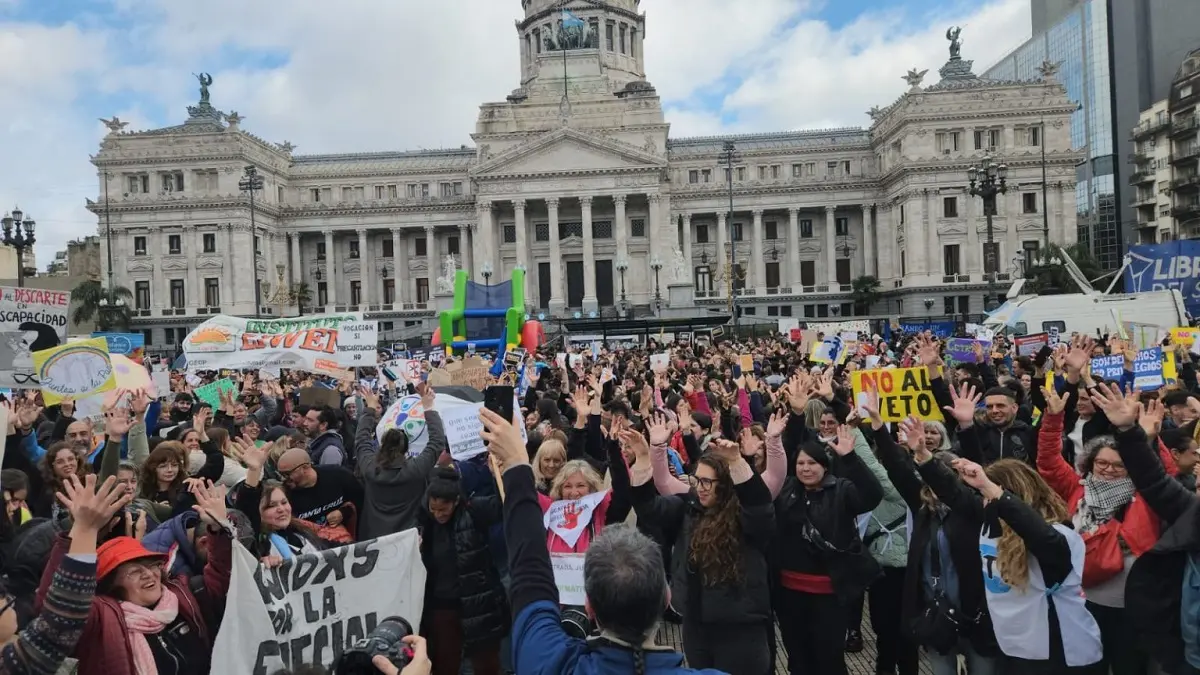
RELATED: Retirees and People with Disabilities Protest in Argentina Against Milei’s Vetoes
Another figures show that 23.5% reduced work shifts and 7.7% resorted to suspensions, reflecting a trend that has been rising for five consecutive quarters. Only 10.6% of companies increased their workforce—a share that has been declining since October 2024, the report noted.
The industrial performance index registered 43.8 points in October, down 5.2 points from the previous year, with the textile, basic metals, apparel, leather, and footwear sectors hit the hardest.
A total of 40.3% of companies reported a drop in production, compared with just 21.3% that saw improvements. Domestic sales also contracted for 47.7% of firms, an accelerated deterioration compared with 43.5% three months ago and 26.5% a year earlier.
Domestic demand remained the sector’s main concern (41%), followed by rising costs (19.3%).
Meanwhile, one in two firms acknowledged difficulties meeting payments to employees, suppliers, or tax authorities, the Argentinian Industrial Union study found.
Milei’s Stance
In this context, far-right President Javier Milei, when asked about the impact of his neoliberal economic policies, argued that “if the economy is opened and a given sector goes bankrupt, it’s because the product being imported is of better quality and/or cheaper.”
He claimed that this adjustment “does not lead to job losses,” saying that workers will migrate to “more productive” sectors. However, in the first 20 months of his administration, beginning in December 2023, 19,164 companies shut down—an average of more than 30 per day, according to data from the Argentinian Center for Political Economy (CEPA), based on official records.
These closures resulted in the loss of 276,624 jobs, of which 55,941 were in the industrial sector. The government’s proposed neoliberal labor reform has not created new employment as promised; instead, it has accelerated layoffs.
Text reads: Since Milei took over, these private companies have already closed down or been sacked in Argentina. This is not “sincerity”, it is destruction of industry and real employment…
The Industrial Union warns that the industrial crisis is deepening, with indicators showing no signs of recovery since 2024. As the administration bets on trade liberalization, domestic firms face unprecedented pressures, with sustained declines in production and employment reverberating throughout the broader economy.
Author: Victor Miranda - LVM
Source: Pagina 12 / Agencies