







Argentina’s Indio Solari Leaves Immortal Legacy in Latin American Rock
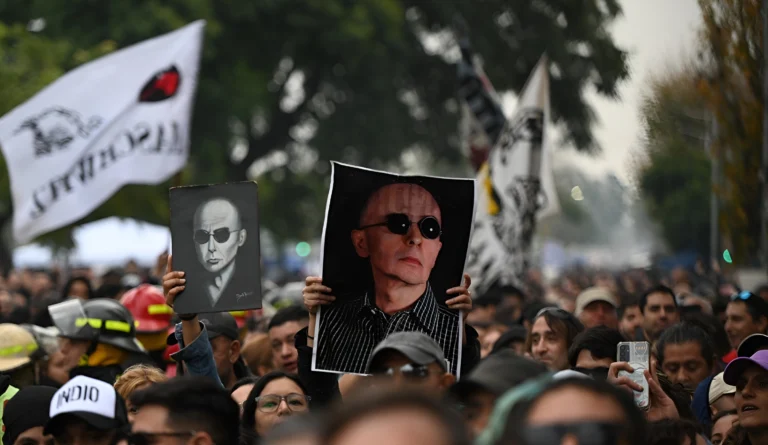
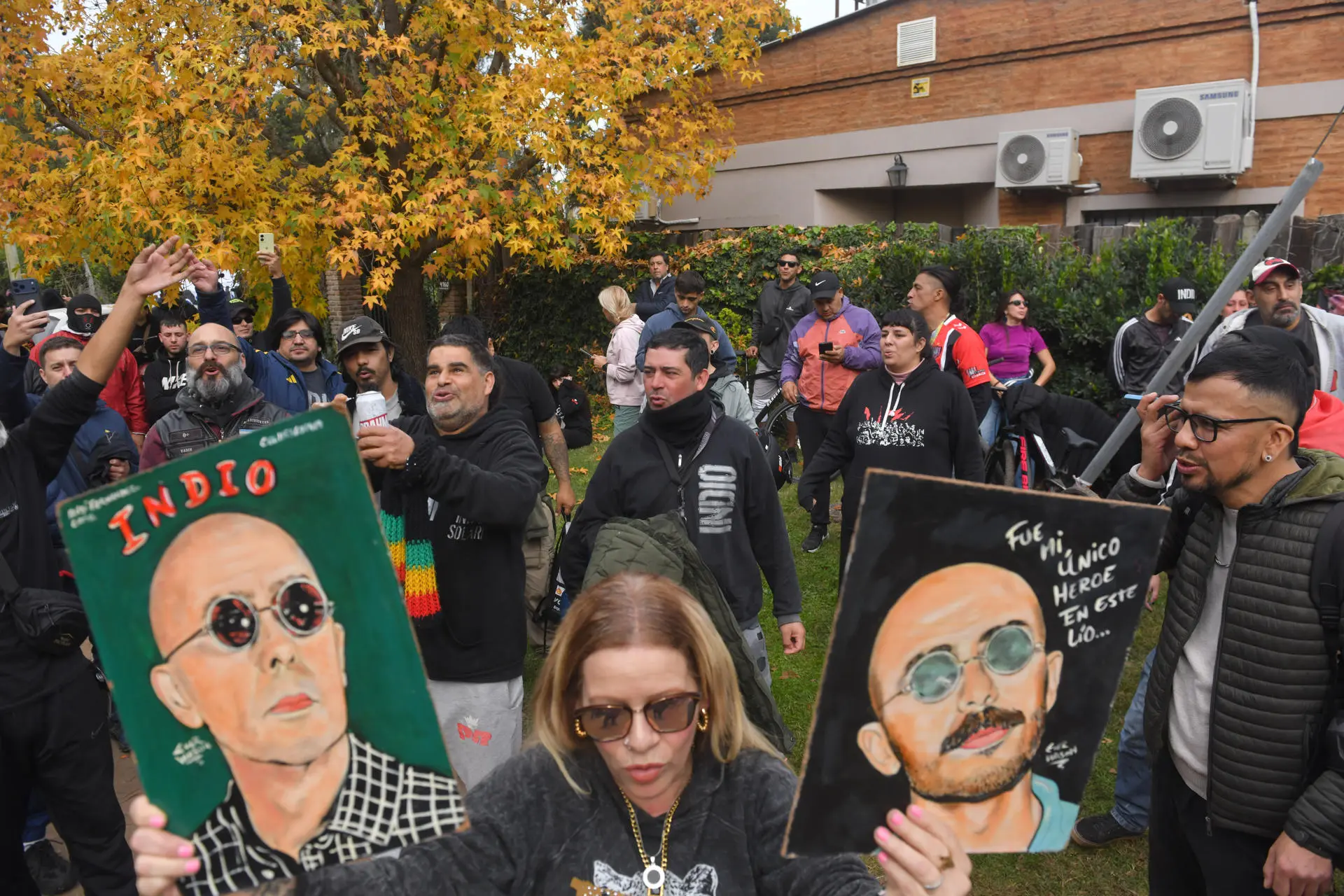
Commemorative concentration in honor of Carlos “El Indio” Solari.
June 8, 2026 Hour: 2:54 pm
🔗 Comparte este artículo
This cultural leader transformed rock concerts into massive secular pilgrimages.
The passing of Carlos “Indio” Solari on June 5, 2026, at age 77, marked the end of an era for Latin American music. As the former frontman of Patricio Rey y sus Redonditos de Ricota and later the leader of Los Fundamentalistas del Aire Acondicionado, Solari was more than a rock musician.
RELATED:
Argentine Fans Bid Farewell to Rock Legend Carlos ‘Indio’ Solari
He was the architect of a massive cultural and social phenomenon that operated entirely outside the traditional music industry. For five decades, his poetic lyrics, distinctive voice, and strict commitment to independence made him a foundational figure in Argentine society, drawing crowds that often exceeded 300,000 per concert.
Understanding the magnitude of Solari’s influence requires looking past conventional metrics of commercial success. He rarely gave interviews, rejected corporate sponsorships, and never relied on major record labels for distribution.
Instead, he cultivated a grassroots following that transformed his concerts into secular pilgrimages known as “misas ricoteras” (Ricotero masses). His death due to a hemorrhagic stroke, following a long public battle with Parkinson’s disease, triggered widespread grief across Argentina and the wider Latin American diaspora, cementing his status as an immortal symbol of artistic independence and popular resistance.
Early Life and Education of Carlos Solari
Carlos Alberto Solari was born on January 17, 1949, in Paraná, a city in the province of Entre Ríos, Argentina. Shortly after his birth, his family relocated to La Plata. Growing up in La Plata during the 1960s heavily shaped Solari’s worldview. He immersed himself in literature, design, and science fiction, showing an early affinity for visual arts and the written word rather than traditional academic paths.
In his late teenage years, Solari registered at the Institute of Fine Arts in La Plata to study painting. However, his rebellious spirit and unconventional behavior led to frequent absences, resulting in his expulsion from the institution.
To support himself, he worked in a small textile workshop where he designed and printed fabrics. It was during this period of youth culture and bohemian experimentation that friends and acquaintances began calling him “Indio” (The Indian), a nickname inspired by his unique character, reserved nature, and alternative lifestyle.
The Ricotero Genesis and the Ethos of Independent Art
The musical history of Carlos Solari changed in 1976. Amidst the onset of Argentina’s civic-military dictatorship, Solari co-founded Patricio Rey y sus Redonditos de Ricota in La Plata alongside guitarist Eduardo “Skay” Beilinson and manager Carmen “La Negra” Poli.
In its earliest days, the group was not a conventional rock band but rather an underground, multidisciplinary artistic cooperative. Their early performances featured theatrical monologues, circus acts, ballet, and the distribution of small cheese balls called ricotitas to the audience, establishing a haven for free expression during a period of intense state censorship and political repression.
As the band transitioned into a traditional musical act in the 1980s, they established a philosophy of artistic self-management. Los Redondos, as they were affectionately known, consistently rejected offers from multinational record labels and refused to advertise their shows through mainstream media outlets.
This independent economic model allowed them to retain control over their catalog, ticket prices, and artistic output, proving that a major cultural phenomenon could survive and thrive entirely outside the capitalist music market.
Following the publicized dissolution of Los Redondos in November 2001, a breakup caused by internal disputes over the rights to their video archives, Solari spent three years in creative isolation.
He returned to the public eye in 2004 by forming a new backing band, Los Fundamentalistas del Aire Acondicionado. Operating from his private home studio, named Luzbola, in the wooded suburb of Parque Leloir, Solari released a string of critically acclaimed solo albums, beginning with El tesoro de los inocentes.
Social and Cultural Impact in Argentina and Latin America
Solari’s profound importance in Argentine and Latin American music is attributable to a unique sociology of his audience. From the mid-1980s onwards, his concerts ceased to be standard entertainment events and evolved into massive, secular gatherings.
Because his music directly addressed the anxieties and realities of ordinary working-class citizens, his fan base became fiercely protective of the band. Generations of young people who felt marginalized by successive waves of severe economic distress found a vital sense of community, identity, and shared sanctuary at his shows.
During the 1990s, as neoliberal economic reforms led to unemployment and factory closures across Argentina, Solari’s music became a primary cultural outlet for the country’s disenfranchised youth.
This socioeconomic dynamic intensified during his solo career. Because no standard football stadium in Buenos Aires could safely contain the sheer volume of his followers, Solari was forced to move his concerts to massive open-air fields in provincial cities such as Tandil, Mendoza, and Olavarría. These events routinely drew between 200,000 and 350,000 travelers from across South America, temporarily transforming small rural towns into bustling cultural capitals.
Solari’s socio-political stance remained clear throughout his life, aligning himself consistently with popular, progressive, and left-wing political movements. He frequently used his public platform to criticize austerity measures and state policies that harmed the working class, making him a revered figure among social activists.
This intersection of artistic mastery and social commitment culminated in May 2026, when the University of Buenos Aires (UBA) formally awarded Solari an honorary doctorate (Honoris Causa). This prestigious academic recognition validated his lifelong contribution to the national identity and cemented his status as a foundational intellectual of modern Argentine culture.
The Hymns of the Periphery and the Language of the Street
The lyrical style of Indio Solari is widely regarded by musicologists and literary critics as a unique blend of high culture and street-level realism. He avoided straightforward storytelling, choosing instead to write cryptic, highly metaphorical verses that incorporated urban Argentine slang, references to classical literature, and sharp critiques of consumer capitalism.
Several compositions from his vast discography have achieved permanent status as cultural landmarks in South America. Among his work with Los Redondos, “Ji Ji Ji” from the 1986 album Oktubre stands out as an unparalleled phenomenon; the track is famous for generating what the Argentine press routinely calls “the largest pogo dance in the world,” where hundreds of thousands of fans jump in unison during the guitar solo.
Solari’s solo career with Los Fundamentalistas del Aire Acondicionado continued this tradition of impactful songwriting. Tracks like “Flight 956” and the deeply personal “Encuentro con un ángel amateur” reflected his ongoing preoccupations with mortality, time, and legacy.
Throughout both eras of his career, Solari was selective about his musical partners, choosing to work primarily with musicians who shared his independent values. This commitment to artistic collaboration culminated in early 2024 with the release of “Quemarás,” a powerful studio track recorded alongside the young Argentine rapper and social activist Wos, which successfully bridged the gap between classic rock and modern urban protest music.
Commemoration, Immortality, and the Final Verdict
The announcement of Carlos Solari’s death on June 5, 2026, from a hemorrhagic stroke sent shockwaves through Latin American society. Having already retired from live performances in 2017 due to the progressive limitations of Parkinson’s disease, his passing at age 77 turned into an immediate national moment of mourning.
Spontaneous public vigils and memorial gatherings formed within hours in major cities across Argentina, with fans carrying flags, lighting candles, and singing his lyrics in town squares, while matching tributes were organized by Argentine communities living in major European cities like Madrid and Barcelona.
To accommodate the immense volume of people wishing to pay their final respects, local authorities organized a massive public wake at the Parque Domínico Sports Complex in Avellaneda, a prominent working-class city just south of Buenos Aires.
The event mirrored the scale of his historic concerts, as tens of thousands of citizens queued for miles to pass by his casket, which was draped in flags, hand-written letters, and rock memorabilia left by the public.
The government of the Province of Buenos Aires declared three days of official mourning, and fellow musicians, political leaders, and cultural icons, including Skay Beilinson, Wos, and soccer star Lionel Messi, released statements honoring his unmatched influence.
Ultimately, the enduring legacy of Indio Solari resides in how his words have been absorbed into the daily vocabulary of millions of people. Phrases like “Just living costs you your life” and “The future arrived quite a while ago” have long since transcended their original musical contexts to become common graffiti, protest slogans, and social mantras across the region.
Sources: Página 12 – Barricada TV – Resumen Latinoamericano – La Izquierda Diario – TeleSUr – France 24 – BBC – Radio del SUR – AP
Author: Silvana Solano
Source: teleSUR