


Lula Trump Mediation: 5 Key Breakthroughs in Brazil–US Talks Amid Venezuela Tensions
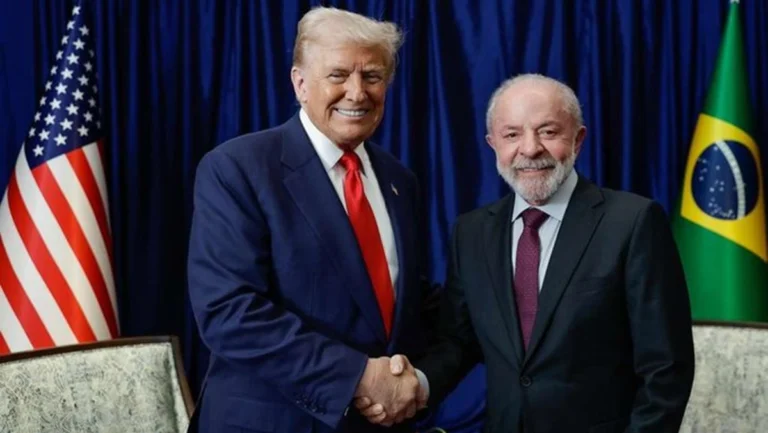
President Luiz Inácio Lula da Silva and U.S. President Donald Trump during an “excellent” bilateral meeting at the ASEAN Summit in Kuala Lumpur.
October 26, 2025 Hour: 9:17 am
🔗 Comparte este artículo
Lula Trump mediation discussed in Malaysia as both leaders commit to easing trade frictions and exploring dialogue between the US and Venezuela.
Lula Trump Mediation: A Turning Point in Brazil–US Relations
In a meeting described as “excellent” by both sides, Brazilian President Luiz Inácio Lula da Silva and U.S. President Donald Trump met in Kuala Lumpur, Malaysia, on Sunday during the ASEAN summit. The encounter marked a new chapter in the Brazil–United States relationship, which had reached one of its lowest points in decades due to steep tariffs and U.S. sanctions.
At the center of this meeting was Lula Trump mediation — Brazil’s strategic proposal to act as a bridge between Washington and Caracas, easing the confrontation between the U.S. and Venezuela.
A “Constructive” Dialogue: Lula and Trump Reopen Bilateral Channels
External source: ASEAN Summit Statements by Telesur
Brazil’s Foreign Minister Mauro Vieira described the meeting as open and direct. “President Lula began by saying there were no forbidden topics,” Vieira told the press. He noted Lula presented a Brazilian request to suspend U.S.-imposed tariffs on exports for a negotiation period, alongside review of the Magnitsky Act sanctions targeting Brazilian officials.
According to Vieira, Trump’s response was positive. The U.S. President agreed to initiate “a bilateral negotiation process starting immediately,” aimed at resolving trade disputes “within a short time.” Both leaders agreed that their teams would begin technical discussions “today,” signaling renewed cooperation.
This pragmatic tone reflects Lula Trump mediation efforts not only on commerce but also in restoring mutual confidence after years of friction.
Brazil as a Regional Peacemaker in Latin America
External source: Telesur report on Lula’s stance toward U.S. actions in Venezuela
Beyond trade, Lula reaffirmed Brazil’s geopolitical strategy: to act as a mediator in Latin America, particularly in the Venezuelan crisis. “Yes, President Lula raised the topic [of Venezuela],” confirmed Vieira. “He said Latin America and South America, specifically, are regions of peace, and he offered to be a contact and interlocutor, as he once was, to find solutions that are mutually acceptable and fair.”
This statement cements Brazil’s role as a diplomatic bridge between Washington and Caracas at a time of heightened tension. By positioning itself as a conciliatory power, Brazil seeks to stabilize hemispheric relations and reclaim its historic influence in regional diplomacy through the Lula Trump mediation approach.
Political Climate and Symbolism
During the meeting, the atmosphere was cordial and relaxed. Vieira emphasized that Trump “expressed admiration for President Lula’s political career,” a reference to Lula’s imprisonment and subsequent acquittal. Both leaders agreed to reciprocal visits — Trump voiced his intention to visit Brazil soon, while Lula accepted a future U.S. invitation.
“The president said he admires Brazil, that he loves Brazil and its people immensely,” Vieira noted. The statements were widely interpreted as a goodwill gesture signaling a shift in the White House’s posture toward Brasília.
These gestures reinforce the image of Lula Trump mediation as anchored not only in policy pragmatism but also in personal diplomacy aimed at rebuilding trust.
From Bolsonaro to Lula: Trump’s Subtle Recalibration
A revealing moment came when Trump was asked about former Brazilian President Jair Bolsonaro, his past ally. “I’ve always liked President Bolsonaro, he went through a lot, but that’s not our concern,” Trump said. The remark suggested a clean break from ideological affiliations, focusing instead on current cooperation with Lula.
The Lula Trump mediation framework, therefore, represents a calculated realignment: pragmatic engagement over partisan loyalty, seeking tangible outcomes in economic recovery and regional stability.
Broader Geopolitical Context
This rapprochement between the two largest economies in the Western Hemisphere arrives amid shifting global alignments. The United States faces diplomatic competition from China and Russia in Latin America, while Brazil aspires to strengthen its strategic autonomy and leadership in multilateral forums such as BRICS and ASEAN.
Analysts see Lula Trump mediation as a balancing move — giving Brazil leverage in negotiations with both Washington and Beijing. By promoting dialogue with Venezuela, Lula also aims to reduce militarization in the Caribbean, counteracting U.S.-led interventions that Brazil views as destabilizing.
This repositioning underscores Latin America’s growing assertiveness: regional actors using diplomacy over dependence to define their role in the emerging multipolar world.
Statements and Social Media
Following the meeting, Lula summarized on social media platform X:
“We addressed the bilateral economic and trade agenda openly and constructively. We agreed that our teams would meet immediately to seek solutions on tariffs and sanctions.”
This message encapsulated the spirit of Lula Trump mediation — transparent dialogue, shared interests, and step-by-step restoration of ties.
Author: JMVR
Source: Agencias - @LulaOficial