


Multilateralism Defense 7 Agreements, 1 Vision: Lula’s Explosive Push for a New World Order at ASEAN Summit
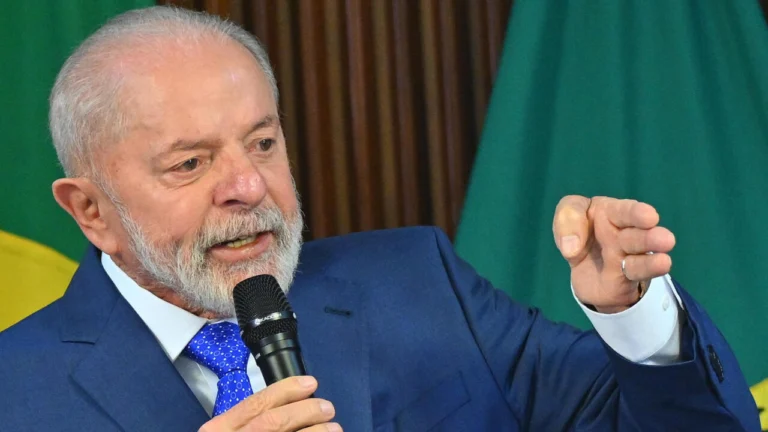
In a landmark moment for Global South unity, Lula da Silva launches a robust multilateralism defense, forging seven bilateral pacts and calling for a world order beyond Western hegemony.
October 25, 2025 Hour: 9:54 am
🔗 Comparte este artículo
President Lula da Silva champions multilateralism defense in Malaysia, slamming the UN Security Council and forging bold new alliances to combat war, hunger, and climate crisis.
Related: Lula Urges the U.S. To Cooperate Against Drug Trafficking Instead of Invading Countries
Lula’s Explosive Push for a New World Order at ASEAN Summit
In a bold declaration from Kuala Lumpur, Brazilian President Luiz Inácio Lula da Silva launched a sweeping multilateralism defense, calling for a radical transformation of the global order to prioritize peace, free trade, food security, and climate action over war, protectionism, and imperial dominance. Speaking after high-level talks with Malaysian Prime Minister Anwar Ibrahim on September 28, 2025, Lula declared that the current international system is not only failing — it is complicit in the world’s crises.
“The world needs peace, not war. The world needs free trade, not protectionism. The world needs more food and less weapons,” Lula proclaimed, his voice resonating across the Indo-Pacific as he positioned Brazil as a leading voice for the Global South.
His message was clear: the institutions meant to prevent conflict have become instruments of aggression, and the time has come for nations of the Global South to build alternatives rooted in cooperation, equity, and mutual development.
This visit marks a strategic elevation of Brazil-Malaysia relations, symbolized by the signing of seven bilateral agreements spanning semiconductors, science, technology, innovation, and green energy — all designed to strengthen South-South cooperation and reduce dependency on Western-dominated supply chains.
“Our relationship changes level today,” Lula stated. “I didn’t come just to buy or sell. I came to say we can change the world and do things better.”
Multilateralism Defense: Lula Slams Broken UN System
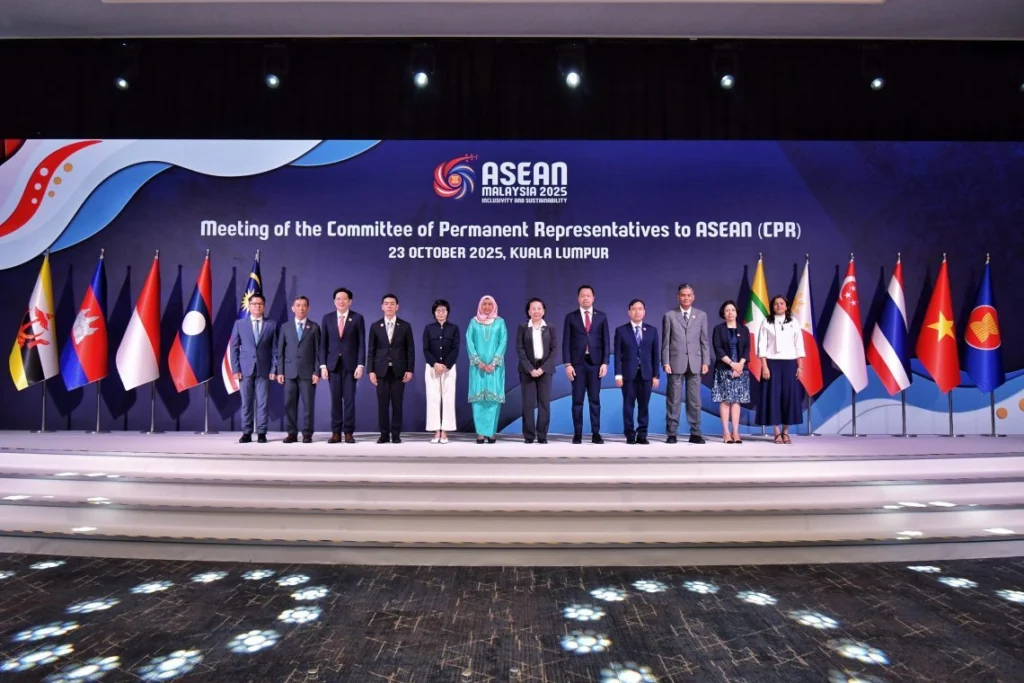
At the heart of Lula’s speech was a scathing indictment of the United Nations Security Council, which he bluntly declared “does not function.”
“All recent wars were determined by people who are part of the UN Security Council,” he asserted, pointing to the permanent members — particularly the United States, the United Kingdom, and France — as key instigators of global conflicts, from Iraq to Libya, Syria to Ukraine.
He lamented that the multilateral institutions created after World War II to prevent such atrocities have been rendered obsolete, captured by the interests of a few powerful nations.
“The institutions that were supposed to stop these things from happening no longer exist,” Lula said. “They’ve been replaced by unilateral actions disguised as ‘international order.’”
His critique echoes growing frustration among non-aligned and developing nations that see the veto power of the P5 as a tool of geopolitical blackmail rather than a mechanism for peace.
Lula called for urgent reforms, demanding greater representation for Latin America, Africa, and Asia in global decision-making bodies. He emphasized that true multilateralism must reflect today’s world — not the colonial hierarchies of 1945.
Without structural change, he warned, the UN risks becoming irrelevant.
🔗 External Link: United Nations – Reform of the Security Council
Official documents outlining proposals for Security Council reform, including calls for expanded membership.
Forging a New Economic Architecture: Seven Pacts for Sovereignty
The seven agreements signed between Brazil and Malaysia represent more than diplomatic symbolism — they are strategic building blocks for economic sovereignty in an era of escalating trade wars and technological fragmentation.
Key areas of cooperation include:
- Semiconductors and digital infrastructure: Joint research and production initiatives to reduce reliance on U.S.-controlled tech supply chains.
- Science and innovation: Exchange programs for researchers and investment in sustainable technologies.
- Green transition: Collaboration on biofuels, renewable energy, and climate-resilient agriculture.
- Food security: Strengthening agro-export partnerships to ensure stable access to essential commodities.
These pacts align with Brazil’s broader vision under BRICS+, where Lula serves as rotating chair, to create alternative financial and trade mechanisms outside Western control.
By partnering with ASEAN — a bloc of 10 dynamic economies representing over 660 million people — Brazil is expanding its geopolitical footprint and diversifying its foreign policy beyond traditional Atlantic ties.
This is not isolationism — it is multipolarity in action.
🔗 External Link: ASEAN Secretariat – Regional Economic Integration
Official source on ASEAN-Brazil cooperation and regional integration efforts.
Geopolitical Context: A Rising Challenge to Western Hegemony
Lula’s multilateralism defense must be understood within a shifting global landscape — one where the unipolar moment is fading, and a new constellation of powers is emerging.
From BRICS+ expansion to the formation of alternative payment systems like the Contingent Reserve Arrangement and local currency trade agreements, countries like Brazil, Malaysia, India, and South Africa are actively constructing a parallel architecture of global governance.
This is not anti-Western — it is post-Western.
The war in Ukraine has accelerated this trend, exposing the weaponization of the dollar, SWIFT, and export controls. As the U.S. imposes sanctions on Russia, Iran, Venezuela, and others, even nominal allies like Brazil face secondary penalties — such as the 50% tariffs recently slapped on Brazilian exports in retaliation for the trial of former President Jair Bolsonaro on coup-related charges.
Washington’s punitive measures have backfired, pushing Brasília closer to Beijing, New Delhi, and Jakarta.
Moreover, Lula’s emphasis on climate justice connects directly to this struggle. Developing nations contribute least to emissions but suffer most from extreme weather, rising seas, and agricultural collapse.
As host of COP30 in November 2025, Brazil will use the climate summit to demand reparations, technology transfer, and debt relief — reframing environmental action as a matter of historical responsibility, not charity.
If the West refuses to lead, the Global South will.
This convergence of trade, diplomacy, and ecological survival defines the new frontlines of international politics — and Lula is positioning Brazil at the center.
Peace, Food, and Climate: A Triad of Urgency
Beyond institutional critique, Lula grounded his message in three existential imperatives: end hunger, stop wars, and save the planet.
On hunger, he highlighted that while billions go underfed, vast resources are poured into arms manufacturing. Global military spending exceeded $2.2 trillion in 2024, according to SIPRI, while the UN estimates a fraction of that would end world hunger.
“We invest in death, not life,” Lula said.
On climate, he urged leaders to act not just for their own nations, but for humanity. With Amazon deforestation rates declining under his administration, Lula presented Brazil as a model of environmental stewardship — but stressed that without global support, even the best policies cannot succeed.
“We cannot protect the Amazon alone,” he said. “It belongs to the world.”
And on peace, he reiterated Brazil’s long-standing commitment to keeping Latin America a Zone of Peace, rejecting foreign military bases and interventionist doctrines.
His presence at the ASEAN summit as BRICS chair underscores a shared vision: regional autonomy through solidarity.
Symbolic Honors and Strategic Diplomacy
Later on Saturday, Lula received an Honorary Doctorate in International Development and the Global South from the National University of Malaysia — a symbolic recognition of his lifelong advocacy for social justice, anti-imperialism, and South-South cooperation.
The honor reflects not just personal achievement, but a political alignment between two nations committed to redefining development beyond Western paradigms.
The following day, Lula participated in the ASEAN Leaders’ Summit in his capacity as BRICS president, where he pushed for deeper coordination between the two blocs on trade, food security, and de-dollarization.
Speculation also swirled about a potential sideline meeting with Donald Trump, though neither government confirmed nor denied the possibility. Given the ongoing diplomatic rift — triggered by Trump’s retaliatory tariffs against Brazil — any encounter would be fraught with tension.
Still, Lula has consistently expressed willingness to engage, provided respect and reciprocity are observed.
TeleSUR’s Perspective: Lula Leads the Counteroffensive
From TeleSUR’s standpoint, Lula da Silva’s multilateralism defense is not mere diplomacy — it is resistance.
We applaud his courage in naming the aggressors, dismantling false narratives, and uniting the oppressed majority of the world against a system built on exploitation.
To say the Security Council doesn’t work is revolutionary — because it names the emperor has no clothes.
Brazil, under Lula, is no longer a passive player in global affairs. It is a proactive architect of a new world order, one based on solidarity, not sanctions; cooperation, not coercion.
His call for free trade is not neoliberal — it is anti-colonial. True free trade means no blockades, no embargoes, no conditional aid. It means the right of every nation to develop without permission.
TeleSUR will continue to cover Brazil’s leadership in BRICS+, its role in COP30, and its unwavering commitment to peace and justice.
Because when leaders like Lula speak, they don’t just represent their countries — they give voice to the silenced.
Conclusion: A World That Can Be Better
Luiz Inácio Lula da Silva did not travel to Malaysia to sign routine trade deals. He went to declare a vision: that another world is not only possible — it is necessary.
His multilateralism defense is more than rhetoric — it is a roadmap for survival in an age of converging crises.
Seven agreements may seem small against the weight of empire. But they are seeds — seeds of sovereignty, dignity, and shared destiny.
As the ASEAN summit unfolds and COP30 approaches, the stakes could not be higher. Will the world continue down the path of division, militarization, and ecological collapse?
Or will it embrace Lula’s plea — for peace over war, food over bombs, cooperation over domination?
The answer will define our century.
And Brazil, once again, stands ready to lead.
Author: JMVR
Source: Agencias