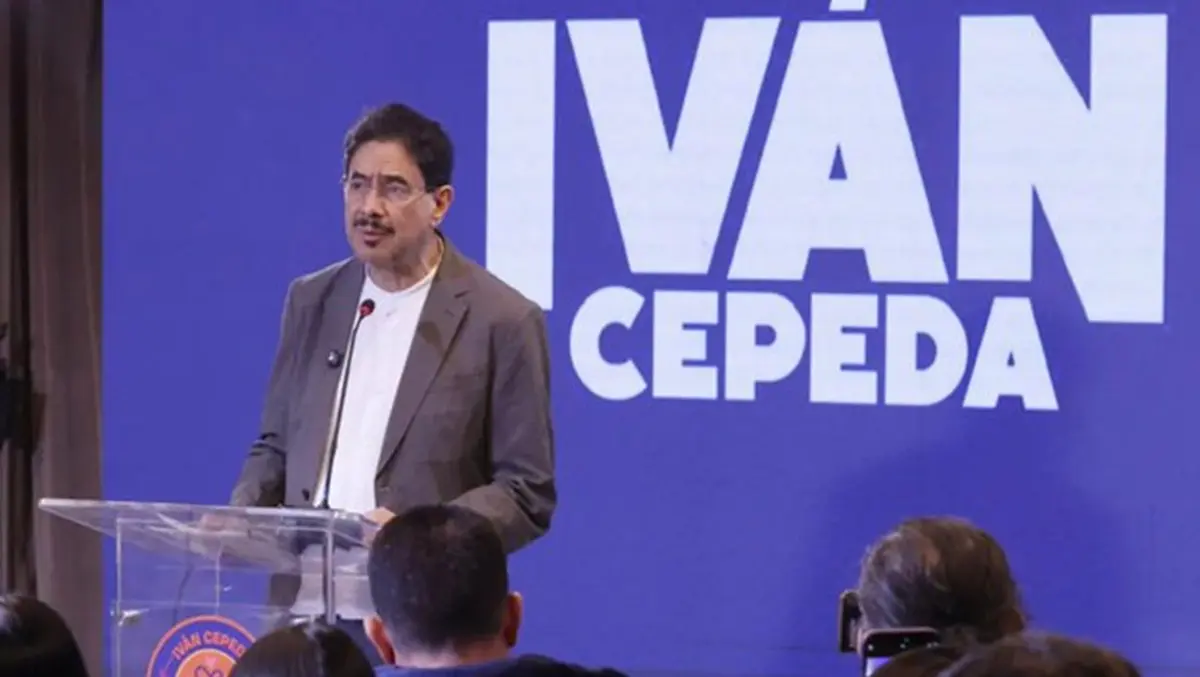








Ivan Cepeda Leads Historic Bloc Toward Colombian Presidential Elections
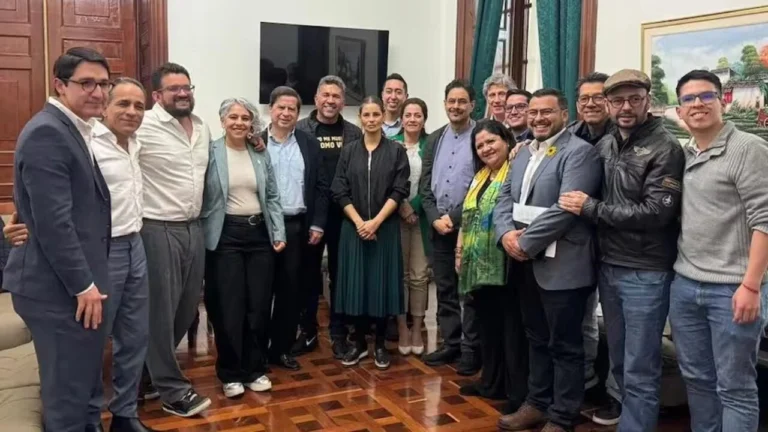
Green Alliance and Iván Cepeda. Photo: Instagram
April 28, 2026 Hour: 2:30 pm
🔗 Comparte este artículo
The leftist candidate gathers support to secure a decisive victory.
The 2026 Colombian presidential race has reached a decisive change with the formal launch of the Alliance for Life, Equity, and Democracy. Senator and presidential candidate Iván Cepeda is leading the coalition, which is made up of various progressive groups.
RELATED:
Leftist Iván Cepeda Leads Colombia Presidential Race, Spanish Poll Finds
He is running alongside his vice-presidential running mate, Aida Quilcué. The coalition is working to consolidate the progressive reforms that were initiated in 2022. Rather than a traditional political merger, the Alliance characterizes itself as a “Historic Bloc”, a broad front of social movements, trade unions, and political parties aimed at preventing a return to the hardline policies of the past.
The formation of this coalition coincides with a period of significant political tension in Colombia, where the discourse surrounding the nation’s future has become a choice between two divergent paths.
On one side, the Alliance for Life is advocating for the deepening of social justice, agrarian reform, and the protection of the 1991 Constitution. Conversely, they face a resurgent right-wing opposition that emphasizes militarization and a return to neoliberal economic strategies.
By framing the election as a fundamental choice for the “sanctity of life,” Cepeda and Quilcué are attempting to build a platform that transcends partisan lines to include anyone committed to the peace process and democratic stability.
The Anatomy of the Alliance
The Alliance for Life is rooted in the Historic Pact (Pacto Histórico), the coalition that secured the first left-wing majority in modern Colombian history. However, the current iteration has significantly expanded its reach to include a diverse array of political actors.
A significant development for the campaign was the formal entry of the Green Alliance Party, which introduced a robust environmental and anti-corruption focus to the platform. Additionally, the En Marcha movement, led by former minister Juan Fernando Cristo, joined the fold after Cristo withdrew his own candidacy, signaling a shift of moderate liberal sectors toward Cepeda’s consensus-building leadership.
The strength of the Alliance lies in its deep roots within Colombia’s grassroots organizations, beyond the sphere of traditional political parties. The coalition has secured the total backing of the country’s most influential trade unions, including the Central Union of Workers (CUT) and the Colombian Federation of Education Workers (FECODE).
These groups provide the movement with a substantial organizational infrastructure and considerable “street power” that is vital for mobilizing voters in both rural and urban areas.
The inclusion of the Indigenous Minga and the Libres Party, which represents Afro-Colombian communities, further reinforces the alliance’s claim to be a truly representative national movement.
This comprehensive approach is also intended to incorporate the voices of those most affected by Colombia’s protracted conflict. Representatives from the Victims’ Movements (CITREP) have played a visible role in the alliance’s launch, emphasizing that the 2016 Peace Agreement remains the cornerstone of their political vision.
The Alliance for Life aims to present a “multitudinous force” by uniting victims, students, workers, and ethnic minorities, making it difficult for traditional political elites to ignore. This diverse composition is intended to demonstrate that the project for social change is no longer the property of a single party, but a collective effort belonging to the “citizenries” of Colombia.
Social Justice and Ethical Revolution
At the core of the Alliance for Life’s platform is a commitment to what Iván Cepeda describes as an “Ethical Revolution.” The objective of this proposal is to implement a fundamental restructuring of the relationship between the Colombian state and its citizens.
This will be achieved by prioritizing transparency and dismantling long-standing political clientelism. Rather than focusing solely on economic metrics, the alliance emphasizes social justice as the primary indicator of national progress.
This includes a robust defense of the 1991 Constitution, which the coalition views as a vital shield against any attempts to weaken democratic institutions or revert to authoritarian governance.
The alliance’s programmatic focus also addresses the deep-seated inequalities that have historically fueled conflict in Colombia. A cornerstone of this vision is a comprehensive agrarian reform designed to provide land titles and technical support to rural peasants and displaced families.
Cepeda and his team’s strategy for achieving this is to revitalize the agricultural sector, with a view to achieving food sovereignty and creating a viable alternative to the illicit economies that currently dominate many remote regions.
This shift towards a more equitable distribution of resources is coupled with a strategy to strengthen public health and education, moving the country towards a universal social safety net that protects the most vulnerable.
Structural Proposals and a New Political Vision
Beyond immediate social reforms, the Alliance for Life proposes a structural overhaul of the Colombian economic and security models. At the core of this vision is the concept of “Human Security”, which replaces traditional military strategies with a focus on community integrity and the protection of human rights.
This approach treats peace not just as the absence of war, but as the presence of state services, justice, and economic opportunity in territories long neglected by the central government.
The alliance is committed to the full implementation of the 2016 Peace Agreement and to continued dialogue with all remaining insurgent groups. This will allow the transition to a post-conflict society to be finalized.
Economically, the coalition is advocating for an ambitious transition away from a model dependent on oil and coal extraction. The Alliance for Life has outlined its vision for a “Productive Matrix,” centered on renewable energy, sustainable tourism, and the “popular economy.”
The popular economy refers to the informal and small-scale businesses that are crucial for supporting numerous Colombian families. This transition is presented as a national security priority, with the preservation of Colombia’s extensive biodiversity being linked to its future economic stability.
By investing in science and technology, the alliance seeks to transform Colombia into a knowledge-based society, ensuring that the country remains competitive in a rapidly changing global landscape.
The Path to the First Round
The primary objective of the Alliance for Life is to achieve a decisive victory in the initial round of voting on 31 May 2026. Cepeda’s strategy of building a broad coalition is aimed at avoiding a polarized runoff that could further divide the country.
The alliance asserts that a robust mandate is imperative to ensure the irreversible nature of the ongoing social transformations, thereby preventing future administrations from readily dismantling reforms in land ownership, labor rights, and environmental protection.
This “Historic Bloc” is presented as the only political vehicle capable of bridging the gap between Colombia’s institutional democracy and its long-marginalized rural and urban populations.
As the campaign enters its final month, the focus remains on converting public anxiety into political mobilization. The alliance has called for extensive participation in forthcoming national marches to demonstrate that the desire for peace outweighs the fear generated by recent violence.
The question of whether this message of unity and “human security” can overcome the deeply ingrained cycles of conflict remains central to the race. For the Alliance for Life, the 2026 election is more than a contest for the presidency; it is a referendum on whether Colombia will continue its journey towards.
Sources: Iván Cepeda YouTube Channel – Partido Alianza Verde – Pacto Histórico Web – El Espectador – TeleSUR – Semana – El Tiempo – RCN
Author: Silvana Solano
Source: teleSUR