







Colombian State Fueled Paramilitarism for Several Decades
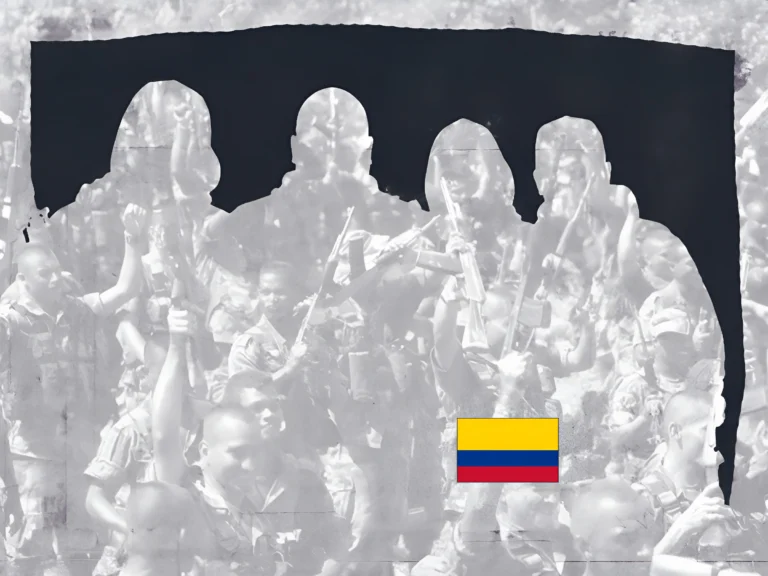
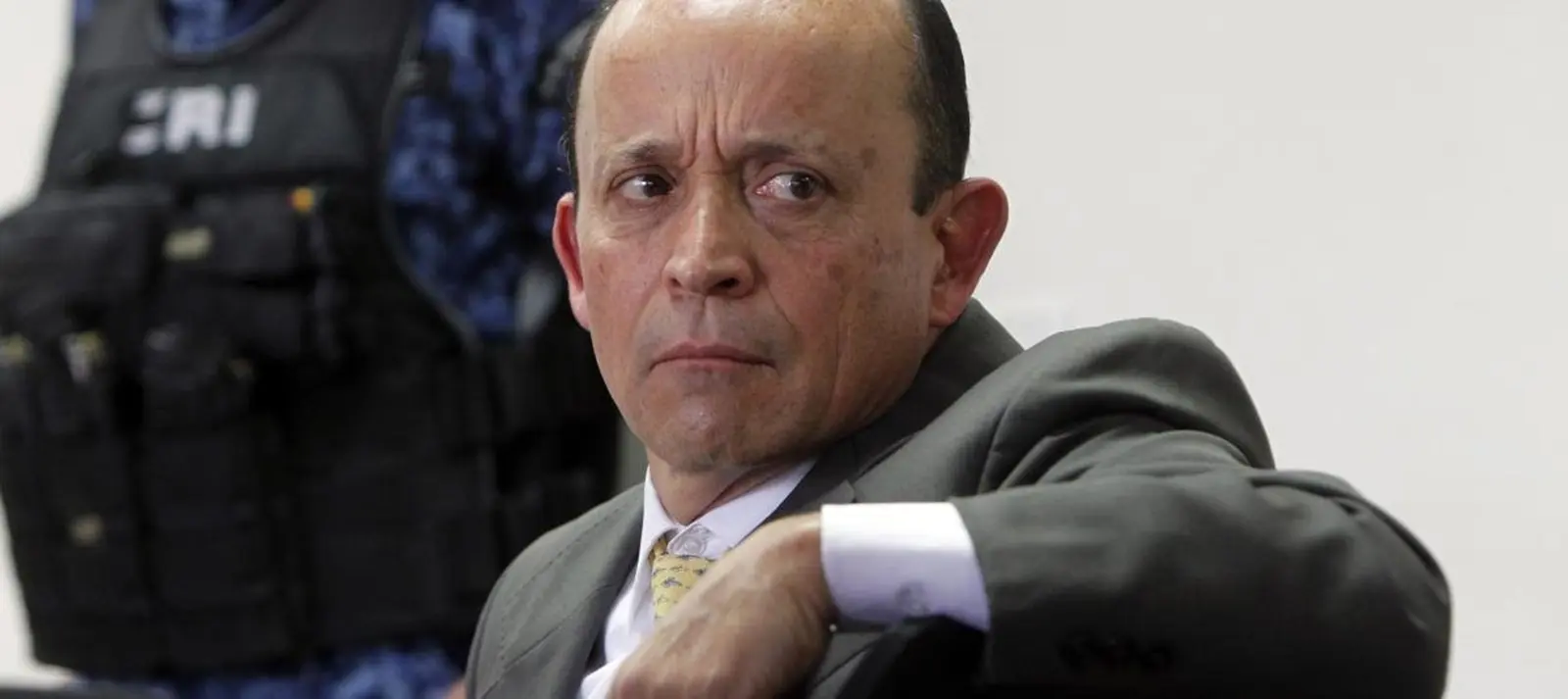
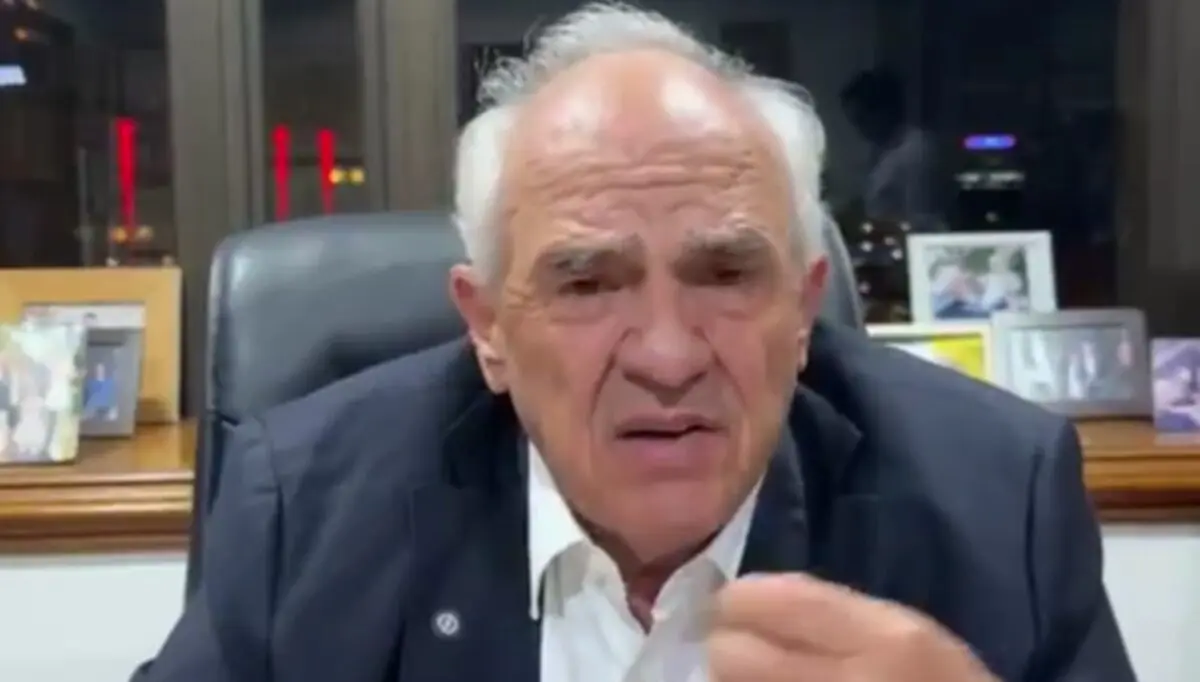
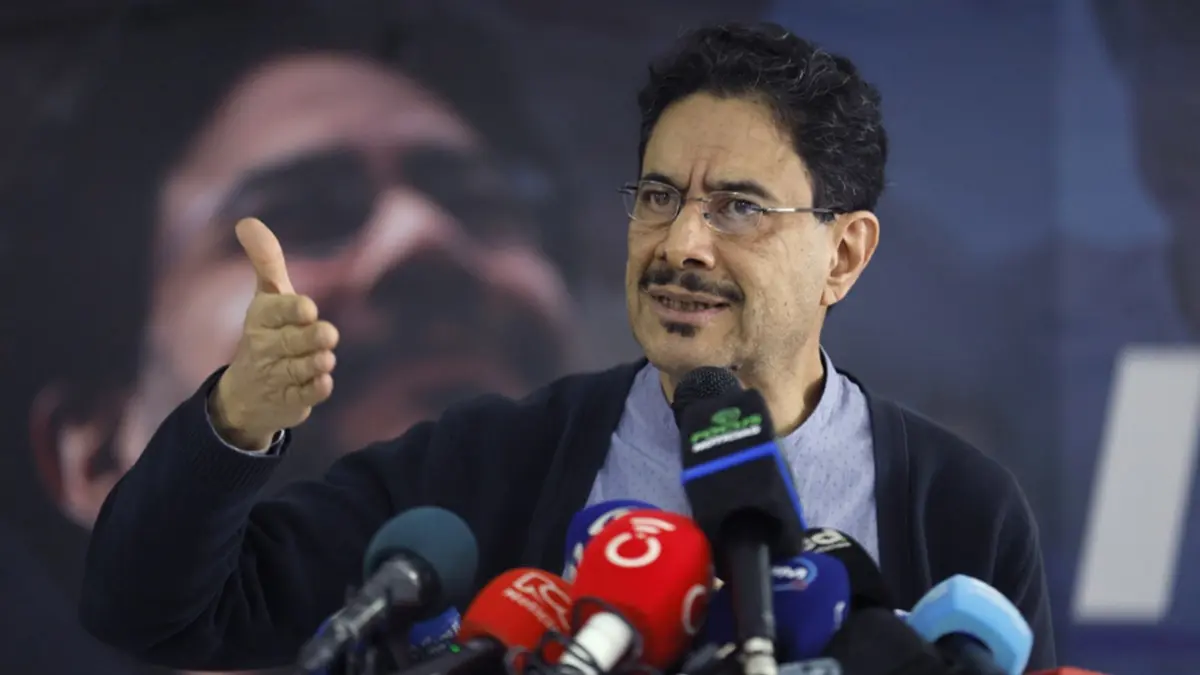
Collage about paramilitarism in Colombia. Photo: Insight Crime
June 9, 2026 Hour: 2:59 pm
🔗 Comparte este artículo
Historical records and judicial rulings expose the cooperation between right-wing politicians, public entities, and counterinsurgency forces.
The prevailing narrative in Colombia for many years has been that the violence is a simple triangle between left-wing guerrillas, state security forces, and independent, spontaneous civil self-defence groups.
RELATED:
Colombia: Former President Uribe’s Brother To Serve 28 Years in Prison
However, academic research, judicial rulings, and investigative journalism have revealed a far more complex reality. Paramilitarism in Colombia is a highly organized, illegal, militarized apparatus that forged deep ties with economic elites, landholders, and sectors of the state’s institutional framework.
To comprehend modern Colombian politics, it is essential to analyze how these right-wing paramilitary structures emerged and why their legacy continues to influence the country’s democratic institutions.
Rather than acting as an external force infiltrating the state, paramilitarism developed through a symbiotic relationship with legal entities. Illegal armed groups provided security, suppressed social mobilization, and enforced territorial control, while their political and economic sponsors offered funding, institutional legitimacy, and legal impunity.
The Legal and Structural Origins of Paramilitarism
The roots of Colombian paramilitarism are tied to state policy and Cold War geopolitics. In the 1960s, under the influence of the United States’ National Security Doctrine, the Colombian government sought ways to involve the civilian population in counter-insurgency efforts against emerging communist guerrillas.
Decree 3398 of 1965 established this policy, and it was then made permanent in Law 48 of 1968. This legislation clearly stated that the executive branch and the military command were allowed to arm civilians and establish private security committees. These committees were to assist the armed forces in national defence operations.
During the 1980s, the nature of these civil defense groups shifted radically due to the influx of drug-trafficking wealth. In regions like the Magdalena Medio, newly rich narcotics traffickers purchased vast tracts of land, becoming major rural property owners.
To protect their estates from guerrillas, these drug lords forged alliances with traditional cattle ranchers, local politicians, and military officers. In 1981, with the creation of Death to Kidnappers (MAS), an organization funded by the Medellín Cartel, MAS served to provide state actors to systematically eliminate suspected guerrilla sympathizers, left-wing activists, and labor union members.
The final phase of institutionalization took place in the mid-1990s under the administration of President Ernesto Samper. Through Decree 356 of 1994, the state authorized the creation of the Rural Vigilance Community Associations, commonly known as the CONVIVIR programs.
These legally sanctioned private security cooperatives were designed to provide intelligence to the army. However, investigative reports by organizations like the National Center for Historical Memory demonstrated that many CONVIVIR structures served as legal fronts for the expansion of regional paramilitary blocs.
By 1997, these disparate regional groups united under a single umbrella organization: the United Self-Defense Forces of Colombia (AUC), led by the brothers Carlos, Vicente, and Fidel Castaño.
Characteristics of Paramilitary and Differences from Guerrillas
The United Self-Defense Forces of Colombia (AUC) and their predecessors operated under a distinct military strategy characterized by high-impact violence directed primarily at non-combatant civilians rather than direct military engagements with guerrilla forces.
Data compiled by the National Center for Historical Memory indicates that between 1980 and 2012, paramilitary groups were responsible for the majority of recorded massacres in the country.
The deliberate use of cruelty, such as public executions, torture, and selective assassinations, was utilized as a psychological mechanism to terrorize populations, dismantle local social organizational structures, and force mass displacements.
This systematic violence was closely linked to an agrarian counter-reform. Investigative platforms have documented how anti-subversive rhetoric frequently served as a justification to violently dispossess smallholders, Afro-descendant communities, and indigenous groups of their land.
Millions of hectares were abandoned due to paramilitary incursions, and these lands were subsequently consolidated into large estates and integrated into large-scale agricultural projects, cattle ranching, or drug trafficking corridors, permanently altering the demographics and land tenure systems of rural Colombia.
Understanding the structural distinctions between these right-wing groups and left-wing insurgencies is critical for analyzing the conflict objectively. While the media often used a generic label of the violent actors to describe all illegal organizations equally, their political objectives and power relationships were fundamentally opposite.
Guerrillas like the FARC and ELN fought against the state apparatus to replace it, seeking the armed overthrow of the established political and constitutional order through revolutionary rhetoric.
In contrast, paramilitaries functioned in a symbiotic relationship with the state, collaborating or operating with the tacit omission of local and national state entities to preserve existing socio-economic structures, land distribution, and elite privileges.
The Para-political Phenomenon and Executive Co-optation
The integration of paramilitary power into formal political institutions, known as parapolitics, established systematic alliances between regional politicians and the AUC to secure electoral victories, control public budgets, and eliminate left-wing competition.
This high-level structural co-optation was crystallized in the 2001 Ralito Pact, a secret agreement signed by top paramilitary commanders like Salvatore Mancuso and “Jorge 40” alongside more than thirty state officials to “refound the nation” and guarantee illegal control over voting districts.
Following intense opposition debates and investigations by the Supreme Court of Justice, judicial records of some media revealed that over 120 former congressmen were formally investigated, resulting in the conviction of more than 60 senators and representatives for aggravated conspiracy.
This widespread accountability demonstrated that the paramilitary strategy focused on infiltrating and coercing the legislature to secure political survival and favorable laws rather than destroying the democratic system.
This institutional capture peaked between 2002 and 2010 during the presidency of Álvaro Uribe Vélez, heavily compromising his governing legislative coalitions through these extensive judicial processes.
A primary example of this direct coordination between state mechanisms and illegal armed groups occurred within the Departamento Administrativo de Seguridad (DAS), the national intelligence agency answering directly to the presidency.
Its director, Jorge Noguera, a personal appointee of President Uribe, was subsequently convicted and sentenced to 25 years in prison. Comprehensive judicial evidence proved that Noguera placed the state’s intelligence apparatus at the disposal of the AUC’s Northern Bloc, actively supplying lists of labor unionists, professors, and human rights defenders who were then systematically assassinated by paramilitary hit squads.
The Uribe Network: Personal, Familial, and Judicial Implications
The investigation into the parapolítica phenomenon demonstrates that alliances with paramilitary networks extended directly into the personal, familial, and political inner circles of President Álvaro Uribe Vélez, as evidenced by numerous high-profile judicial cases processed over the past two decades.
At the familial level, the president’s brother, rancher Santiago Uribe Vélez, faced trial for aggravated conspiracy and murder under allegations of leading the 1990s paramilitary group Los Doce Apóstoles out of the family’s La Carolina hacienda to conduct violent cleansing operations.
The judicial crackdown dismantled the core of the ruling national coalition too; the president’s cousin and former congressional leader, Mario Uribe Escobar, was arrested in 2008 and sentenced to ninety months in prison for collaborating with Salvatore Mancuso to seize land and rig votes, while Salvador Arana, a former governor and Uribe-appointed diplomat, received a forty-year sentence for the premeditated murder of Mayor Eudaldo Díaz, who had publicly denounced Arana’s paramilitary ties.
The systemic nature of these connections was further highlighted in 2008 when President Uribe abruptly extradited fourteen top paramilitary commanders to the United States on drug charges, a controversial move that independent journalists and legal analysts argue effectively silenced crucial confessions regarding the high-ranking politicians and corporate leaders who financed the illegal counter-insurgency apparatus.
The Electoral Horizon: The De la Espriella and Cepeda Antagonism
This historical legacy of violence and institutional capture continues to shape contemporary politics, serving to polarize the current presidential race heading into the June 21 runoff election.
The campaign of Abelardo de la Espriella, representing the right-wing Defensores de la Patria movement, reflects a continuation of these historical networks through his extensive career as a defense attorney for notorious parapolitical figures, such as former cattle-ranching union leader Jorge Visbal Martelo.
Furthermore, recent publications have uncovered that De la Espriella’s business network incorporates corporate partners who acquired land previously utilized as paramilitary bases, drawing scrutiny over the lingering economic structures of the counter-insurgency era. De la Espriella, who secured over forty-three percent of the vote in the first round, campaigns on a platform of strongman security tactics and promises to dismantle the Special Jurisdiction for Peace, appealing to voters who favor a punitive approach to public order.
In absolute contrast, the trajectory of his political opponent, Iván Cepeda, is defined entirely by his history as a victim of state-paramilitary violence and his subsequent role as an investigator of these illegal alliances.
Cepeda entered public life following the 1994 assassination of his father, Manuel Cepeda Vargas, the final senator of the left-wing Unión Patriótica party, a crime later ruled by international tribunals as a joint operation between state agents and paramilitary commanders.
As a member of Congress, Cepeda initiated the historic legislative debates that exposed the origins of the Bloque Metro in Antioquia, gathering testimonies from imprisoned former combatants.
This investigative work eventually prompted Álvaro Uribe to file a witness-tampering lawsuit against Cepeda, which backfired when the Supreme Court dismissed the allegations against Cepeda and instead opened a formal criminal fraud investigation against Uribe himself.
The upcoming election thus presents voters with two entirely opposing histories, forcing a national decision between a political project rooted in the defense of the traditional military-landowning establishment and one built upon the platform of transitional justice and structural agrarian reform.
Sources: RTVC – Radio Nacional Colombia – La Silla Vacía – Vorágine – RUMS – Rutas del Conflicto – Volcánicas – El Tiempo – El Espectador – Insight Crime – rutasdelconflicto.com – Centro de Memoria Histórica
Author: Silvana Solano
Source: teleSUR