


IRGC New Commander 2026: Dramatic Appointment Follows Devastating Strike
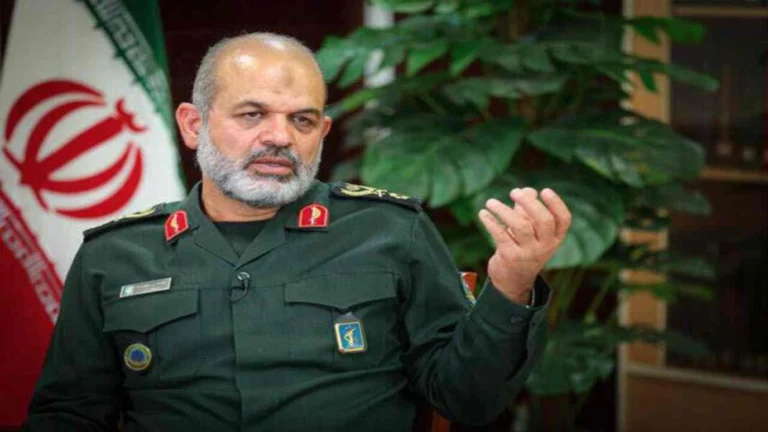
Major General Ahmad Vahidi appointed as IRGC New Commander on March 1, 2026, succeeding Mohammad Pakpour after joint US-Israel attacks that killed top Iranian officials. (Photo: Al Mayadeen / Archive)
March 1, 2026 Hour: 9:26 am
🔗 Comparte este artículo
IRGC New Commander 2026: Iran names Ahmad Vahidi to lead Revolutionary Guards after Mohammad Pakpour’s death in US-Israel attacks. Vahidi, ex-defense minister and Quds Force founder, takes helm amid escalating conflict.
Related: Iran Says Killing of Supreme Leader Will Not Go Unanswered
IRGC New Commander: Ahmad Vahidi Takes Helm After Deadly Strikes
Tehran, March 1, 2026 — Iran’s Islamic Revolutionary Guard Corps (IRGC) has appointed Major General Ahmad Vahidi as its new Commander-in-Chief, state media reported Sunday. The move follows the death of predecessor Mohammad Pakpour in joint US-Israel strikes that targeted senior military and political figures on February 28.
Vahidi, a veteran commander with deep roots in Iran’s security apparatus, previously served as Minister of Defense and Armed Forces Logistics, Interior Minister, and the inaugural leader of the Quds Force—the IRGC’s elite extraterritorial branch. He also played a key role in founding Iran’s Ministry of Intelligence and held a full seat on the Expediency Discernment Council.
The appointment comes amid one of the most severe crises in the Islamic Republic’s history. Iranian sources confirm Pakpour was killed alongside Defense Minister Aziz Nasirzadeh, Armed Forces Chief of Staff Abdolrahim Mousavi, and Supreme Leader Ali Khamenei’s senior adviser Ali Shamkhani during a Defense Council meeting struck by precision attacks.
Israel described its operation as “preventive”, aimed at neutralizing perceived threats. US President Donald Trump confirmed American participation, framing it as part of a broader campaign to counter Iranian influence.
In immediate response, Iran launched multiple waves of ballistic missiles and drones targeting Israeli military sites and US bases across the Middle East, marking one of the largest direct exchanges in the ongoing shadow war.
Geopolitical Context
The IRGC New Commander appointment occurs at a pivotal moment of escalation in the Middle East, following the unprecedented killing of Supreme Leader Ayatollah Ali Khamenei in US-Israel strikes—the most significant decapitation of Iranian leadership since 1979. Vahidi’s elevation signals continuity in hardline resistance while the regime navigates succession uncertainties and internal stability. Regionally, the conflict risks drawing in proxies across Lebanon, Yemen, Iraq, and Syria, disrupting Gulf energy routes and global supply chains. Internationally, it challenges non-proliferation efforts, strains US alliances with Arab states, and prompts urgent diplomacy from Russia, China, and European powers wary of wider war. The strikes and retaliation test deterrence doctrines, potentially reshaping power balances, refugee flows, and oil markets amid already fragile global security.
Vahidi’s Extensive Background and Strategic Role
Ahmad Vahidi brings decades of experience to the IRGC’s top post. As founding commander of the Quds Force, he oversaw operations supporting allied groups throughout the region during the 1980s and 1990s. His tenure as Defense Minister from 2009 to 2013 focused on strengthening domestic military production amid sanctions.
Vahidi also served as Interior Minister from 2021 to 2024, managing internal security during periods of domestic unrest. His appointment, reportedly approved by interim leadership structures, reflects a preference for seasoned figures with proven loyalty to the revolutionary system.
State media emphasized Vahidi’s role in institutionalizing Iran’s defense capabilities. He has consistently advocated for self-reliance in military technology and asymmetric warfare strategies.
The transition occurs under extraordinary circumstances. With multiple senior commanders lost in the same attack, the IRGC faces immediate challenges in command continuity, operational readiness, and morale.
For official Iranian confirmation of the appointment and Vahidi’s background, see Mehr News Agency report.
Further analysis of Vahidi’s career and the context of his rise appears in Iran International coverage.
Escalation and Iranian Response to Joint Attacks
The US-Israel operation, which Iranian officials describe as “aggression”, targeted key military and command centers in Tehran and western Iran. Reports indicate over 200 aircraft participated, striking missile sites, air defenses, and leadership gatherings.
Iran’s retaliation began hours later, with waves of ballistic missiles hitting Israeli military installations and US bases in Iraq, Syria, and the Gulf. Additional strikes reached Oman, expanding the geographic scope.
The IRGC vowed the “most devastating offensive operation” in its history, signaling potential for sustained or intensified responses. Officials framed the attacks as existential threats requiring proportionate force.
The deaths of Khamenei and top commanders have triggered 40 days of national mourning, while interim leadership arrangements seek to maintain stability. Succession processes for the Supreme Leader remain under discussion amid calls for unity.
The conflict marks a sharp departure from previous shadow confrontations, raising fears of uncontrolled escalation. Both sides continue military operations even as diplomatic channels explore de-escalation.
IRGC New Commander Ahmad Vahidi assumes leadership at a defining juncture for Iran. His appointment ensures continuity in the Guard’s doctrine of resistance and forward defense. As strikes persist and retaliation unfolds, the coming days will test Iran’s military resilience, internal cohesion, and ability to navigate profound strategic challenges in a rapidly deteriorating regional environment.
Author: JMVR
Source: Agencias