







Ecuador May Host Two U.S. Bases Pending Referendum on Foreign Military Presence
Ecuador’s decision on whether to host two U.S. bases will depend on a national vote to amend its Constitution, amid escalating violence and growing U.S. involvement in regional security.
U.S. Homeland Security Secretary Kristi Noem meets with Ecuadorian officials during an inspection of potential base sites in Manta and Salinas. Photo: @EFEnoticias
November 13, 2025 Hour: 1:42 am
🔗 Comparte este artículo
Ecuador’s government plans to authorize the establishment of two U.S. bases—one military and one focused on security operations—if voters approve a constitutional reform lifting the country’s ban on foreign military installations in a national referendum this Sunday.
RELATED:
More than 390 rights violations denounced during strike in Ecuador
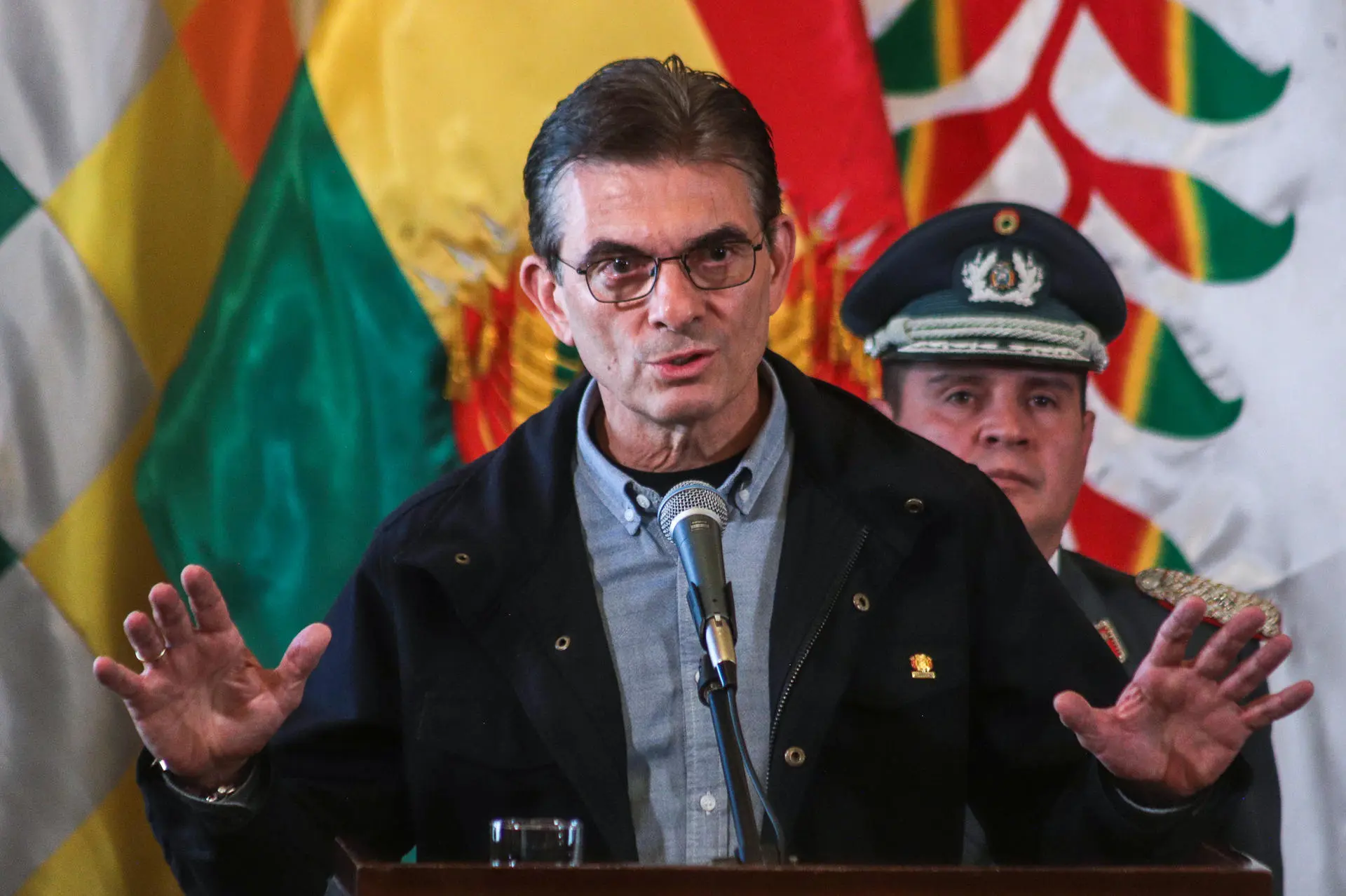
Interior Minister John Reimberg announced that the proposed facilities would be located in Manta and Salinas, two strategic cities along Ecuador’s Pacific coast. Both sites were inspected last week by U.S. Homeland Security Secretary Kristi Noem during her second visit to Ecuador in less than three months.
Reimberg said one of the bases would be managed by the U.S. Department of Homeland Security, responsible for public safety, counterterrorism, border control, and cybersecurity. “We want to strike hard against criminal groups. Working jointly at two bases where our personnel can share information is what we need,” he said in an interview with Radio Centro in Guayaquil.
The proposal will move forward only if Ecuadorians vote to amend the Constitution, which currently prohibits foreign military installations—a restriction introduced under former President Rafael Correa (2007–2017).
Ecuador has previously hosted U.S. military facilities. During World War II, the U.S. operated a base in the Galápagos Islands, and from 1999 to 2009, it maintained an anti-drug surveillance base in Manta until the 2008 Constitution required its closure.
Today, Manta is one of Ecuador’s main port cities and a key hub for drug trafficking networks that send large shipments of cocaine toward Central America. Reimberg highlighted that both Washington and Quito view the potential bases as part of a joint strategy to confront organized crime. “Why else would Noem return so quickly for a second visit?” he asked rhetorically.
After her two-day trip, Noem described Ecuador as an “excellent partner” in efforts to combat drug trafficking, irregular migration, and smuggling by land and sea. Reimberg added that Salinas, Ecuador’s westernmost city on the Pacific, holds “high strategic value” for tackling transnational crimes.
Ecuador is currently facing one of the worst waves of violence in its modern history. Criminal organizations linked to drug trafficking have expanded into extortion, kidnapping, and illegal mining. President Daniel Noboa declared an “internal armed conflict” in early 2024, labeling the gangs as terrorist groups. Despite these measures, violence has continued to surge in 2025, with 4,619 homicides recorded in the first half of the year—47 percent more than in the same period of 2024.
Author: MK
Source: EFE