


Venezuela Amnesty Law 2026: Transformative Step Ends Devastating Political Hatred
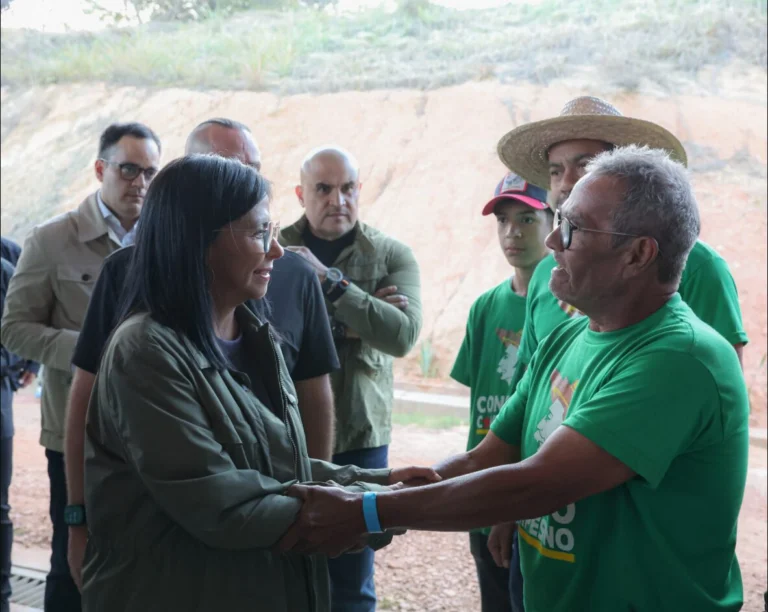
Delcy Rodríguez highlights the Venezuela Amnesty Law as key to healing divisions during the delivery of over 5,000 land titles to rural families in Miranda, February 20, 2026. (Photo: Prensa Presidencial de Venezuela)
February 21, 2026 Hour: 10:54 am
🔗 Comparte este artículo
The Venezuela Amnesty Law represents the core topic, as Delcy Rodríguez emphasizes its vital role in ending political hatred and fostering national reconciliation amid recent political shifts.
Related: Venezuela’s Attorney General Backs Amnesty Law
Venezuela Amnesty Law Vital to End Political Hatred, Says Delcy Rodríguez
Caracas, February 20, 2026 — Acting President Delcy Rodríguez stressed that the Venezuela Amnesty Law is essential for putting an end to political hatred and advancing toward true national reconciliation. Speaking during the delivery of more than 5,000 agrarian property titles to peasant families in Miranda state, Rodríguez framed the law as a tool to heal wounds caused by extremism and antipolitics since 1999.
The event coincided with the 167th anniversary of the Federal War, a historic milestone Rodríguez invoked to underscore ongoing struggles for sovereignty and land justice.
“We cannot remain stuck in confrontation,” Rodríguez declared. “It is possible to move forward from divergence.” She urged all sectors to resolve differences respectfully, guided by the principles of Bolivarian Diplomacy of Peace.
The Venezuela Amnesty Law, recently promulgated after unanimous approval in the National Assembly, seeks to overcome the legacy of polarization. Rodríguez highlighted its role in addressing the violent consequences of political hatred, including crimes motivated by extremism.
Geopolitical Context
The push for the Venezuela Amnesty Law comes amid profound shifts in Venezuela’s political landscape following the U.S. capture of former President Nicolás Maduro in January 2026. Under international pressure, particularly from the United States, the interim administration has pursued measures to ease tensions, including prisoner releases and economic adjustments. This law signals an effort to foster internal stability and democratic coexistence, while navigating relations with global powers and regional neighbors. Broader implications include potential returns from diaspora communities, reduced sanctions pressure, and renewed focus on productive alliances to counter the unjust economic blockade.
Importance of Venezuela Amnesty Law for National Reconciliation
Rodríguez described the Venezuela Amnesty Law as crucial for national reconciliation and genuine encounter among Venezuelans. She referenced attacks on the country, including those on January 3, attributing violence to hatred, extremism, and fascism.
“The hatred, extremism, and fascism caused political violence and hate crimes,” she stated, acknowledging victims’ contributions to peace-building.
The law aims to surpass the effects of polarization that have fueled unrest since the Bolivarian process began in 1999. Rodríguez emphasized victims’ generosity in prioritizing peace over prolonged confrontation.
For more on the law’s implementation, see the official announcement from Venezuela’s National Assembly.
Additional details on international perspectives are available from BBC Mundo coverage.
Call for Unity and Productive March Against Economic Blockade
Rodríguez called on productive sectors to march together against the unjust, illegitimate, and criminal economic blockade imposed on Venezuela.
During the agrarian event, she promoted an “scientific-peasant alliance” involving private sectors to provide technical assistance to rural communities. “That is the productive union. That is what we must promote: true unity,” she affirmed.
Such efforts, she noted, lead to increased production of animal protein and crops, ensuring affordable food access while generating export revenues and foreign currency inflows.
The acting president linked these advances to historical resistance against oligarchic land grabs, honoring Ezequiel Zamora, the “general of free peoples,” who fought for sovereign, free lands 167 years ago.
“We defend the cry of the Federation against the oligarchy that sought to monopolize political power and lands,” Rodríguez said.
For context on land reform policies, refer to reports from reputable international sources like Al Jazeera.
The Venezuela Amnesty Law stands as a cornerstone for moving beyond division. By fostering forgiveness and productive collaboration, Rodríguez envisions a sovereign nation where all who defend independence can coexist peacefully. The delivery of over 5,000 land titles exemplifies this commitment to social justice alongside political healing.
Author: JMVR
Source: teleSUR - Prensa Presidencial