







5 Eye-Opening Facts on US Opposition to Venezuela Invasion Reveal Growing Peace Movement
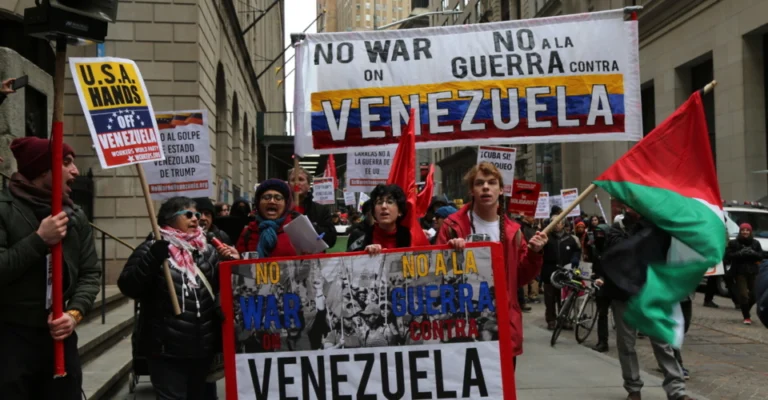
Over 60% of Americans oppose a military invasion of Venezuela, highlighting a growing public peace movement.
September 20, 2025 Hour: 11:32 am
🔗 Comparte este artículo
US opposition to Venezuela invasion exceeds 60%, showing a major split between public sentiment and political elites pushing war.
Related: Jorge Rodríguez: Venezuela Doesn’t Want War, It Wants the Caribbean as a Zone of Peace
US opposition to Venezuela invasion is widespread, with over 60% of Americans rejecting military intervention, according to a recent YouGov survey conducted from September 5 to 8, 2025. This significant majority crosses political divides, including 74% of Democrats, 63% of independents, and 48% of Republicans opposing an invasion. Even limited military action aimed at ousting President Nicolás Maduro finds resistance from 53% of respondents, compared to only 18% who support it.
This broad public disapproval stands in stark contrast to the aggressive rhetoric of certain US political elites, exposing a clear gulf between popular opinion and policy agendas. Leonardo Flores, co-founder of the North America Venezuela Solidarity Network, notes that “public opinion in the US has never been enough to stop or prevent a war,” but stresses that the current environment is different: some figures across party lines, including MAGA-aligned individuals like Trump’s special envoy to Venezuela Richard Grenell, oppose the use of force.
Flores explains that this divide stems from the fact that the United States functions more as an oligarchy with democratic appearances, where international financial powers centered in Davos pressure to maintain funding for NATO’s war against Russia and a multipolar world. He identifies the radical sector of the Cuban-American diaspora as a key driver behind the interventionist agenda, emphasizing their influence in conditioning federal budget votes towards harsher Venezuelan policies. Traditional hawks and multinational oil corporations such as ExxonMobil also play crucial roles in this lobbying.
The so-called “war lobby,” conceptually analyzed by theorists like John Mearsheimer, employs strategies to manufacture consent for armed conflicts—a tactic repeatedly attempted in Venezuela but without widespread success so far. Efforts have included falsely linking Venezuela to supposed US adversaries such as Hezbollah, Iran, Russia, and China, invoking humanitarian crises and “narco-terrorism” narratives to instill fear among the American public, albeit with limited results. Nevertheless, Flores warns that popular resistance does not guarantee peace: “Any accident or provocation between US and Venezuelan forces could pivot public opinion and unleash a patriotic fervor that legitimizes war.”
The media’s role in shaping this narrative battlefield is critical. Flores acknowledges that despite a notable gap with social media, mainstream outlets have limited coverage on key issues, such as the UN commission’s classification of the Gaza conflict as genocide—a report largely ignored by traditional media but amplified on online platforms, bolstering anti-war movements.
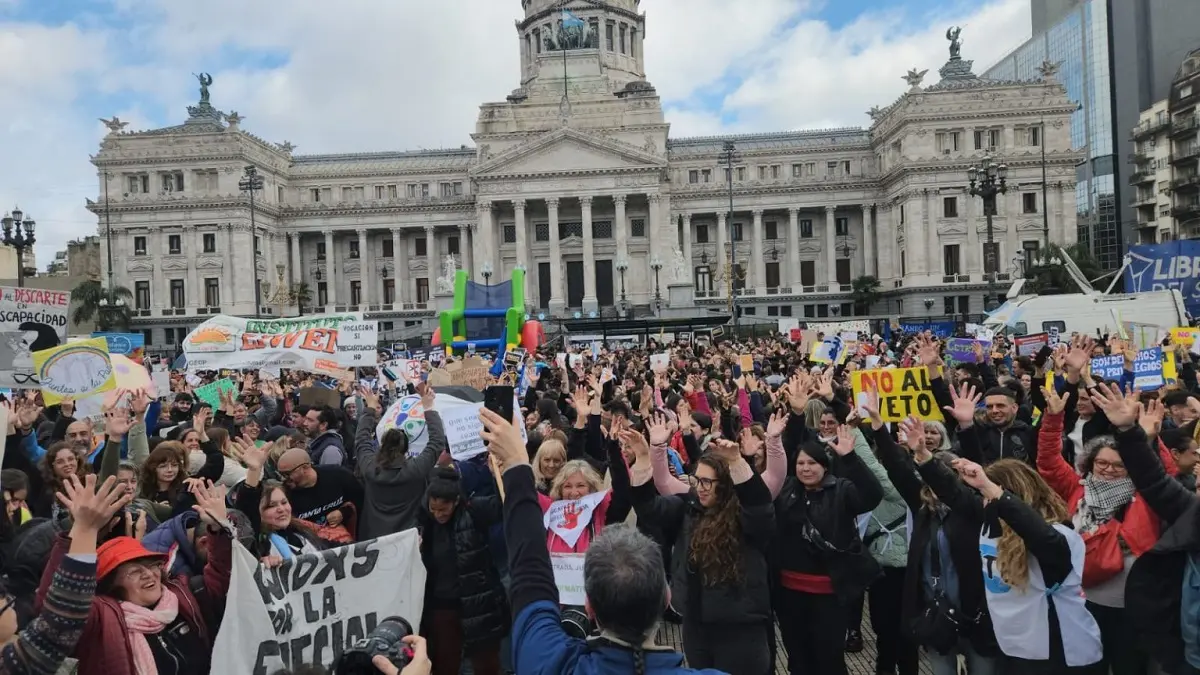
Despite majority opposition reflected in polls, concrete steps to prevent military intervention require broad popular mobilization. Flores highlights that, in the short term, public pressure can support anti-war congress members, but historically, mass protest only decisively influenced policy in escalated conflicts like Vietnam. He calls on citizens to engage actively: “Write your newspaper, call your representatives, talk to your neighbors, and join organizations fighting imperialism.”
YouGov US Polls | North America Venezuela Solidarity Network | John Mearsheimer on War Lobby
US Opposition to Venezuela Invasion Highlights Political Oligarchy and Media Gaps
From teleSUR’s perspective, this survey underlines deep popular rejection within the United States toward interventionist policies promoted by economic and military power sectors, aimed at imposing violent destinies on Venezuela and the broader region. The citizen opposition represents a crucial opportunity to bolster peace movements and solidarity networks that challenge imperial hegemony and advocate democratic, sovereign solutions.
The gap between interventionist elites and public opinion exposes the oligarchic nature of the US political system, where popular will is subordinate to corporate and strategic interests driving war agendas. Yet, growing social consciousness and mobilization can serve as effective brakes against imperial maneuvers.
The continued deployment of US warships in the Caribbean and escalating threats against Venezuela form part of a strategy to destabilize the region for a unipolar, militarized order. Political and economic actors promoting this policy ignore the majority’s peaceful will, reframing the conflict with fear-driven narratives that attempt to legitimize violence.
Council on Foreign Relations – US-Venezuela relations | International Crisis Group – Venezuela
Geopolitical Impact and the Call for International Solidarity
In this context, teleSUR urges reflection on the importance of building international alliances to promote peace and respect for sovereignty while condemning war threats. Popular resistance and dialogue promotion remain the only viable path to avoid a war escalation that would affect not just Venezuela but the stability of all Latin America and the Caribbean.
President Nicolás Maduro’s call for mobilization and awareness of the majority pacifist stance in the US resonates as a hopeful message amid imperialist aggression. It is essential for peoples to unite to prevent any intervention attempt and advance toward a multipolar world that respects differences and fosters global justice.
In short, despite aggressive agendas within US political elites, majority public opinion firmly opposes war with Venezuela—showing that social mobilization and international solidarity can be decisive in preserving peace and self-determination.
Author: JMVR
Source: Sputnik