US-Canada Trade Negotiations Halted: Trump Terminates Talks Over “Fraudulent” Ontario Reagan Video 2025
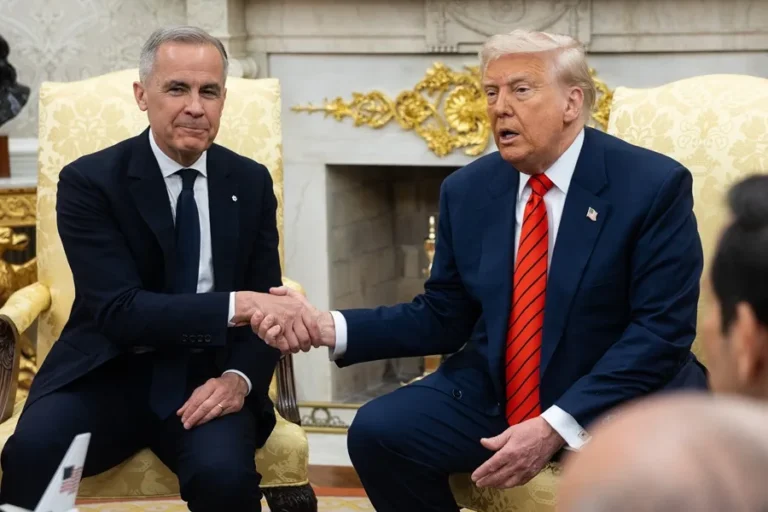
President Trump suspended US-Canada trade negotiations after criticizing Ontario’s Reagan ad as “fraudulent.”
October 25, 2025 Hour: 3:20 pm
🔗 Comparte este artículo
US-Canada trade negotiations end abruptly after President Trump ends talks, citing a “fraudulent” Reagan video in Ontario’s anti-tariff campaign.
Related: Trump Calls Off Sending National Guard to San Francisco
US-Canada Trade Negotiations: Trump Pulls the Plug After Ontario’s Controversial Reagan Video
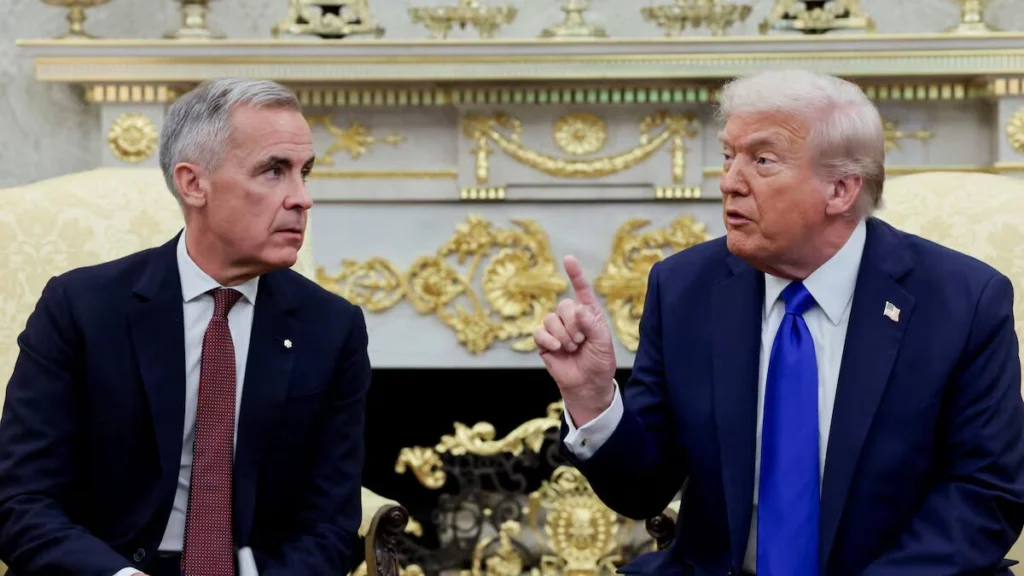
US-Canada trade negotiations collapsed dramatically after President Donald Trump announced the immediate suspension of talks with Canada. The reason: a highly controversial television ad aired by Ontario’s local government, featuring a vintage clip of former US President Ronald Reagan criticizing tariffs in 1987.
Trump harshly condemned the ad as “fraudulent” via Truth Social, declaring the Reagan video “misrepresented” the true legacy of the late president and threatened US economic security. The US-Canada trade negotiations are now terminated, he wrote, blaming the “egregious behavior” of Ontario’s authorities for sabotaging the agreement process.
Trudeau’s Response and the Fallout of US-Canada Trade Negotiations
- Office of the United States Trade Representative – Canada
- Canadian Prime Minister’s Office – Trade Statements
The ad at the center of the controversy borrowed a 1987 statement from Reagan: “Imposing tariffs or trade barriers of any kind are measures I detest. In the long run, these trade barriers hurt all American workers and consumers.” The Ronald Reagan Presidential Foundation responded swiftly, issuing a statement that the commercial selectively edited content and distorted Reagan’s intended message.
Trump responded in kind. “TARIFFS ARE VERY IMPORTANT for US national security and economy,” he insisted, disputing the ad’s main claim and reaffirming his protectionist stance that has defined talks since his return to the White House in 2025.
Canadian Prime Minister Mark Carney, addressing media on October 24, said Canada remains “prepared to resume trade talks with the United States whenever Americans are ready.” Carney’s statement highlights Canada’s continued commitment to constructive engagement, even amid heightened trade tensions.
Geopolitical Context: Rising Tariffs and North American Tensions
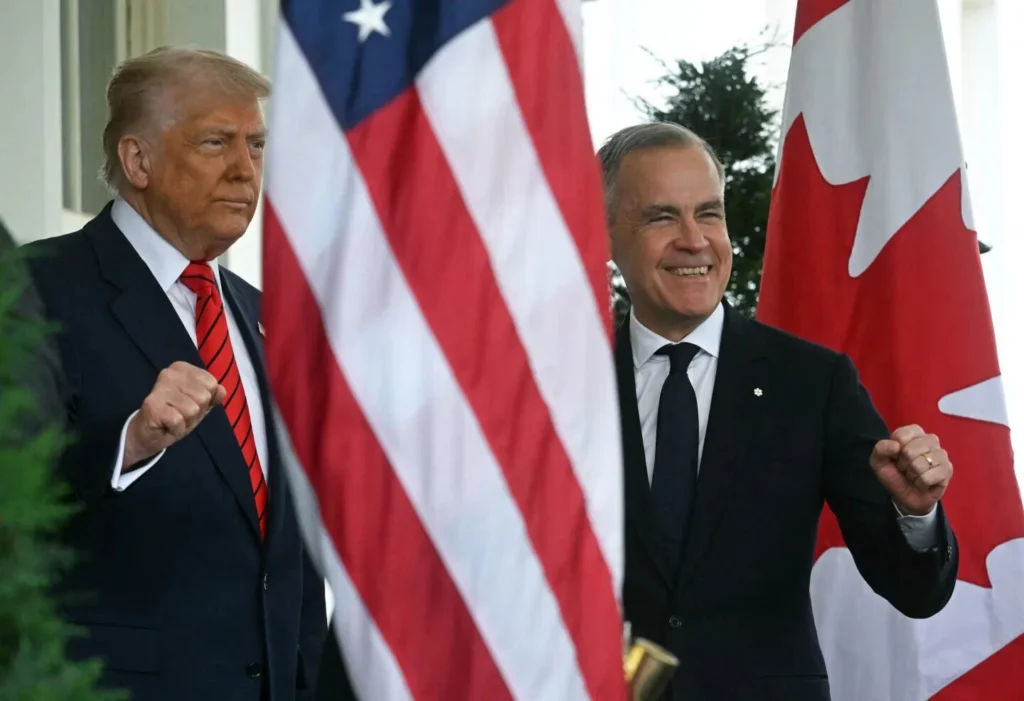
The unresolved status of US-Canada trade negotiations arrives at a critical geopolitical moment. Canada stands as the only G7 member yet to finalize a new trade deal with Washington. Since President Trump’s new term began, trade relations have grown increasingly hostile.
US tariffs on key Canadian exports—including steel, aluminum, automobiles, and lumber—jumped to as high as 35% starting August 1. The White House defends the move as necessary to counter alleged cross-border challenges such as illegal immigration and fentanyl trafficking.
These sweeping economic measures have already taken a toll on the Canadian economy, according to economic forecasts and industry leaders. Prime Minister Carney’s government has vowed not to permit “unfair US access” to the Canadian market, indicating that a near-term resolution to the US-Canada trade negotiations is unlikely.
Recent Major Economic Decisions by President Trump in October
Throughout October 2025, President Trump has revealed an aggressive series of new tariff measures and executive actions aimed at protecting U.S. industries and reinforcing his doctrine of “economic sovereignty.” On October 1st, Trump imposed a 100% tariff on imported patented pharmaceuticals (exempting only those with domestic production), 25% on heavy-duty trucks, 50% on imported kitchen cabinets and vanities, and 30% on upholstered furniture. These tariffs, justified on national security grounds, are part of a broader strategy to incentivize local manufacturing and reduce foreign reliance in critical supply chains.
Additionally, Trump’s administration has issued executive orders adjusting tariffs on medium- and heavy-duty trucks and parts, offering offset incentives for U.S. assembly while setting new 10-25% levies on select vehicles imported from abroad. Critics—including former allies and industry economists—warn that these broad new tariffs could drive up prices for American consumers, further fuel inflation, and strain relationships with key trading partners. Legal challenges continue to escalate, with several federal courts declaring elements of Trump’s tariff regime illegal but staying enforcement until the Supreme Court issues a final ruling in November 2025.
Current State of the Canadian Economy
The Canadian economy is feeling the impact of US tariffs more acutely than at any time in the last decade. With US import duties on Canadian exports—steel, aluminum, automobiles, and lumber—reaching 35% since August, sectors critical to Canada’s GDP and job market have come under severe strain. Economists report slower growth rates in the third quarter and rising inflation, as manufacturers and exporters struggle to absorb higher cross-border costs.
Despite these challenges, Canada maintains historically low unemployment (hovering below 6%) and robust, albeit slowing, growth in service sectors. The Bank of Canada is actively monitoring inflation, signaling potential adjustments in monetary policy to stabilize prices and support domestic industries. Prime Minister Carney’s government has responded to the trade disruptions with targeted relief funds and incentives for export diversification, while reaffirming that Canada “will not allow unfair access from the US” and is preparing structural reforms to buffer the economy from ongoing tariff shocks. Industry leaders warn that prolonged trade uncertainty could deter investment and dampen economic resilience as 2026 approaches.
Author: JMVR
Source: Agencias