


Recents Steps in the Ukraine Crisis 2025: Putin-Trump Talks Signal a Turning Point Amid Rising Hope
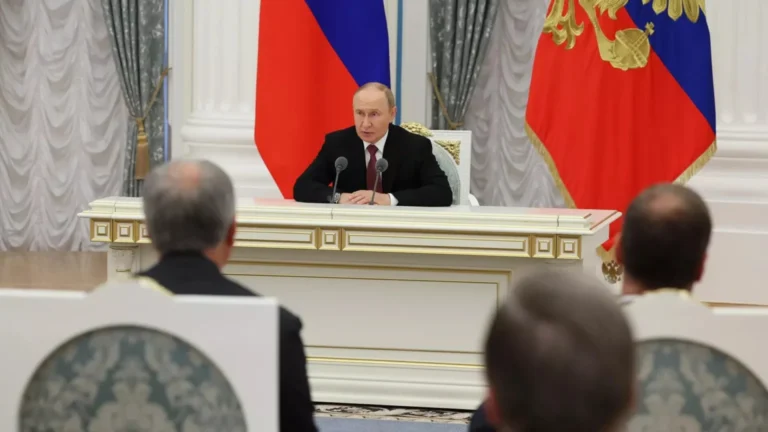
Vladímir Putin evaluó los resultados de la recent meeting in Alaska with a US delegation headed by Donald Trump. Photo: Sputnik.
August 16, 2025 Hour: 12:59 pm
🔗 Comparte este artículo
Amid rising tensions, Putin and Trump’s Alaska meeting marks a pivotal moment in the Ukraine crisis, opening new diplomatic channels for peace and bilateral cooperation.
Putin Hails Landmark Meeting with Trump as Key Step in Ukraine Crisis Resolution
In a surprising diplomatic development, Russian President Vladimir Putin has described his recent high-level meeting with former U.S. President Donald Trump in Alaska as “timely and useful,” marking one of the most significant attempts to de-escalate the Ukraine crisis in recent years. The summit, held under strict security and away from global media glare, brought together two of the most polarizing figures in modern geopolitics to confront one of the world’s most volatile conflicts.
According to the Kremlin, the conversation was frank, detailed, and constructive, covering nearly every aspect of bilateral cooperation, with a central focus on finding a just and lasting resolution to the war in Ukraine. Putin emphasized that both leaders shared a mutual understanding of the urgency to end hostilities and begin rebuilding diplomatic trust between Moscow and Washington—a relationship that has been strained for over a decade.
“We discussed almost all issues of bilateral cooperation, but the core of our conversation was undoubtedly the Ukraine crisis,” Putin stated in a press briefing from Moscow. “It was a sincere and serious dialogue that could lead us toward the correct solutions.”
This meeting is particularly notable given the absence of direct communication between top U.S. and Russian officials since the full-scale invasion of Ukraine in 2022. While the Biden administration has maintained a firm stance on sanctions and military support for Kyiv, the involvement of a former U.S. president—known for his unconventional foreign policy approach—has introduced a new dynamic in backchannel diplomacy.
Experts suggest that Trump’s participation, though unofficial, may offer a neutral diplomatic channel outside the constraints of current governmental positions. As a private citizen with significant influence over a major segment of the American electorate, his engagement could pave the way for future negotiations, especially if he returns to the White House in 2025.
🇷🇺🇺🇸 La eliminación de las causas fundamentales de la crisis ucraniana "debe ser la base para su resolución", asegura Putin
— Sputnik Mundo (@SputnikMundo) August 16, 2025
En este contexto, la cumbre en Alaska nos acerca a las decisiones necesarias para resolver el conflicto, declara el presidente ruso.
📍 Más detalles sobre… https://t.co/oBiFGsEGaZ pic.twitter.com/eLHgAOjTqY
🔗 External Link: BBC – Russia-Ukraine War: Timeline and Key Developments
Diplomatic Breakthrough or Strategic Posturing? The Global Implications of the Alaska Summit
The Alaska meeting took place against a backdrop of intensifying warfare in eastern Ukraine, where Russian forces continue to press forward in Donetsk and Luhansk, while Ukrainian troops resist with Western-supplied arms. Despite ongoing combat, both Putin and Trump expressed a shared desire to halt the bloodshed and explore pathways to negotiation.
Putin stressed that the discussion focused not only on ceasefire mechanisms but also on the root causes of the conflict, including NATO expansion, security guarantees for Russia, and the status of Crimea and the Donbas region. He claimed that Trump demonstrated a nuanced understanding of Russia’s security concerns—a rare acknowledgment from the Kremlin toward a U.S. political figure.
“We need to eradicate the causes of the crisis, not just treat its symptoms,” Putin said. “Only then can we speak of a sustainable peace.”
While no formal agreements were signed, and no immediate ceasefire was announced, the mere fact that such a dialogue occurred at this level has been interpreted by analysts as a potential turning point. The meeting could lay the groundwork for a broader peace initiative, possibly involving Ukrainian President Volodymyr Zelenskyy, whom Putin said had expressed interest in a trilateral summit.
Such a move would be unprecedented. To date, Zelenskyy has refused direct talks with Putin unless Russian troops fully withdraw from occupied territories—a condition Moscow has rejected. However, the idea of a mediated negotiation, possibly hosted by a neutral country like Turkey or Saudi Arabia, is gaining traction among international diplomats.
The geopolitical implications of this shift are profound. A thaw in U.S.-Russia relations, even if initiated through informal channels, could reshape global alliances, impact energy markets, and influence conflicts in regions like Syria, Iran, and the South China Sea. It may also affect the strategic calculus of NATO, which has long viewed Russia as its primary adversary.
Moreover, the timing of the meeting is significant. With the U.S. presidential election approaching in November 2024, Trump’s involvement in foreign policy—especially on an issue as critical as the Ukraine crisis—could influence both domestic opinion and international perceptions of American leadership.
“This is not just about Ukraine,” said Dr. Elena Mirskaya, a senior fellow at the European Council on Foreign Relations. “It’s about whether the world’s two most powerful nuclear states can re-establish dialogue before the conflict spirals into a wider war.”
Still, skepticism remains. The Biden administration has not commented directly on the meeting, but senior officials have reiterated that any peace process must be led by Ukraine and respect its sovereignty. The European Union and several Eastern European nations, particularly Poland and the Baltic states, have also voiced caution, fearing that backdoor negotiations could undermine Kyiv’s position.
🔗 External Link: United Nations – Call for Peace in Ukraine
The Role of Informal Diplomacy in Resolving the Ukraine Crisis
In an era dominated by institutional diplomacy and multilateral summits, the Alaska meeting highlights the enduring power of personal diplomacy. Historically, leaders like Nixon and Gorbachev, or Reagan and Gorbachev, used direct dialogue to ease Cold War tensions. Today, Putin and Trump—both known for their unconventional leadership styles—may be attempting a similar breakthrough.
Trump, during his presidency (2017–2021), repeatedly expressed a desire to improve relations with Russia, often clashing with his own intelligence community over the issue. His administration imposed sanctions after the 2018 Skripal poisoning and the 2020 SolarWinds cyberattack, but Trump himself maintained a public admiration for Putin’s strength as a leader.
Now, as a private citizen, Trump has more flexibility to engage in diplomatic overtures without the constraints of executive responsibility. His meeting with Putin, reportedly arranged through intermediaries and held in a remote Alaskan location for security reasons, suggests a carefully orchestrated effort to test the waters for future negotiations.
For Putin, the benefits are clear. Engaging with a prominent U.S. political figure—especially one with a base that questions continued military aid to Ukraine—allows Moscow to shape the narrative in America and potentially influence the 2024 election outcome. It also breaks Russia’s diplomatic isolation, demonstrating that dialogue with the West is still possible despite years of sanctions and condemnation.
However, critics warn that such informal talks risk undermining official peace efforts led by the United Nations, the European Union, and Ukraine itself. There is also concern that Putin may use the meeting to portray Western divisions, suggesting that even former U.S. leaders disagree with current policies on Ukraine.
“Backchannel diplomacy can be useful, but it must be transparent and aligned with international law,” said Anders Fogh Rasmussen, former NATO Secretary General. “Anything less risks legitimizing aggression.”
Nonetheless, the mere fact that both leaders agree on the necessity of ending the war is a step forward. Putin reiterated that Russia seeks a peaceful resolution and is open to negotiations, provided that its “legitimate security interests” are recognized. Trump, according to Kremlin sources, acknowledged the complexity of the situation and expressed hope for a diplomatic solution.
What Comes Next? The Path Toward a Trilateral Summit
The most tangible outcome of the Alaska meeting may be the proposal for a trilateral summit involving Putin, Trump, and Zelenskyy. While highly symbolic, such a gathering would be unprecedented in the history of the conflict. No sitting or former U.S. president has ever participated in direct negotiations between Russia and Ukraine.
If realized, the summit could serve as a platform to establish mutual security guarantees, discuss prisoner exchanges, and outline a framework for post-war reconstruction. It could also address the contentious issue of Crimea, which Russia annexed in 2014 and which Ukraine insists must be returned.
However, major obstacles remain. Zelenskyy has consistently demanded that any negotiations begin with a full Russian withdrawal—a condition Putin has ruled out. Additionally, the legal and logistical challenges of involving a former U.S. president in an active conflict zone are significant.
Still, diplomatic sources suggest that the idea is being explored through quiet channels, with potential mediators including the United Nations, Türkiye, and even the Vatican. The involvement of a high-profile figure like Trump could help de-escalate rhetoric and create space for compromise.
“We are not naive,” Putin admitted. “There are many difficulties ahead. But without dialogue, there is no path to peace.”
A Fragile Hope in the Shadow of Sanctions and Suspicion
Despite the optimistic tone from the Kremlin, the reality remains complex. Putin warned that the United States could impose new and severe economic sanctions if substantial progress is not made in future negotiations. This reflects Moscow’s awareness that any diplomatic gains must be matched by concrete actions on the ground.
Meanwhile, Ukraine continues to face immense challenges. Cities like Bakhmut and Avdiivka have been reduced to rubble, and civilian casualties remain high. The country relies heavily on Western military and financial aid, which could be affected by shifting political winds in the U.S. Congress.
Yet, the Alaska meeting has injected a rare note of hope into a conflict that has dragged on for over two years. For the first time in years, there is a visible effort to restart dialogue between key global players, even if through unconventional means.
The Ukraine crisis remains one of the defining challenges of the 21st century—a conflict that has reshaped global energy markets, displaced millions, and brought the world closer to a new Cold War. But as history has shown, even the most intractable conflicts can yield to diplomacy when leaders choose dialogue over division.
Whether this meeting marks the beginning of a genuine peace process or merely a strategic maneuver remains to be seen. But one thing is clear: the world is watching.
Conclusion: A Pivotal Moment in the Ukraine Crisis
The Alaska summit between Vladimir Putin and Donald Trump may not have ended the war in Ukraine, but it has opened a new chapter in international diplomacy. By re-establishing direct communication between Russian and American leadership—even in an unofficial capacity—it has created a pathway for negotiation where none seemed possible just months ago.
With the Ukraine crisis at the center of global security concerns, this dialogue offers a glimmer of hope that peace, though distant, is not out of reach. As geopolitical tensions continue to rise, the importance of honest, high-level conversations cannot be overstated.
The coming weeks will reveal whether this meeting was a proven step toward peace or a symbolic gesture with little follow-through. But for now, the world must recognize the significance of leaders choosing dialogue over destruction—a choice that could define the future of international stability.
“We must not let the perfect be the enemy of the possible,” said a senior European diplomat who spoke on condition of anonymity. “Sometimes, the first step is simply showing up.”
Author: JMVR
Source: Sputnik - teleSUR