







U.S. Navy Secretary Fired Amid Internal Pentagon Power Struggle
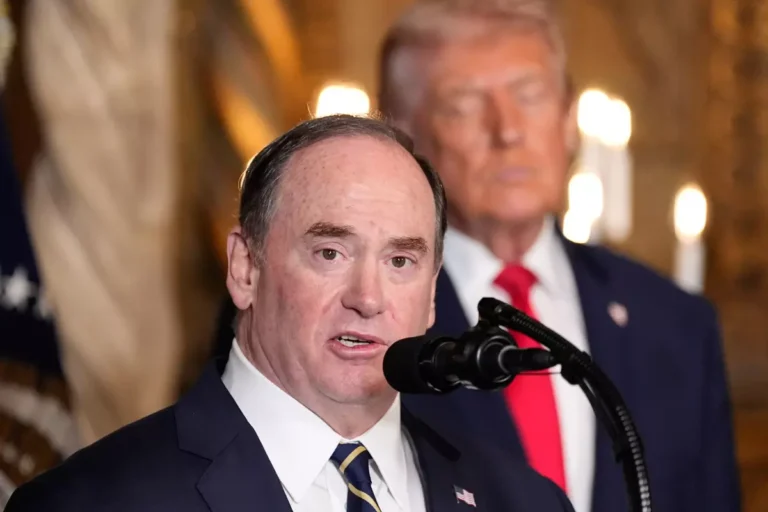
(FILE) U.S. media such as The New York Times said that Phelan had disagreements with Secretary of War Pete Hegseth and Deputy Secretary of Defense Stephen Feinberg. Photo: AP.
April 22, 2026 Hour: 10:11 pm
🔗 Comparte este artículo
The Donald Trump Administration dismissed U.S. Secretary of the Navy, John Phelan, on Wednesday, after months of reported internal disputes with senior Pentagon officials and amid ongoing tensions with Iran, marking a significant shake-up in U.S. military leadership.
The Donald Trump Administration announced the dismissal of U.S. Secretary of the Navy, John Phelan, on April 22, following several months of widely reported internal disputes with high-ranking Pentagon officials.
Sean Parnell, spokesperson for the War Department, confirmed the removal of Phelan, who, until his departure, was responsible for organizing, training, and equipping the U.S. naval forces. This move signals a turbulent period within the Pentagon as the U.S. navigates complex international relations, particularly concerning Iran.
RELATED: U.S. Partial Shutdown To Leave DHS Personnel Without Pay
Phelan’s departure is the latest in a series of significant restructurings within the Pentagon’s military leadership. It comes just weeks after War Secretary Pete Hegseth fired the Army’s top uniformed officer, General Randy George.
Since assuming his position last year, Hegseth has also overseen the dismissal of numerous other high-ranking generals, admirals, and defense leaders, indicating a systematic overhaul of the US military’s top brass.
“On behalf of the War Secretary and the Undersecretary of War, we thank Secretary Phelan for his service to the Department and the United States Navy”, Parnell stated on his official X account. He further informed that Phelan’s position would be temporarily filled by Undersecretary Hung Cao, whom several media outlets have identified as loyal to President Trump. This appointment of an Interim Secretary seen as closely aligned with the President underscores the administration’s intent to exert greater control over key defense roles, potentially influencing future U.S. defense policy and operations globally.
Disagreements and Resignations
U.S. media, including The New York Times, highlighted that Phelan had notable disagreements with War Secretary Pete Hegseth and Deputy Defense Secretary Stephen Feinberg. These internal conflicts reportedly centered on budgetary decisions, technological advancements for the Navy and strategic logistical deployments.
While the Secretary of the Navy does not have direct involvement in United States combat operations, the role is critical in defining the Navy’s budget, technology acquisition, and logistical deployment strategies. This means that Phelan’s influence extended to how the U.S. Navy was structured, funded and prepared for global operations. His dismissal, therefore, impacts not just internal Pentagon dynamics but also the long-term strategic capabilities and operational readiness of one of the U.S.’s most powerful military branches.
This series of high-profile dismissals is not merely about personnel changes; it reflects a broader power struggle within the Trump Administration’s defense apparatus. The consolidation of power and the appointment of loyalists such as Hung Cao could lead to significant shifts in U.S. military strategy and resource allocation. The restructuring indicates a determined effort to implement a specific vision for U.S. defense, potentially at the cost of dissenting voices or established military protocols.
Author: Laura V. Mor
Source: Agencies