







The World Cup of Invisible Borders
Uncover the hidden barriers facing 2026 World Cup fans: visa challenges, premium pricing, and the growing divide between football’s promise and reality.
June 11, 2026 Hour: 1:07 pm
🔗 Comparte este artículo
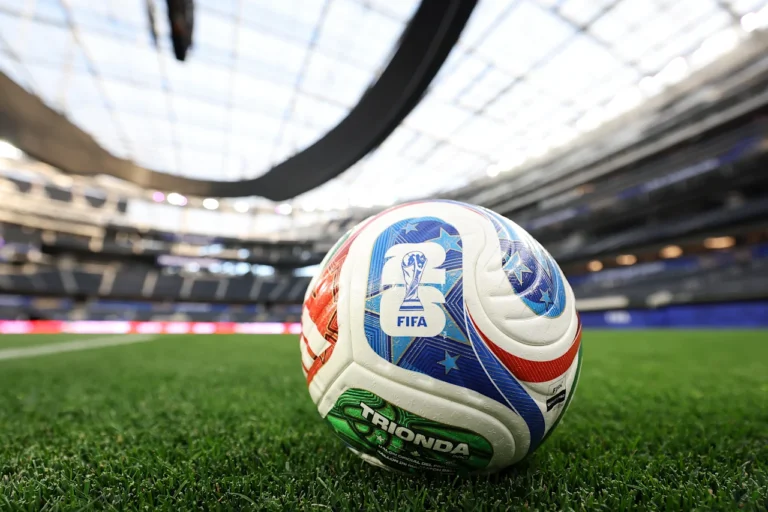
The 2026 FIFA World Cup promises to be a colossal celebration: three host countries, 48 teams, 104 matches, and an expansion narrative marketed as synonymous with openness.
But beneath the gleaming surface of the spectacle, an uncomfortable and decisive question arises: Will it truly be a World Cup for everyone, or a tournament designed for those who can afford it without hesitation?
Related: The World Cup: Between Wars, Silence, and Dreams
Between visas, expensive tickets, and hotels inflating their rates, the party might end up leaving many at the entrance. This is no minor concern.
Football, so often presented as the ultimate universal language, risks becoming a privilege of the wallet here.
Integration through Football
The idea of an inclusive World Cup collides head-on with the reality of thousands of fans who must navigate a labyrinth of immigration procedures to set foot on American soil, while facing an economic scenario that threatens to put the journey beyond most people’s reach.
The promise of integration, in this context, looks too much like a shop window illuminated from afar.
The problem begins with the visa, that bureaucratic key that effectively decides who can approach the stadium and who must follow the tournament from a screen.
Buying a ticket doesn’t guarantee entry to the country, and this simple truth dismantles much of the idealized narrative.
The 2026 World Cup
This World Cup, which should be a meeting point between peoples, is conditioned by the logic of suspicion, waiting, and prior selection.
For many fans, loving football won’t be enough; they’ll have to prove it, justify it, and still await an uncertain response.
In that waiting, enthusiasm loses oxygen. Added to this is the weight of money, which in this case doesn’t act as a discreet companion but as the true arbiter of access.
Official tickets already mark an entry barrier that not everyone can cross naturally, and hospitality options raise the stakes even higher, as if the World Cup experience had been divided into participation categories.
But the hardest blow often comes outside the stadium: inflated accommodation, domestic flights, transfers between venues, and a chain of expenses that transforms the dream into a financial operation. For many, the World Cup will cease to be a sporting journey and become a survival calculation.
There’s something symbolic in this contradiction. Football was born and grew as a popular ritual, capable of bringing diverse crowds together under the same emotion.
Its great nights didn’t belong to luxury, but to the street, the neighborhood, the radio turned on, the passion shared with family or friends.
However, in the era of mega-events, the epic has been dressing itself in rates, premium packages, and tiered access.
The ball keeps rolling for everyone, but not everyone will be able to follow it from the same stand, and in that difference, part of the sport’s meaning is also at stake. The concern, then, is not just economic or merely administrative.
It’s also cultural and political. A World Cup that presents itself as global cannot ignore that globality, to be real, needs minimum access conditions.
It’s not enough to open more spots on the field if doors are closed at consulates or if invisible walls are raised through prices.
Football’s universality shouldn’t be measured by the breadth of the calendar or the number of venues, but by the effective possibility for ordinary people to be part of the experience.
Perhaps therein lies the great tension of this World Cup: between the narrative of expansion and the reality of exclusion.
Between the desire to celebrate the game as common heritage and the tendency to turn it into a high-cost commodity, between the postcard of the full stadium and the silent absence of those who couldn’t make it.
If football still preserves its ancient promise of fraternity, this will be the moment to prove it.
Because a truly great World Cup isn’t just one that brings together more teams; it’s one that doesn’t turn its back on those who made it great from the beginning.
Author: Boris Luis Cabrera
Source: teleSUR