







FIFA Bans Haiti’s Jersey Featuring Independence Symbols
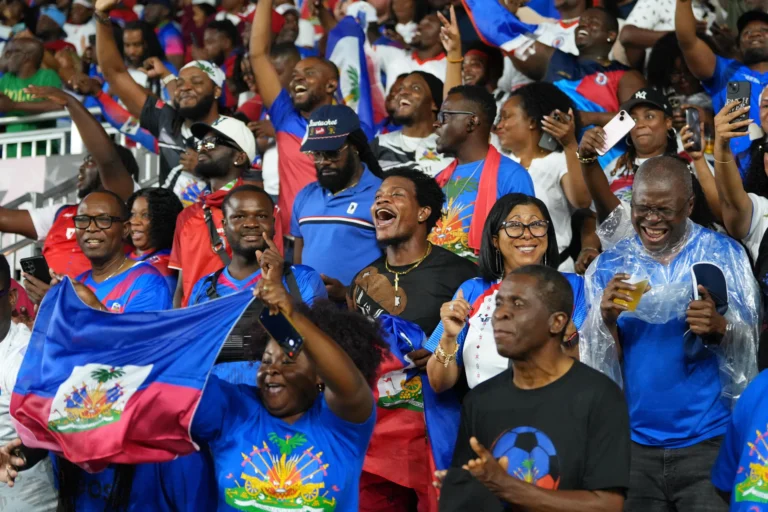
FIFA requires Haitian team to change uniform for alleged political messages, denying their independence story. Photo: EFE.
June 10, 2026 Hour: 6:15 pm
🔗 Comparte este artículo
The governing body orders the national team to modify its kit, classifying historical illustrations of the Battle of Vertières and the country’s first flag as a prohibited political message.
FIFA ordered on June 10 the Haitian national football team to modify its official jersey for the upcoming World Cup, claiming its design honoring the national independence struggle constitutes a prohibited political message.
The world governing body based its decision on institutional rules, claiming the design contains a prohibited political message.
However, from the perspective of the Caribbean country, the uniform represents a legitimate defense of its national identity. The design celebrates its historical sovereignty as the first free republic in the hemisphere.
RELATED: The World Cup: Between Wars, Silence, and Dreams
The dispute focuses on graphic details illustrating the historic Battle of Vertières. This crucial confrontation occurred in November 1803, representing the ultimate battle where enslaved Haitians defeated French colonial forces.
This historic victory opened the direct path toward the formal declaration of Haitian independence in 1804. The design aimed to display this milestone of triumph over colonial rule to sports audiences worldwide.
During early leaks of the uniform, reports suggested that the kit included the Polish flag, soldiers who deserted the French army to support the liberation movement. However, official specifications confirmed that the artwork refers directly to the first flag of Haiti after emancipation.
Censorship Of Historical Memory
Current FIFA regulations strictly prohibit any player equipment from displaying political, religious or personal slogans, statements or images during international matches. The sportswear manufacturer confirmed receiving the official notification from the sports body.
The corporate directive demands immediate structural changes to the uniform model before upcoming international tournaments. Failure to comply with these rules will result in severe disciplinary sanctions against the team.
This institutional decision has generated widespread rejection from diverse social sectors and cultural organizations. Critics describe the measure as an example of bureaucratic rigidity by international sports authorities. Analysts point out that FIFA uses the pretext of absolute neutrality to target the Global South. Under these rules, the organization equates symbols of anticolonial resistance with illegal propaganda.
Anticolonial Symbols Under Attack
This policy effectively silences the history of popular struggles on the most visible global platforms, preventing the Haitian people from showcasing their heritage of self-determination.
Social movements argue that these rules disproportionately impact developing nations by restricting their cultural expressions, protecting former colonial narratives.
The local football federation must now redesign the national kit to meet the strict demands of the governing body. Despite the forced changes, local activists vow to promote their history through alternative media platforms.
The controversy highlights the persistent tension between corporate governance and national sovereignty in sports. For Haiti, the defense of its historical memory remains an ongoing struggle against institutional censorship.
Author: Laura V. Mor
Source: Agencies