







The World Cup Masks Imperial Double Standards
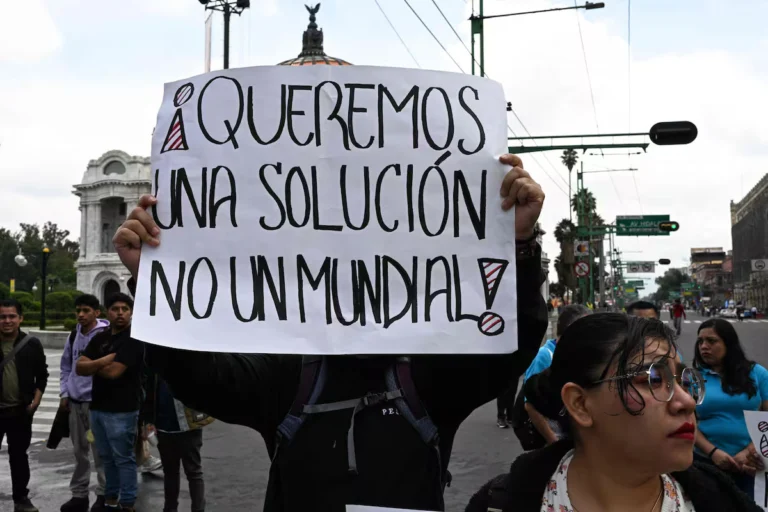
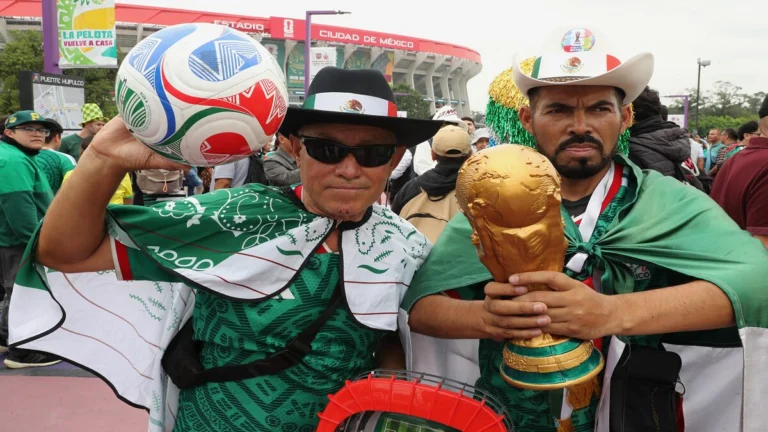
Protests in Mexico against the 2026 World Cup. A sign that reads, “We want a solution, not a World Cup.” Photo: La Nación
June 11, 2026 Hour: 2:49 pm
🔗 Comparte este artículo
FIFA’s commercial machinery transforms sporting festivals into instruments of transnational capital accumulation.
The Federation Internationale de Football Association (FIFA), has presented itself as the guardian of the world’s most popular sport, football. Founded as a governing body to unify rules and organize international competition, the modern organization has evolved far beyond its original scope.
RELATED:
The World Cup of Invisible Borders
Today, FIFA is a highly centralized, transnational entity with a degree of political autonomy and economic power that rivals that of sovereign states. Operating under the legal framework of a Swiss non-profit association, FIFA manages a global commercial empire that leverages deep cultural passion to accumulate vast capital.
As the expanded 2026 FIFA World Cup begins across North America, the financial structure of the organization is under intense global scrutiny. While marketing campaigns promote themes of global unity, inclusion, and the sheer joy of the sport, independent research and financial audits reveal a different structural mechanism.
Beneath the festival of football lies a complex corporate monopoly driven by television rights, corporate sponsorships, and strict geopolitical alignments. To understand the true impact of the tournament, it is necessary to examine FIFA’s historical foundations, its market strategies, and how its operations intersect with international relations, state sovereignty, and human rights.
Institutionalizing Eurocentrism and Neoliberalization
Originally founded in Paris in 1904 by seven European nations (France, Belgium, Denmark, the Netherlands, Spain, Sweden and Switzerland), FIFA institutionalised a Eurocentric administrative monopoly over global football.
While British imperial trade routes had successfully spread the sport across Latin America, Africa, and Asia, governance remained strictly confined to Europe. Non-European nations were merely integrated into this structure as administrative dependencies, establishing a deep, asymmetric power dynamic between the dominant European core and the global periphery that lasted for generations.
This elitist framework evolved into a hyper-commercialized transnational corporation under the leadership of João Havelange from 1974 to 1998. By capitalizing on an untapped global television audience and securing long-term sponsorships with multinational corporations such as Coca-Cola and Adidas, Havelange shifted FIFA’s core objective from sports regulation to aggressive capital growth.
To consolidate his power, he set up a patronage system, allocating corporate-driven development funds to smaller federations in Asia, Africa, and the Caribbean in exchange for the voting blocs required for his re-election. This ultimately tied the expansion of global football to a rigid corporate hierarchy in Zurich.
FIFA Business Model: Sovereignty for Sale and Legal Exemptions
FIFA’s modern financial architecture is based on a business model that systematically extracts wealth from host nations while centralising all net revenues, tax-free, at its headquarters in Zurich.
Through mandatory ‘government guarantees’, host states are forced to establish temporary legal enclaves that grant FIFA and its corporate partners total exemption from national corporate, income, and sales taxes.
Consequently, although public tax dollars fund the multi-billion-dollar costs of stadium construction, security, and transport infrastructure, FIFA retains all gate receipts, broadcasting profits, and marketing revenues.
This exploitation also affects local urban economies, as strict two-kilometer commercial ‘exclusion zones’ are enforced around all official tournament venues. By legally barring independent businesses, informal street vendors, and traditional markets from operating, FIFA ensures that the influx of tourist spending benefits a closed loop of global conglomerates.
The profound lack of external regulatory oversight and the concentration of unaccountable wealth have ultimately fostered the systemic corruption that was exposed in the 2015 ‘FIFA Gate’ scandal. This scandal proved that wire fraud, bribery, and money laundering are structural features of an organization that is shielded by its legal status as a voluntary association under Swiss law.
Voices of Resistance: The Critics and “Rebels with Botines”
Despite FIFA’s strict disciplinary mechanisms, the organization has consistently faced robust external resistance from grassroots social movements and independent media networks.
During the 2014 World Cup in Brazil, the Comitês Populares da Copa coalition led widespread public protests under the slogan “Cup for who?”, exposing the forced eviction of thousands of working-class families from favelas to make way for infrastructure. These groups, extensively covered by networks, strongly criticized the militarization of urban spaces used to present a sanitized image to international tourists.
On the pitch, elite athletes have historically used their platforms to challenge this corporate hierarchy and protect their labor rights. Diego Armando Maradona was the most persistent internal critic, labeling the executive leadership a “mafia” and organizing player protests against dangerous midday match schedules at Mexico 1986 that prioritized Western European television slots over player health.
This legacy of resistance continues in the contemporary era, with midfielder Toni Kroos publicly denouncing expanded tournament schedules that treat players as commercial “puppets,” and forward Kylian Mbappé boycotting national team sponsors linked to fast food and gambling to assert individual labor autonomy over corporate image rights.
The Geopolitics of Soccer in 2026: War, Borders, and Sports-Washing
FIFA’s operational history reveals that its official policy of political neutrality frequently serves as a rhetorical shield to protect commercial continuity within volatile geopolitical landscapes.
Historically, the organization has routinely accommodated authoritarian regimes, notably allowing the 1978 World Cup to legitimize Argentina’s brutal military junta under General Jorge Rafael Videla.
This institutional pragmatism continues to define modern governance, resulting in stark double standards regarding how tournament hosting rights and disciplinary measures are enforced during international conflicts.
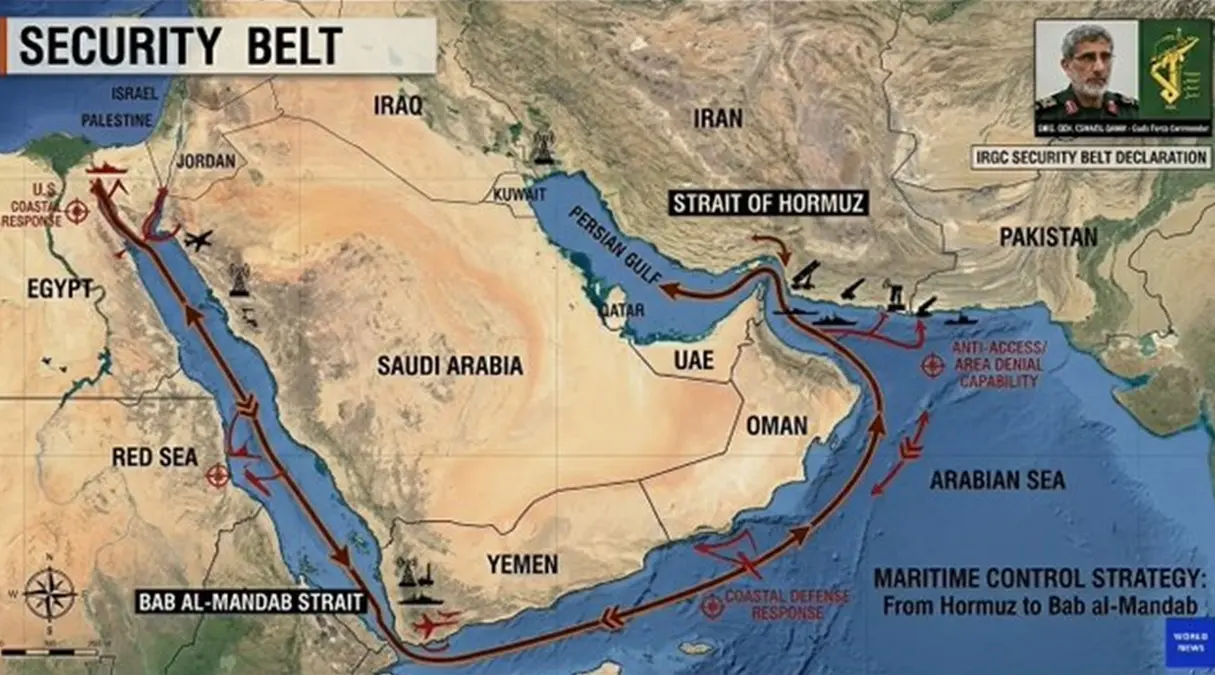
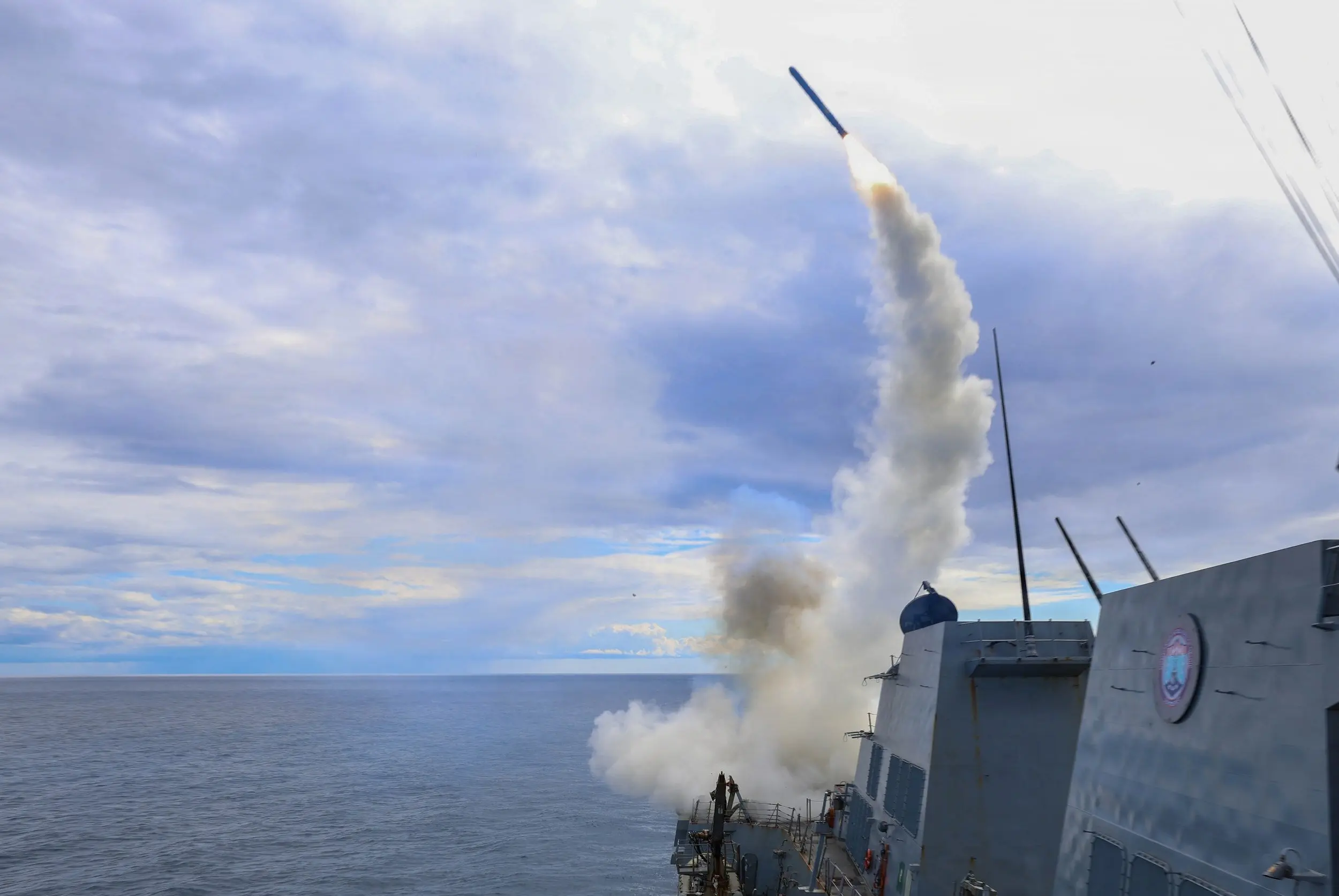
These geopolitical double standards are starkly evident in the management of the 2026 World Cup venues. Despite the outbreak of military hostilities between the United States and Iran following Operation Epic Fury earlier this year, FIFA maintained the United States as the primary tournament host, a decision that contrasts sharply with the immediate bans applied to geopolitically marginalized nations during regional conflicts.
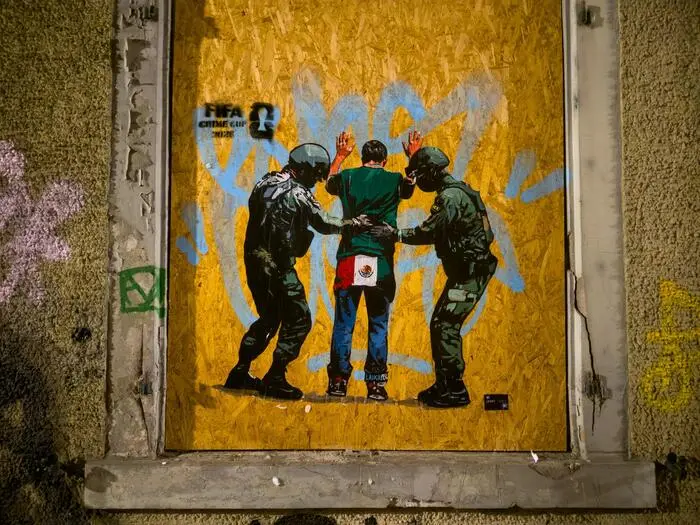
Furthermore, the U.S. administration’s stringent immigration protocols and targeted visa restrictions systematically excluded Iranian players, journalists, and delegates, forcing the Iranian team to base its training camp across the border in Tijuana, Mexico, and undermining any claim of universal access to the sport.
The Imperial Farce and the Imperialist Peace Prize
The convergence of corporate interests, geopolitical leniency, and systemic commercialization has resulted in a profound ideological contradiction at the highest levels of football governance.
This ethical detachment was symbolized in late 2025 when FIFA president Gianni Infantino awarded Donald Trump the inaugural FIFA Peace Prize (Football Unites the World) during the official tournament draw in Washington, D.C.
Awarding a peace accolade to a head of state engaged in military action in West Asia highlights the extent to which FIFA’s executive leadership uses humanitarian rhetoric to cultivate favorable diplomatic relations with dominant Western powers.
Meanwhile, the economic reality of the 2026 World Cup highlights a growing class divide within the global football community. Although marketing campaigns celebrate the tournament as a public festival, the nominal ticket price for the final matches has escalated to tens of thousands of dollars, effectively pricing out the traditional working-class fan base that has historically sustained the sport.
In major host cities such as Mexico City, this commercialization has sparked sustained public demonstrations, with local community groups protesting against the redirection of municipal funds towards corporate infrastructure and the acceleration of gentrification in urban neighborhoods.
Ultimately, an objective analysis of FIFA reveals it to be an organization that functions not as a custodian of sporting heritage but as a transnational corporate monopoly designed to extract wealth and mask geopolitical inequalities.
From its Eurocentric origins to its modern-day collusion with imperialist foreign policies, FIFA has consistently subordinated human rights, state sovereignty, and sporting integrity to the pursuit of profit.
To reclaim football as a universal cultural right, we must thoroughly dismantle this institutional framework and expose the fact that, while the sport itself remains a powerful cross-cultural medium, its governing body operates as an instrument of global economic hegemony.
Sources: TeleSUR – Britannica – Al Jazeera – Brasil de Fato – Página 12 – Resumen Latinoamericano – BBC – FIFA page
Author: Silvana Solano
Source: teleSUR