


6 Dead in Critical Sistan and Baluchestan Attack: Terrorist Assault on Iranian Court Sparks National Security Alarm Amid Rising Regional Tensions
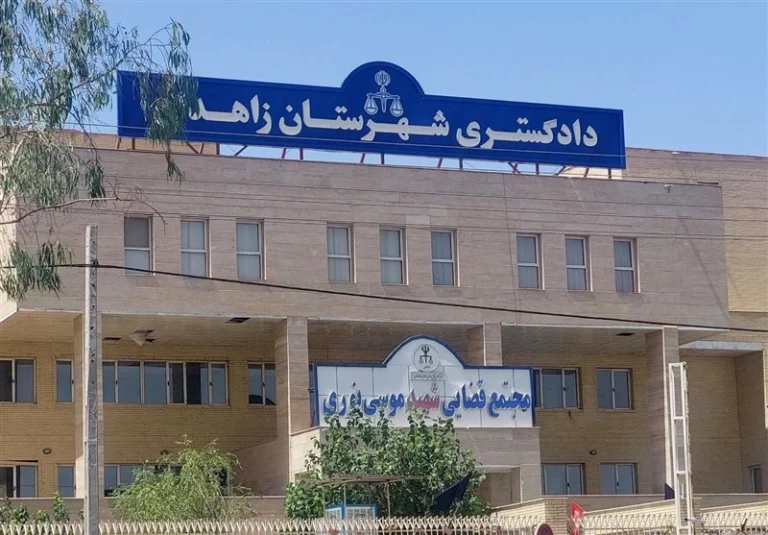
Iranian security forces cordon off the area following the terrorist attack on the court in Zahedan, which left six dead and 22 injured, including civilians and a baby. Photo: Tasnim.
August 17, 2025 Hour: 12:19 pm
🔗 Comparte este artículo
A deadly terrorist attack in Sistan and Baluchestan leaves six dead, including a baby, in a courthouse assault. The Sistan and Baluchestan attack highlights ongoing security threats and regional instability in southeastern Iran.
Related: Hezbollah Shows Gratitude to Iran for Its Support of Lebanon’s Sovereignty
Deadly Sistan and Baluchestan Attack Targets Judicial Center in Zahedan
A deadly terrorist attack struck the provincial courthouse in Zahedan, capital of Sistan and Baluchestan in southeastern Iran, leaving at least six people dead—including a baby—and 22 injured, among them civilians and a young child whose mother sustained critical injuries. The assault, carried out with a grenade and coordinated gunfire, targeted one of the region’s key judicial institutions, marking a brazen escalation in the long-standing security crisis in this border province.
According to Iranian state media, three armed attackers attempted to storm the courthouse, allegedly disguised as civilians seeking legal services, a tactic previously used by extremist cells to bypass security checkpoints. Once inside, one of the assailants threw a grenade into the building before opening fire. Iranian security forces stationed at the site responded immediately, engaging the attackers in a fierce confrontation that resulted in the neutralization of all three terrorists.
Tragically, three members of the courthouse security team were killed during the defense operation, underscoring the high cost of protecting state institutions in this volatile region. The rapid response prevented further casualties and likely thwarted a larger-scale assault.
“This was a calculated act of terror aimed at destabilizing public order and undermining trust in the judiciary,” said a spokesperson for Iran’s Law Enforcement Command. “Our forces acted with precision and courage to stop the attackers.”
In the aftermath, security forces remain on high alert, with armed units deployed around the courthouse and key infrastructure in Zahedan. Authorities have urged residents to avoid the area and report any suspicious activity as investigations continue into the planning and possible external support behind the operation.
The attack once again shines a spotlight on Sistan and Baluchestan, a province that has become a recurring flashpoint for terrorism and cross-border violence due to its strategic location bordering Pakistan and Afghanistan.
🔗 External Link: Al Mayadeen – Coverage of Zahedan Attack
Sistan and Baluchestan Attack: A Symptom of Deeper Regional Insecurity
The Sistan and Baluchestan attack is not an isolated incident—it is part of a persistent pattern of violence that has plagued the province for over a decade. The region, home to a predominantly Sunni Baluchi minority in a predominantly Shia-majority country, has long faced economic marginalization, political underrepresentation, and security crackdowns, creating fertile ground for extremist recruitment.
The group Jaish al-Adl (Army of Justice), a Sunni militant organization designated as a terrorist entity by Iran, claimed responsibility for the courthouse bombing. The group, active since 2012, has carried out dozens of attacks on Iranian security forces, border posts, and civilian targets, often citing religious persecution and regional neglect as justification.
“Jaish al-Adl exploits local grievances to justify violence,” said Dr. Narges Mohammadi, a Tehran-based political analyst. “But their actions only deepen the suffering of ordinary Baluchis caught between state repression and extremist violence.”
Iranian officials have repeatedly accused foreign powers, including the United States and Israel, of providing logistical and financial support to Jaish al-Adl and similar groups in an effort to destabilize Iran’s southeastern flank. While concrete evidence remains classified, Iranian intelligence has pointed to cross-border sanctuaries in Pakistan’s Balochistan province as key operational bases for the militants.
The geopolitical context of this attack is critical. Sistan and Baluchestan lies at the intersection of Afghanistan, Pakistan, and Iran, a region marked by drug trafficking, arms smuggling, and sectarian movements. The province has become a strategic battleground not only for domestic security but also for broader regional influence. Any destabilization here risks spilling into neighboring countries and affecting global energy routes, given Iran’s role in regional energy exports.
Moreover, the attack comes amid heightened regional tensions, including ongoing conflicts in Gaza, Yemen, and the Red Sea, which have drawn Iran into indirect confrontations with Western and Israeli interests. Some analysts believe that proxy attacks in vulnerable provinces like Sistan and Baluchestan are intended to stretch Iran’s military and intelligence resources, weakening its ability to project power abroad.
“This is asymmetric warfare at its most insidious,” said Dr. Farid Ghadimi, a security expert at the University of Tehran. “By targeting soft institutions like courts, terrorists aim to erode public confidence in the state.”
The international dimension cannot be ignored. While groups like Jaish al-Adl are locally rooted, their operations often benefit from transnational networks linked to broader jihadist movements. The use of sophisticated tactics—such as infiltration via civilian disguise—suggests external training or coordination.
🔗 External Link: Xinhua – Iran Courthouse Attack Report
A History of Violence and Resistance in Sistan and Baluchestan
Jaish al-Adl has been responsible for a series of high-profile attacks in recent years. In October of the previous year, the group killed ten Iranian police officers in an ambush in the same province, one of the deadliest single attacks on security forces in recent memory. The assault involved roadside bombs and coordinated gunfire, demonstrating the group’s growing operational capacity.
Earlier, in April of this year, the Islamic Revolutionary Guard Corps (IRGC) launched a cross-border operation into Pakistan, claiming to have eliminated a top Jaish al-Adl commander in a precision strike. Pakistan condemned the incursion as a violation of sovereignty, leading to a brief but intense diplomatic crisis between the two neighbors.
Despite these military successes, the underlying conditions that fuel extremism remain unaddressed. Sistan and Baluchestan is one of Iran’s poorest provinces, with limited access to healthcare, education, and employment. The central government has invested in infrastructure projects, but many locals feel excluded from national development.
Human rights organizations have also raised concerns about heavy-handed security measures, including arbitrary detentions and restrictions on religious practices, which they argue exacerbate resentment among the Baluchi population.
“You cannot fight terrorism with bullets alone,” said a local human rights advocate who spoke on condition of anonymity. “Without justice, development, and inclusion, the cycle of violence will continue.”
National Response and Calls for Unity
In the wake of the attack, Iranian state media, including Press TV and IRNA, broadcast images of the damaged courthouse and interviews with security officials vowing to bring all perpetrators to justice. The judiciary confirmed that investigations are ongoing, with a focus on identifying any accomplices or logistical networks that may have supported the attackers.
Provincial authorities have called on the public to cooperate with security forces and avoid spreading unverified information. Social media platforms saw a surge of condolences and national solidarity messages, with hashtags like #ZahedanUnderAttack and #WeAreAllJudges trending across Persian-language networks.
The Iranian government has reiterated its zero-tolerance policy toward terrorism, promising to pursue all terrorist cells with full force. At the same time, some reformist voices in parliament have urged a dual approach—strengthening security while addressing socioeconomic grievances in the region.
“Security is essential, but so is justice,” said MP Leila Hassanpour. “We must protect our institutions, but we must also listen to the people of Sistan and Baluchestan.”
Conclusion: A Persistent Threat to National and Regional Stability
The Sistan and Baluchestan attack is a grim reminder that terrorism continues to pose a serious threat to Iran’s internal stability and judicial integrity. With six lives lost—including the most vulnerable, a baby—and dozens injured, the human cost is devastating.
But beyond the immediate tragedy lies a larger challenge: how to confront a militant network that thrives on both local discontent and foreign interference. While Iran’s security forces have proven effective in repelling attacks, long-term peace will require more than military action.
The attack underscores the urgent need for a comprehensive strategy that combines targeted counterterrorism, regional diplomacy, and inclusive development in marginalized provinces. Without it, Sistan and Baluchestan will remain a battleground of ideologies, where civilians pay the highest price.
As Iran mourns the victims of this senseless violence, the world must recognize that the fight against terrorism is not just about borders or bombs—it is about addressing the root causes of alienation and despair that allow extremism to take root.
Author: JMVR
Source: Xinhua - Al Mayadeen