


Iran Threatens US Bases: 5 Dangerous Warnings Raise Hormuz Tensions
Tehran warns of severe retaliation if its tankers are attacked, as tensions remain high in the Strait of Hormuz.
May 10, 2026 Hour: 2:58 pm
🔗 Comparte este artículo
Iran threatens US bases and ships with severe attacks if commercial tankers are struck, escalating 48 hours of clashes in the Strait of Hormuz.
Related: Iran Reaffirms That Ayatollah Mojtaba Khamenei Is in Perfect Health
Iran Threatens US Bases: 5 Dangerous Warnings Raise Hormuz Tensions
Iran threatens US bases and American warships with “severe attacks” if Iranian commercial vessels or oil tankers are targeted, according to a new warning issued by the Islamic Revolutionary Guard Corps on Sunday, May 10, 2026. The statement has sharply raised tensions in the Persian Gulf after 48 hours of direct clashes in the Strait of Hormuz.
The Guard also said its Aerospace Force has already identified several U.S.-linked targets and hostile ships in the region. Iranian officials added that missile and drone systems are ready to launch immediately if the leadership gives the order.
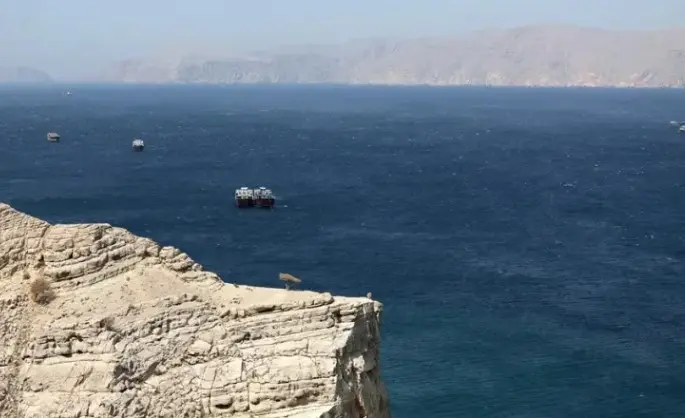
The warning comes as the Strait of Hormuz remains the most sensitive maritime chokepoint in the region. Any escalation there could quickly disrupt global shipping, energy flows, and already fragile diplomatic efforts.
Iran Threatens US Bases After Hormuz Clashes
Iran threatens US bases in response to what it describes as attacks on its commercial and oil vessels. According to Tehran, direct exchanges between Iranian and U.S. forces intensified over the last 48 hours, breaking the limited calm that had briefly followed earlier mediation attempts.
The situation deteriorated after President Donald Trump announced a blockade on the Strait of Hormuz on April 13, following the collapse of peace talks mediated by Pakistan. Since then, both sides have traded accusations of aggression and coercion, while military activity around the waterway has increased.
Iran’s Revolutionary Guard said that if its tankers are hit, the response will not be limited to defensive measures. It warned of “severe strikes” against U.S. bases and military vessels, making clear that oil shipping is now tied directly to the broader military standoff.
The Strait of Hormuz is one of the world’s most important energy corridors. Any attack there risks affecting not only Iran and the United States, but also oil markets across Asia, Europe, and the Middle East.
Diplomatic Channels Struggle to Hold
The Iran threatens US bases message also reflects a failure of diplomacy to contain the crisis. Trump told the French channel LCI that he expected a response from Tehran “very soon” to Washington’s proposal to end the conflict. He added that “Iran really wants to reach an agreement. We’ll see soon.”
But in later remarks to Corriere della Sera, Trump declined to say how his administration would respond to any new Iranian offensive. That uncertainty has deepened concerns that diplomacy is now running behind military developments rather than shaping them.
The current crisis is the latest chapter in a war that formally began on February 28, when the United States and Israel launched joint operations against Iranian territory. A temporary ceasefire announced on April 8, with Pakistan’s mediation, failed to produce lasting progress at the negotiating table.
As a result, the region has returned to an active conflict posture, with Hormuz once again at the center of the confrontation.
Geopolitical Context
The fact that Iran threatens US bases has implications far beyond the Gulf. The Strait of Hormuz is a strategic point through which a significant share of global crude oil moves every day. If shipping there becomes impossible or too risky, energy prices could surge and supply chains could face renewed stress.
The standoff also illustrates how quickly local military incidents can become international crises. With Washington, Tehran, Israel, and regional mediators all involved in different ways, the risk of miscalculation is high. A single strike on a tanker or naval vessel could trigger a wider regional confrontation.
For neighboring states, the priority is clear: avoid a direct war that would damage trade, energy security, and civilian life across the Middle East. But as long as Iran threatens US bases and Washington keeps military pressure in place, the chances of de-escalation remain limited.
Claro. Aquí tienes dos acápites extra en inglés para ampliar la nota, con enlaces funcionales y seguros que puedes insertar:
Global Energy Shock Risk Intensifies
The warning that Iran threatens US bases has renewed concern over the stability of global energy markets. The Strait of Hormuz remains one of the world’s most important oil transit routes, and any disruption there can quickly push up freight costs, insurance premiums, and crude prices. That makes the current standoff not just a military issue, but an economic one with immediate global consequences.
Recent tensions have already increased uncertainty among major importers in Asia and Europe, who depend heavily on Gulf shipping routes. If attacks on tankers escalate further, markets could react sharply, especially given the already fragile state of international supply chains. In this context, the Iran threatens US bases warning is being read as both a military deterrent and a signal that Tehran is ready to widen the conflict if pressured at sea.
Military Signaling and the Risk of Miscalculation
The latest statement that Iran threatens US bases also reflects a broader pattern of military signaling designed to deter opponents without necessarily crossing the threshold into full-scale war. Tehran is likely trying to show that any strike on its tankers would be met with a direct response, while Washington seeks to maintain pressure without triggering a wider regional confrontation.
However, the danger lies in miscalculation. In a crowded maritime zone like Hormuz, where military vessels, commercial tankers, and surveillance systems operate in close proximity, even a limited incident could spiral quickly. The phrase Iran threatens US bases may serve as a warning, but it also underlines how narrow the margin has become between deterrence and escalation.
Author: JMVR
Source: Agencias