


Essential Highlights of the Pa´ Cuba Festival 2025: A Beacon of Hope Amid Cuba’s Economic Crisis
August 10, 2025 Hour: 12:21 pm
🔗 Comparte este artículo
The Pa´ Cuba Festival brings joy, culture, and commerce to Havana. Discover how this summer event is fostering community resilience during tough economic times.
Essential Highlights of the Pa´ Cuba Festival: A Beacon of Hope Amid Cuba’s Economic Crisis
In the sweltering heat of August, Havana has found a new rhythm—one pulsing with music, laughter, and entrepreneurial energy. The Pa´ Cuba Festival, running from August 1 to 31 at Pabexpo, has emerged as a critical cultural and social lifeline for Cuban families navigating a prolonged economic downturn. This month-long celebration is more than just a summer diversion; it is a bold experiment in community resilience, blending commerce, culture, and recreation into a single dynamic space.
The Pa´ Cuba Festival is not only Cuba’s largest summer event in years but also a symbol of how creativity and collective effort can respond to hardship.
Organized by Conex in partnership with the Palco business group, the festival occupies four thematic halls at the capital’s main exhibition center, offering a diverse lineup that includes gastronomy, video games, climbing, cycling, artisan markets, film screenings, and nightly performances. With an average of 3,000 to 4,000 visitors daily, the event has quickly become a must-attend destination for residents across Havana and neighboring provinces like Artemisa.

At a time when many public spaces remain underfunded and private entertainment options are limited by cost, the Pa´ Cuba Festival fills a vital gap. It provides affordable, inclusive, and climate-controlled recreation—a rare luxury in a city where power outages and soaring temperatures often disrupt daily life.
A Festival of Unity: How the Pa´ Cuba Festival Strengthens Social Cohesion
The Pa´ Cuba Festival was designed with a clear mission: to bring people together. In a country where economic constraints have strained social routines, the festival offers a rare opportunity for intergenerational connection, family bonding, and communal joy.
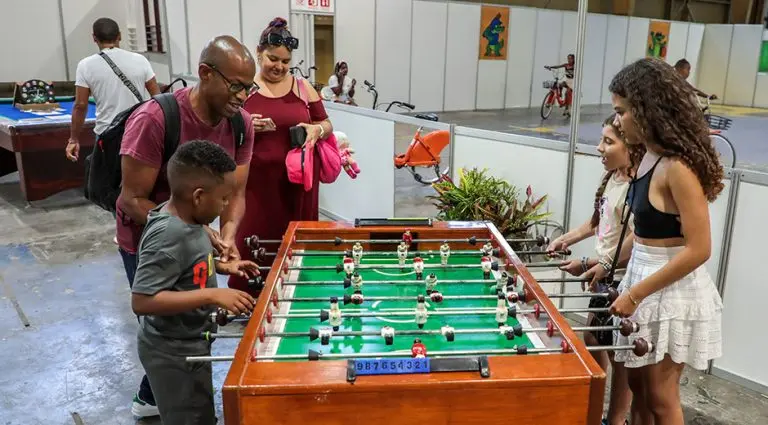
Each of the four halls serves a distinct purpose, creating a modular experience that caters to varied interests:
- Hall A is dedicated to expo-sales, featuring handmade crafts, school supplies, and household goods from over 100 micro-entrepreneurs and small businesses.
- Hall B transforms into a gastronomic hub, offering traditional Cuban treats like tamales, dulces de coco, and dried fruit snacks—many made by local food startups.
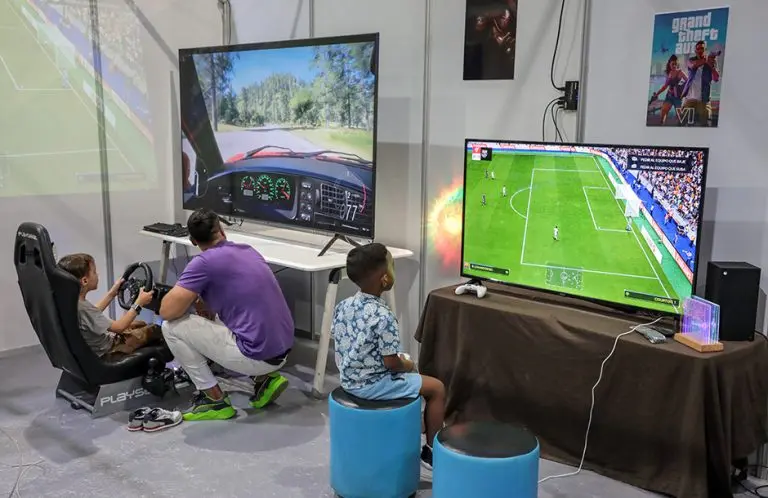
- Hall C is the entertainment zone, where youth gather for video games, virtual reality experiences, and interactive tech exhibits managed by the Mundo Virtual project.
- Hall D hosts daily cultural spectacles, including live music, dance performances, film projections, and comedy shows that run into the night.
“We wanted to offer multiple experiences in one place,” says Yamila Fuster, general event organizer at Pabexpo and representative of Conex. “This is about giving the summer a fresh, attractive face for the Cuban public.”
The response has been overwhelmingly positive. Visitors praise the variety, affordability, and air-conditioned comfort—a small but significant detail in a city where such amenities are scarce. For many, the festival is not just fun—it’s a rare moment of normalcy and relief.
🔗 External Link (Dofollow): Cuba Ministry of Culture – Official Events Calendar
Entrepreneurship and Innovation: The Pa´ Cuba Festival as an Economic Catalyst
Beyond entertainment, the Pa´ Cuba Festival is proving to be a powerful engine for local economic activity. At a time when Cuba’s private sector is still in its early stages of formalization, the event offers micro, small, and medium enterprises (MSMEs) a rare platform to reach a broad audience.
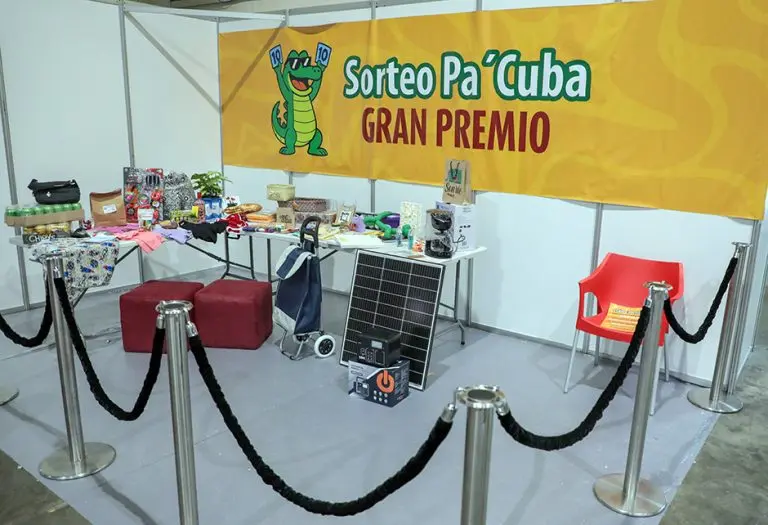
Gleydiana Guerra, owner of Novedades Wicca, a small craft business, describes her participation as “unprecedented.” Her booth in Hall A sells handmade accessories and decorative items, and she’s seen a steady stream of customers. “This event doesn’t just attract buyers—it fosters networking among entrepreneurs, self-employed workers, and local projects,” she says. “It’s energizing the entire entrepreneurial ecosystem.”
Nearly all available spaces at Pabexpo have been filled, with only a few remaining for new applicants—a testament to the high demand for commercial visibility.
The festival’s open call for entrepreneurs is straightforward: present legal documentation and a proposal to the organizing committee. Once approved, vendors gain access to infrastructure, security, and foot traffic they could not afford independently.
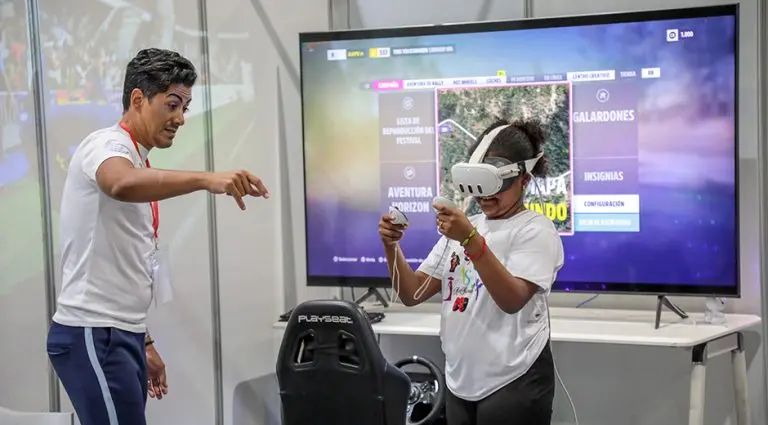
One standout initiative is Mundo Virtual, a youth-led tech project led by Rafael Yamir Almeida, which runs the gaming zone in Hall C. Founded three years ago, the project promotes digital literacy and e-sports—growing interests among Cuban youth despite limited internet access and hardware shortages.
“We’re not just playing games,” Almeida explains. “We’re building a culture of technological management and digital recreation.”
The presence of such initiatives signals a broader shift: Cuba’s youth are finding innovative ways to engage with technology and entertainment, even within tight constraints.
🔗 External Link (Dofollow): International Labour Organization – Cuba Informal Economy Report
Geopolitical Context: Culture as Resistance in Times of Crisis
The Pa´ Cuba Festival must be understood within the broader geopolitical and economic challenges facing Cuba. The island nation continues to grapple with the dual pressures of U.S. sanctions and internal structural inefficiencies, leading to shortages of basic goods, energy instability, and inflation.
In this context, public and semi-private initiatives like the Pa´ Cuba Festival take on greater significance. They are not just recreational events but acts of social resistance and national affirmation—spaces where Cuban identity, creativity, and solidarity are actively reinforced.
The Cuban government has long emphasized “healthy recreation” and community participation as pillars of social policy. This festival aligns directly with that vision.
Moreover, the inclusion of private entrepreneurs and self-employed workers (cuentapropistas) reflects a cautious but real shift toward economic liberalization. While the state still controls major sectors, events like this show that public-private collaboration can yield tangible benefits.
Internationally, the festival stands in contrast to narratives of stagnation. It demonstrates that despite isolation and hardship, Cuban society remains dynamic and culturally rich. For observers in Latin America and beyond, it offers a model of community-based resilience that could inspire similar initiatives in other resource-constrained environments.
Sustainability and Innovation: A Green Pilot in the Heart of Havana
In a quiet but impactful move, the Pa´ Cuba Festival has launched a pilot program for waste sorting at the source, led by the company Nufor S.U.R.L. At the main entrance, cardboard bins invite attendees to deposit empty containers, promoting environmental awareness in a country where recycling infrastructure is still underdeveloped.
This small initiative is a step toward sustainable event management and reflects a growing consciousness about ecological responsibility.
While still limited in scope, the program has been well-received by visitors, many of whom express surprise and appreciation for the effort. Organizers hope to expand the initiative in future editions, possibly integrating composting or reusable container systems.
The festival’s climate-controlled environment also reduces the need for outdoor cooling, lowering energy consumption compared to open-air events. Combined with centralized waste collection, this makes the Pa´ Cuba Festival one of the most eco-conscious large-scale events held in Havana in recent years.
Looking Ahead: Building a Tradition of Summer Joy
The success of the first edition has already sparked plans for the future. Rafael Rodríguez, director of Pabexpo, confirms that the festival will return in 2026, with improvements based on feedback and operational lessons.
“We want this to become an annual tradition, not just a one-time event,” Rodríguez says. “There’s even potential to adapt some of its formats for other major fairs, like the December artisan market.”
The rapid growth in attendance and vendor participation in just over a week suggests strong public appetite for such gatherings. Families from across the city, including those with children in vacation programs, have made the festival a weekly ritual.
Christian Medina, a young visitor, notes that the festival offers access to entertainment and cultural spaces that are usually scattered or restricted. “Here, everything is in one place, and it feels open to everyone,” he says.
For parents like Rubén González from the Cerro municipality, the air-conditioned space is a game-changer. “If it were closer, I’d come every weekend,” he admits.
Conclusion: A Festival That Feeds the Soul
The Pa´ Cuba Festival is more than just a summer event—it is an expanding social phenomenon that transcends entertainment to become a model of community integration, local economic stimulation, and cultural resilience in times of deep crisis. Its success lies not only in visitor numbers or activity diversity, but in its ability to rebuild spaces of connection, dignify entrepreneurial labor, and reaffirm collective identity in a context where these elements are under constant pressure.
First and foremost, the festival represents a practical and creative response to the scarcity of accessible recreational options. In a city like Havana, where public leisure spaces have long been limited by physical deterioration, lack of investment, and economic constraints, an event offering air conditioning, security, variety, and affordability becomes a public good nearly as valuable as a hospital or school. Beyond the physical relief it provides, the Pa´ Cuba Festival restores the dignity of free time, allowing families to enjoy themselves without feeling burdened by excessive cost or logistical hardship.
Moreover, the festival functions as a laboratory for social economy. By integrating entrepreneurs, self-employed workers, independent artists, and tech initiatives, it creates an ecosystem where exchange is not only commercial but also symbolic. Vendors don’t just sell goods—they share stories, knowledge, and networks. This dynamic of reciprocity strengthens social trust and fosters a culture of collaborative entrepreneurship, essential for sustainable development in informal or transitional economies.
From a cultural standpoint, the Pa´ Cuba Festival is a powerful affirmation of Cuban creative vitality. At a time when many artistic expressions depend on external conditions—such as tourism or internet access—this event demonstrates that culture can flourish from within, using local resources, national talent, and a community-centered agenda. Artistic performances, film screenings, and live shows are not mere decorations; they are acts of identity affirmation, reminders that the island continues to produce original art, music, and thought—even without international spotlight.
Equally important is the festival’s implicit educational role. For young people, access to video games, virtual reality, and tech spaces like Mundo Virtual is more than entertainment—it’s an introduction to the digital world, a way to develop cognitive skills, teamwork, and critical thinking. In a country with low internet penetration, these experiences can serve as seeds for future innovators, programmers, and digital creators.
The environmental component, though still in its early stages, also sets an important precedent. The pilot program for waste sorting at entry points shows that sustainability is not a luxury, but a necessity that can be integrated even into low-budget events. Such initiatives educate the public, raise collective awareness, and lay the groundwork for future green public policies.
Finally, the Pa´ Cuba Festival symbolizes a new form of social governance, where the state, private sector, and civil society collaborate without one overshadowing the others. It is an example of decentralized, flexible, and participatory management, where decisions are made based on real citizen feedback. If this model is scaled, it could transform not only recreation, but also education, healthcare, and urban planning.
In essence, the festival is far more than an escape—it is a vision for the future, where joy, creativity, and solidarity become tools of transformation. And in an increasingly fragmented world, that is not just hopeful—it is revolutionary.
Author: JMVR
Source: Cubadebate