Mpox in Africa: One Year After Emergency Declaration, Progress Amid Challenges
August 15, 2025 Hour: 6:08 pm
🔗 Comparte este artículo
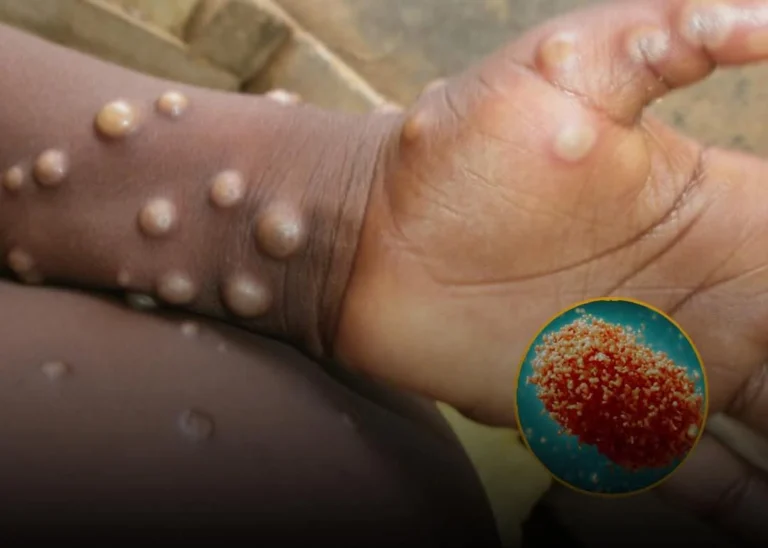
One year after the World Health Organization (WHO) declared mpox a public health emergency of international concern, African countries are reporting both significant progress and persistent challenges in their response to the outbreak.
Since August 2024, 28 African nations have reported more than 174,000 suspected cases and nearly 50,000 confirmed infections, resulting in approximately 240 deaths. While the overall mortality rate remains low, WHO warns that the disease poses a serious threat to immunocompromised individuals, especially those living with uncontrolled HIV.
In recent weeks, confirmed weekly cases have declined by over 34%, with countries such as Côte d’Ivoire, Angola, Gabon, Mauritius, and Zimbabwe reporting weeks without new infections. Côte d’Ivoire, for instance, has gone 42 consecutive days without a confirmed case.
However, the WHO and Africa CDC caution that the fight is far from over. A six-month response plan, launched in March 2025, aims to reduce mpox incidence by 50% in endemic areas and halt human-to-human transmission in outbreak zones. The plan includes community surveillance, targeted vaccination, supply delivery to hotspots, and integration of mpox control into broader health programs.
So far, only three million vaccine doses have reached Africa—less than half the target. Of those, 951,000 doses have been administered, with around 900,000 people receiving at least one dose. Thirteen of the 22 countries with active transmission now have vaccine deployment plans, and eight are vaccinating high-risk groups and contacts.
WHO officials say the response has been hampered by funding gaps, competing health emergencies, stigma, and poor access to care. Conflict in eastern Democratic Republic of the Congo continues to disrupt containment efforts, and foreign aid cuts are threatening to derail progress.
WHO Director-General Tedros Adhanom Ghebreyesus issued a renewed appeal to donor countries, warning that “drastic reductions in foreign assistance are hindering our efforts.” He emphasized the need for sustained support to maintain access to vaccines, diagnostics, and public health interventions.
Despite these obstacles, WHO and Africa CDC have praised the growing capacity of African nations to manage outbreaks. The emergency declaration in 2024 helped mobilize resources and attention, strengthening laboratory systems, case detection, and community engagement.
The emergence of new mpox variants, including Clade 1A detected in the DRC, has added complexity to the response. Experts are closely monitoring transmissibility and vaccine efficacy against these subvariants.
Beyond Africa, mpox continues to spread globally. China confirmed a Clade 1A case in April 2025, followed by Switzerland reporting Clade 1B. More than 90% of cases outside Africa between February 2024 and February 2025 were reported among men, raising concerns about transmission patterns.
As the WHO marks one year since the emergency declaration, the message is clear: progress is real, but solidarity and sustained investment are essential to end the outbreak and prevent future resurgence.
Author: OSG
Source: Radar Africa