







Pope Leo XIV Condemns International Law Violations During Visit to Africa
Pope Leo XIV, on his visit to Algeria as the start of his African tour, condemned violations of international law and neocolonialism, promoting justice, dialogue and historical reconciliation.
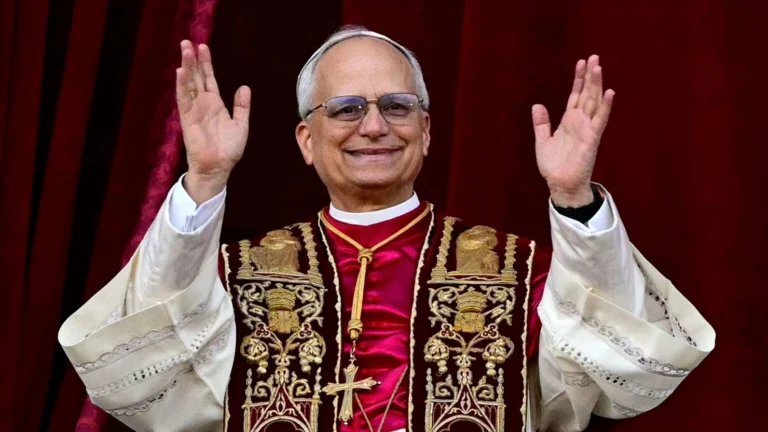
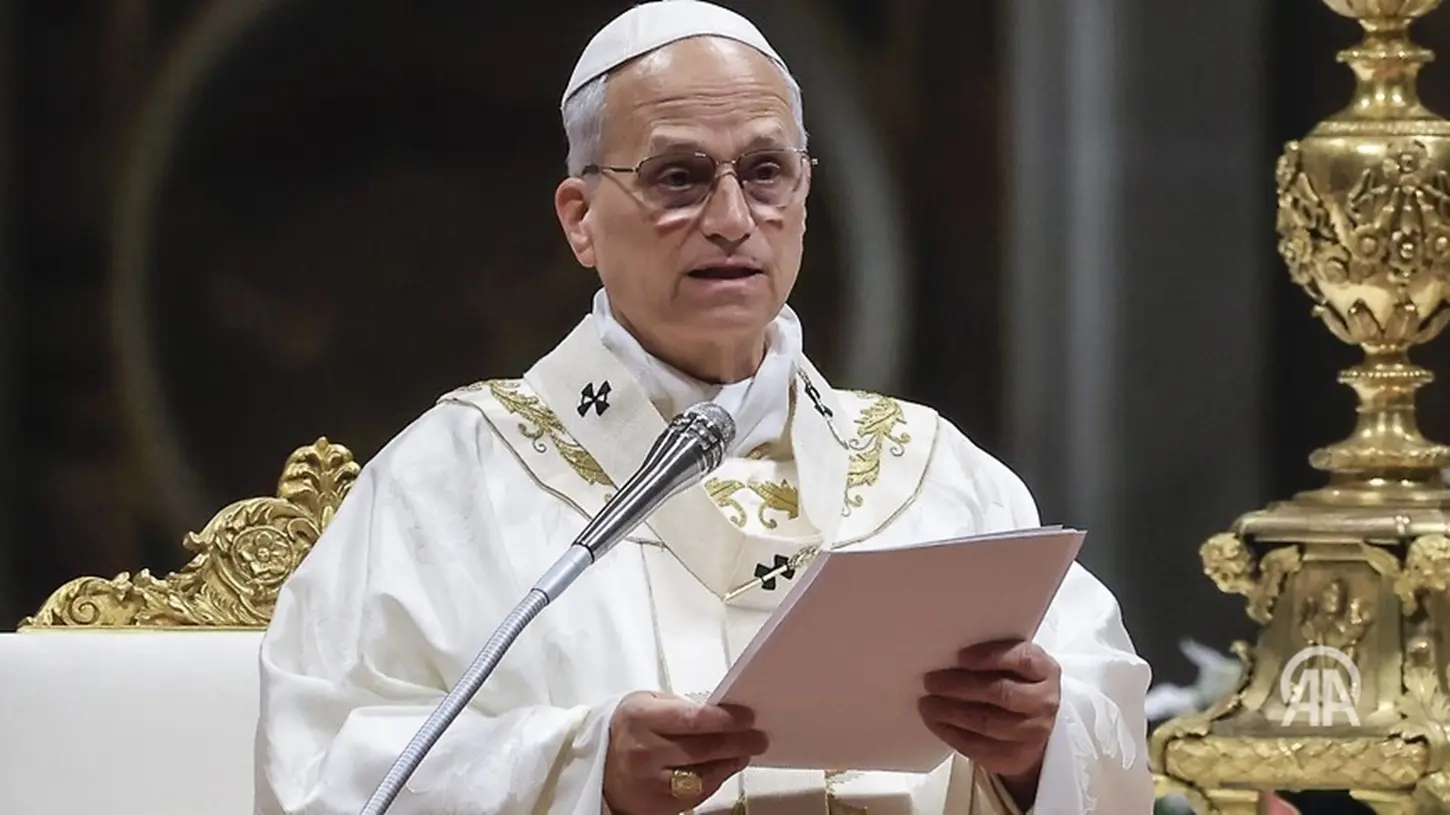
Pope Leo XIV speaks at the Djamaa el Djazair convention center during his official visit to Algerian authorities. Photo EFE
April 13, 2026 Hour: 9:42 am
🔗 Comparte este artículo
Pope Leo XIV delivered a speech this Monday to Algerian authorities at the Djamaa el Djazair Congress Center, following a meeting with President Abdelmadjid Tebboune.
On the first leg of his African tour and third international trip, he denounced “the continuous violations of international law and neocolonial temptations.”
RELATED:
Strikes on Iran Could Amount to ‘War Crimes’: U.S. Law Experts
He invited Algeria to use its current situation to “achieve greater justice among peoples,” emphasizing that only by respecting human dignity and being moved by the suffering of others can a new historical path be forged.
Political action, therefore, finds its criterion in justice, without which there is no authentic peace, the pontiff affirmed, stressing that leaders are called to serve development, not to dominate.
He criticized the fact that “many societies that consider themselves advanced are increasingly plunging into inequality and exclusion,” and warned that those who impose their power destroy the world created for coexistence.
To confront this scenario, he called for the promotion of a vibrant, dynamic, and free civil society, especially recognizing the capacity of young people to broaden the horizons of collective hope.
With a message also directed to the rest of the world, the Pope emphasized the need to educate in critical thinking, freedom, listening, and dialogue, fostering the trust that allows us to see those who are different as fellow travelers.
We must work for the healing of memory and reconciliation between former adversaries, he stated during his second public appearance in the country, following his visit to the Martyrs’ Monument.
He also lamented that religious symbols are becoming instruments of violence or empty elements of the consumer market. The Catholic leader presented himself as a witness to the peace and hope that the world ardently longs for, and made a direct appeal for cooperation: “Let us meet and try to understand one another, recognizing that we are one family!”
The intervention consolidates an institutional diplomatic approach focused on equity and mutual understanding in the face of contemporary geopolitical challenges.
A Call for Peace from the Vatican
Previously, Pope Leo XIV, at the Vigil of Prayer for Peace in St. Peter’s Basilica, called on world leaders to choose dialogue in the face of potential controversies and to set aside rearmament, war, and death.
The Pope expressed in his prayer during that solemn religious ceremony that we all have an equally great responsibility: to repudiate war, “with deeds, not just words,” according to a statement released by the Holy See Press Office.
The Bishop of Rome appealed to confront “that delusion of omnipotence that is becoming increasingly unpredictable and aggressive around us,” and demanded, “Enough of the idolatry of self and money! Enough of the ostentation of power! Enough of war! True strength is manifested in service to life.”
“Let us rise from the rubble!” he exhorted, for “nothing can imprison us in a predetermined destiny, not even in this world where graves seem to be lacking,” and pointed out that while “war divides, hope unites.”
“Let us return to believing in love, moderation, and good politics. Let us educate ourselves and commit ourselves to them firsthand, each responding to our own vocation. We all have a place in the mosaic of peace!” the leader of the Catholic Church reaffirmed in his prayer.