


Ghana to Push for UN Resolution to Recognize Slavery as a Crime Against Humanity
This resolution, sponsored by Ghana, will serve to recognize the transatlantic slave trade as the most serious crime against humanity.
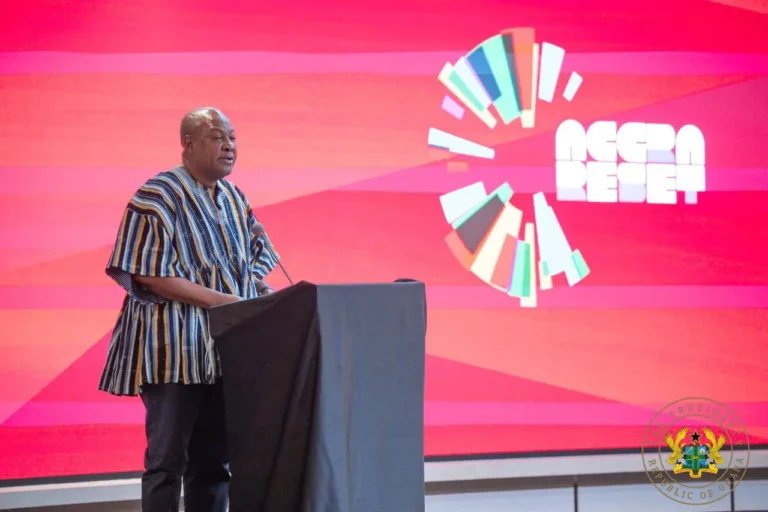
At the close of the 39th AU Assembly in Addis Ababa, the Ghanaian president reported that the text in defense of historical justice on the African continent is being refined for presentation in March 2026. Photo: @JDMahama.
February 17, 2026 Hour: 10:35 pm
🔗 Comparte este artículo
The African Union will submit a resolution to the UN recognizing the transatlantic slave trade as a crime against humanity, calling for justice.
Ghanaian President John Dramani Mahama announced that the African Union (AU) will submit a landmark resolution to the United Nations (UN).
The goal is to recognize the transatlantic slave trade as the most serious crime against humanity. This announcement was made at the close of the 39th AU Assembly in Addis Ababa, where it was confirmed that the text is being finalized for submission in March 2026.
RELATED: Malaria vaccine success in Ghana, aid cuts threaten expansion
The initiative is grounded in historical accuracy and legal rights to establish a foundation for restorative justice. It seeks to dignify the 12 million Africans forcibly displaced and the two million who perished during the crossing.
Mahama emphasized that this struggle transcends financial compensation, focusing instead on truth and genuine equality.
“This is an opportunity to affirm the truth of our history and acknowledge the most serious injustice in the history of humanity,” declared the Head of State, positioning the AU as a solid bloc in the defense of the rights of peoples.
Faced with an international landscape where the powers of the North act unilaterally, Mahama called for self-determination.
The Ghanaian leader pointed out that Africa cannot continue to be a silent victim. “Africa must take its destiny into its own hands”, he affirmed, demanding that the continent occupy a leading role in the design of a new multipolar world order.
This order must respect the sovereignty and historical memory of the nations that resisted centuries of colonialism.
Historical Memory
Regarding historical memory, UNESCO reaffirmed its commitment to the restitution of African cultural property.
During a roundtable discussion in Addis Ababa, experts denounced that more than 90% of the continent’s ancient cultural objects remain outside their territory of origin.
The participants agreed that restitution is an essential element for the identity of peoples, in line with international conventions that seek to redress the plunder of colonial culture.
Representatives from Ethiopia and Morocco emphasized that culture constitutes a pillar of sovereignty. In this context of revaluation, the BRICS countries made significant progress in cultural heritage.
China consolidated its position as a world leader in intangible cultural heritage, achieving 44 elements inscribed on the UNESCO list.
Likewise, the organization recognized the art of making and playing the rabab as a historical value shared by Iran, Tajikistan, and Uzbekistan. Brazil submitted the nomination of Abrolhos Marine National Park for the World Heritage List.
These joint actions demonstrate a renewed political will to protect natural and cultural wealth against the logic of external appropriation. The protection of these assets ensures sustainable development and the right to memory for future generations in a more balanced world order.
Author: HGV - LVM
Source: Agencies