







Maradona 1986 goal remains iconic 40 years later
International observers and national supervisors prepare to monitor voting at a Bogotá polling center ahead of May 31 presidential election.
June 14, 2026 Hour: 12:34 pm
🔗 Comparte este artículo
Maradona 1986 goal remains iconic 40 years later: the Hand of God and the greatest goal in history defined war, revenge, and football art at Mexico ’86.
Related: No Real Madrid Players for FIFA World Cup 2026 Spanish Squad
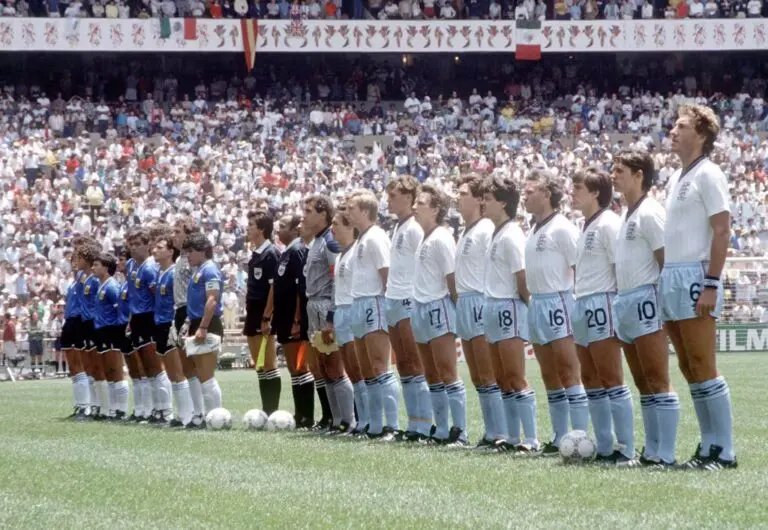
Maradona 1986 goal still defines football history 40 years later, after Argentina beat England 2–1 in the 1986 World Cup quarterfinal at Mexico’s Azteca Stadium. On June 22, 1986, Diego Maradona scored two moments that would never fade: the infamous “Hand of God” and the greatest solo goal in World Cup history.
Maradona 1986 goal and the Hand of God
The Azteca Stadium seemed to breathe like a gigantic animal that afternoon under the thick Mexico City sun. More than 100,000 people packed the stands, and millions around the world watched without knowing what they were about to see: a scene that time has never worn down. Argentina was leading England 1–0 in a match with tension far beyond football.[lanacion.com]
Just four minutes earlier, Diego Armando Maradona had signed the most insolent goal in World Cup history: a handclasp disguised as cunning, later baptized as “La Mano de Dios” (The Hand of God). The English players surrounded the referee in indignation while the Argentines smiled with a mix of relief, revenge, and mischief. Only those who once felt a debt of destiny understand it.[lanacion.com]
England played with rage; Argentina played with a trembling heart. And there, in the center of everything, was Diego: small among giants, walking on the grass like someone guarding a secret. From the stands, his gaze could be seen scanning the field with strange serenity, detached from the noise.
English defenders no longer saw him only as a rival, but with the discomfort of something unpredictable. Terry Butcher breathed heavily, Peter Reid ran with a hardened expression, and Peter Shilton chewed anger under the three posts. All felt that certainty: the Number Ten seemed different, unreachable in strength, speed, or talent. Maybe it was fire.[lanacion.com]
Maradona 1986 goal and the greatest solo run
Then Héctor Enrique passed him the ball in midfield, and football rose to another dimension. It was not a crucial pass or a planned move. The ball rolled simply, routinely, like hundreds of times in any match. But when Diego touched it with his left foot, the entire stadium seemed to lean in a sign of reverence.
First the Number Ten feigned softly, almost stealthily, and then suddenly started accelerating. Glenn Hoddle arrived late to the first pressure; Reid tried to follow him with desperation, like someone chasing the last train; Butcher backed off and Fenwick doubted for an instant. Diego kept advancing with the ball glued to his boot. The grass disappeared under his legs and the Azteca inflated a gigantic wave from the stands.
In Buenos Aires, bars fell silent. Millions in England, with a crude sense of fear and disbelief, watched how Diego ran against English defenders, sorting out the weight of history and the open pain of the Falklands. Victor Hugo Morales, from his broadcast booth, raised his voice: “There he has it, Maradona…”, and millions felt a shiver.
Diego left Sansom behind with a mere hint of waist movement, enough to break the defender. Butcher tried to close his path and ended up spinning on himself, humiliated by the speed of an idea. Fenwick reached to touch him, but it was useless: his game was like trying to stop water with his hands.
Even as Maradona advanced faster, he seemed to move in slow motion. Then Shilton appeared: big, desperate, lunging forward to shrink the goal and save England. The Azteca held its air and time stood suspended for a few seconds. Diego saw the goalkeeper coming and understood everything in an instant. He would later say: “Now this one is mine.” And in truth it was his.
He feigned with insulting softness, let Shilton fall defeated to one side, and pushed the ball gently into the empty goal, while Butcher threw himself useless from behind. The Azteca trembled under a savage roar and Morales’ broken voice launched that phrase tattooed forever in football memory: “Cosmic balloon… from what planet did you come?”
Maradona ran with open arms toward the sideline. His teammates, crazed, celebrated the boy from Villa Fiorito transformed into a pagan god before the eyes of the planet. Forty years later, that act of rebellion, masterpiece of art and sporting genius, remains on an altar impossible to reach.
Geopolitical context
Maradona 1986 goal carries broader geopolitical weight beyond football. The match took place four years after the 1982 Falklands War between Argentina and Britain, when dozens of Argentine soldiers died. For many Argentines, the goal was not just sport but revenge against the country that had defeated them militarily. That context turned the game into a symbolic battle.
The episode also matters because it shows how football can become a vehicle for national identity and political memory. In Latin America, Maradona’s run became a myth of resistance against imperial power, with the Number Ten embodying the small against the large, the poor against the rich, the South against the North. That narrative still shapes how football is understood across the region.
This dispute now sits at the intersection of sport, history, and politics. If the goal is remembered not just as art but as revenge, it reinforces the idea that football reflects deeper struggles over sovereignty and dignity. That is why Maradona’s 1986 goal remains more than a match moment; it is a political symbol.
Author: JMVR
Source: Boris Luis Cabrera