







Swiss Reject in Referendum Limiting Population Growth
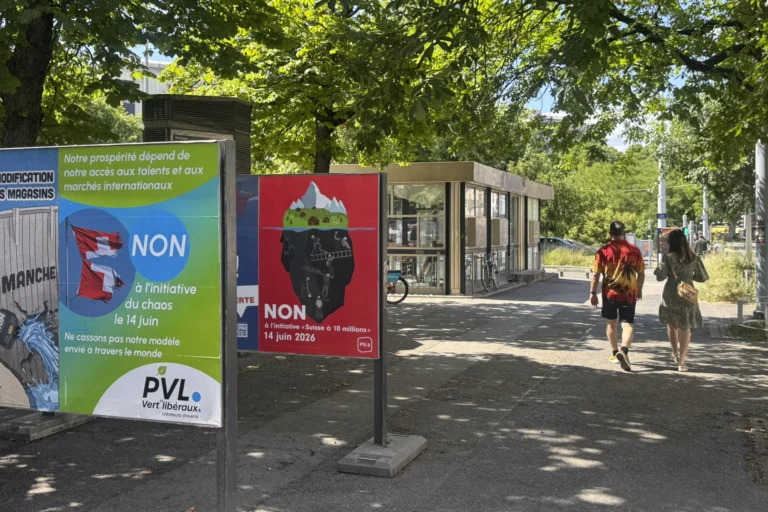
This Sunday, Switzerland voted – for the third time in a referendum – on a new initiative to limit immigration, which this time will be linked to the country’s population not exceeding the ten million mark by 2050. Photo: EFE/ Antonio Broto
June 14, 2026 Hour: 10:34 am
🔗 Comparte este artículo
The Swiss today rejected in a referendum the “No to a Switzerland of ten million” initiative, which proposed imposing measures to curb demographic growth – mainly through more restrictions on immigration and the right to asylum – if the country reached 9.5 million inhabitants before 2050.
Switzerland Debates Where to Rebuild Alpine Village Buried by Landslide: Swiss Reject in Referendum Limiting Population GrowthProposed and defended solely by the populist party Democratic Union of the Centre (UDC), 55% of voters opposed the initiative, according to preliminary results with a margin of error of plus or minus 3%.
Switzerland is experiencing one of the fastest demographic growths in Western Europe: it went from 7.3 million inhabitants in 2002 to more than 9.1 million in 2026, an increase of almost 25% in 24 years.
Of that growth, about 80% is due to net immigration, as the local fertility rate is around 1.3 children per woman.
Currently, 27% of the national population (more than 2 million people) is foreign, with higher rates in border cantons, such as Geneva.
The formal objective of the initiative, which has been the subject of arduous national debate, was to prevent the country’s population from exceeding ten million people by 2050, but the underlying message was that immigration needed to be limited, including from neighboring European Union countries, as well as tightening asylum rules.
Regarding migration, the biggest fear has been the damage that a “Yes” could cause to relations between Switzerland and the European Union, with which it maintains political, economic, and commercial ties that are vital for the Swiss economy and that have the Free Movement of Persons Agreement as a fundamental pillar.
That agreement grants EU citizens the right to enter, reside, and work in Switzerland under the same conditions as Swiss nationals.
With the exception of the UDC, all other political parties united against the initiative, and even the Socialist Party formed a rare alliance with employers to convince citizens of the negative consequences of approving the initiative, especially when polls conducted during the campaign suggested it could be accepted.
The arguments they used ranged from the dependence of certain sectors—particularly healthcare, construction, and hospitality—on foreign labor, as well as the need for Switzerland’s significant business network to be able to hire highly qualified workers from other countries.