







Honduras Approves Sweeping Anti-Gang, Prison Security Law
Honduras’ Congress has unanimously approved a law establishing a special prison regime for people accused of belonging to terrorist organizations, maras and pandillas. The measures include individual maximum-security detention, strict limits on visits and communications, and virtual court hearings.
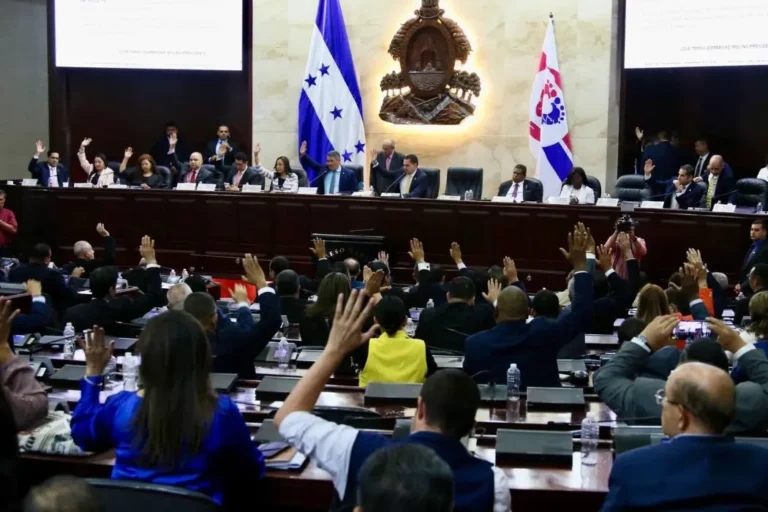
Honduran lawmakers approved a new special regime for people accused of belonging to terrorist organizations, gangs and other designated criminal groups. Photo: La Prensa Honduras
September 23, 2026 Hour: 2:04 am
🔗 Comparte este artículo
The law creates a special regime for people accused of belonging to terrorist groups, with strict isolation and limits on visits and communications.
Honduras’ Congress has unanimously approved a sweeping security law creating a special prison regime for people accused of belonging to terrorist organizations, maras and pandillas, with mandatory detention in maximum-security facilities, strict limits on visits and communications, and virtual court hearings.
RELATED: Rixi Moncada Accuses Congress and Judiciary of Political Persecution in Honduras
The legislation was approved Tuesday in a single debate after lawmakers waived a second reading. It combines reforms to the country’s prison and criminal procedure laws with expanded powers for security institutions to target designated terrorist organizations and criminal groups.
Key measures under the new regime
The law establishes a special prison regime for people prosecuted or convicted of belonging to maras, pandillas or organizations designated as terrorist. The measures include:
- Maximum-security detention: Mandatory placement in high- or maximum-security facilities, with no transfer to preventive, medium- or minimum-security facilities or open prisons.
- Individual isolation: Detainees must remain in individual cells and cannot mix with prisoners under other regimes.
- Limited movement: Prisoners may leave their cells only under escort and at authorized times.
- Outdoor time: Access to prison yards or outdoor areas is limited to one hour per week, individually or in groups of no more than two, under supervision.
- Special clothing: Detainees must wear clothing identifying them as subject to the special regime.
- Family visits: Allowed only in exceptional cases and with authorization from a court or the National Penitentiary Institute’s governing board, without physical contact.
- Conjugal visits: Prohibited.
- Legal visits: Lawyers may visit detainees under the supervision of prison authorities.
- Electronic devices: Mobile phones, computers, televisions, radios and other technological or audiovisual devices are prohibited.
- Communications: One monitored and recorded telephone call of up to 10 minutes per month to a previously authorized number. Written correspondence is subject to inspection.
- Communications jamming: Systems to block unauthorized communications, including satellite-phone signals, will be strengthened.
- Personal belongings: Cash, valuables, food, drinks and other items require explicit authorization.
- Activities: Work, educational, religious, recreational and rehabilitation activities must be scheduled and authorized in advance. Self-organized activities are prohibited.
- Surveillance: Permanent monitoring through cameras, sensors and security personnel, with daily searches of cells and detainees.
- Court hearings: Criminal hearings for prisoners under the regime must be conducted virtually.
Text Reads: 🏛️The National Congress unanimously approved reforms to the Law on the National Penitentiary Institute (INP), in response to a new directive from the National Defense and Security Council classifying members of criminal organizations as terrorists.
Led by President Tomás Zambrano, the National Congress is taking direct action against terrorists within criminal groups by toughening communication regimes and imposing communication restrictions in maximum-security prisons.
Expanded powers for security forces
The legislation follows recent decisions by Honduras’ National Defense and Security Council to formally designate three high-impact criminal structures as terrorist organizations.
It also amends the laws governing the National Police and the Military Police of Public Order, making the tracing, prevention and dismantling of those organizations a priority. Both institutions must coordinate with the National Penitentiary Institute to send people identified as members of the groups directly to maximum-security cells after their capture.
The National Defense and Security Council will also be able to declare areas or municipalities affected by crime and extortion as High-Risk Territories. In those areas, authorities may conduct saturation operations with support from the armed forces, establish fixed and mobile checkpoints, impose temporary restrictions on nighttime movement, deploy drones and cameras, and carry out financial-intelligence operations to trace and freeze assets linked to organized crime.
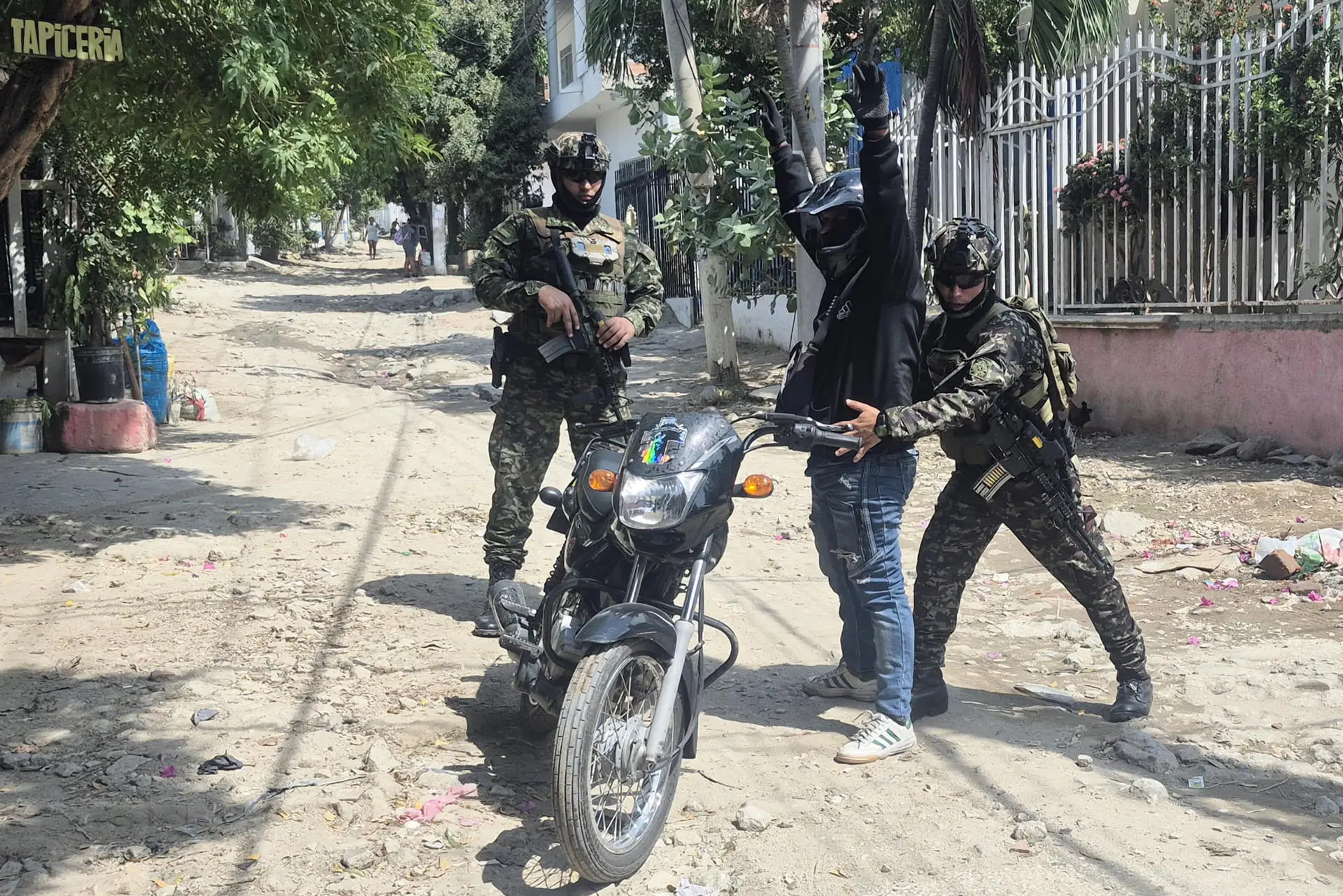
The law also imposes temporary restrictions on motorcycle traffic in municipalities designated by defense authorities for periods of up to 12 months:
- More than one man may not travel on the same motorcycle, except when the passenger is a woman or a child under 12.
- Firearms or blunt objects may not be carried on motorcycles, even by people with legal permits.
- Violations may result in the seizure of the motorcycle, suspension of the driver’s license for 45 to 90 days, and fines ranging from one to four minimum wages.
- Riders must keep their faces uncovered and license plates visible and in proper condition.
Criminal procedure changes
The legislation eliminates the possibility of substitute measures for people captured on suspicion of belonging to terrorist organizations. They must remain in pretrial detention in maximum-security prisons while awaiting trial.
Arrests involving people linked to the organizations will also be treated as cases of flagrancy, even when those detained are not carrying out a criminal act at the time of their arrest.
Specialized judges will be appointed to hear cases involving people accused of belonging to terrorist organizations. The judiciary has 30 days to establish regulations governing protected courts and safeguards for judges, court officials and support staff. The legislation provides for due process and the defendant’s right to challenge a judge.
During the congressional session, President of Congress Tomás Zambrano said the reforms were a matter of national security and would provide defense and security institutions with additional legal tools.
“This is not a game. It is about giving the Honduran people security and giving defense and security institutions legal tools,” Zambrano said.
Security Minister Gerson Velásquez told lawmakers that the country was facing a critical moment requiring measures to contain criminal groups that, according to the government, had openly challenged state authority.
National Penitentiary Institute Director Walter Amador said the institution was prepared to receive and guard prisoners transferred to maximum-security modules under the new regime.
The executive branch has 30 days to make the corresponding regulatory changes within defense, security and prison administration institutions.
The decree will formally take effect once it is published in Honduras’ official gazette, La Gaceta.
Author: MK
Source: Agencies