


Ecuadorian Scientists Publish Results of 30 Years of Research on Cedar
The work documents 11 species in continental Ecuador, updating the taxonomic, ecological and conservation knowledge of this tree group that is fundamental to the Andean and Amazonian ecosystems.
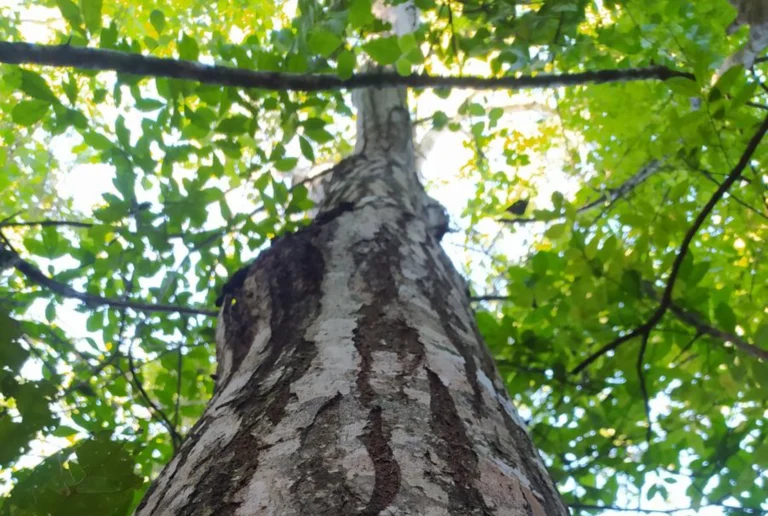
The National Institute of Biodiversity documents the distribution of the genus Cedrela in continental ecosystems of Ecuador. Photo: Inabio
May 29, 2026 Hour: 10:18 am
🔗 Comparte este artículo
On Thursday, Walter Palacios, a research associate at the National Institute of Biodiversity (Inabio) and the Technical University of the North, presented the book “The Cedars of Ecuador”, which systematizes more than three decades of studies on the genus Cedrela.
RELATED:
Ecuador: Scientists Record 14 Native Mammal Species in Nature Reserve
This forest species is a genus of varieties within the mahogany family, Meliaceae. They are evergreen trees, or deciduous during the dry season, with pinnate leaves, native to the tropical and subtropical New World, from southern Mexico to northern Argentina.
The work documents 11 species in continental Ecuador, updating the taxonomic, ecological, and conservation knowledge of this tree group, which is fundamental to the Andean and Amazonian ecosystems.
Until 2007, the official registry recognized only four species. Revisions conducted between 2010 and 2025 identified new species such as Cedrela domatifolia, Cedrela angusticarpa, Cedrela pubescens, and Cedrela brevicarpa, in addition to recording species previously known only from Peru and other South American regions.
The text reads, “The giant tortoises of western Santa Cruz Island in the Galápagos are having their migratory routes obstructed by the expansion of cedar (Cedrela odorata), an invasive species introduced in the 1940s. This tree already covers more than 1,700 hectares on the island and is also affecting other areas of the archipelago. Satellite tracking studies show that the tortoises avoid the dense cedar forests, which limits their access to food and shelter. The Galápagos National Park has initiated control measures, such as logging and the use of herbicides, to curb the advance of this threat and protect one of Ecuador’s most emblematic species.”
Many of these species remained “hidden within the Cedrela odorata taxonomic group,” which highlights the evolutionary complexity of the genus and the need for further genetic and ecological studies.
Currently, Cedrela angusticarpa, Cedrela brevicarpa, Cedrela kuelapensis, and Cedrela saltensis are critically endangered due to deforestation, habitat fragmentation, and illegal logging.
Cedar trees are among the finest woods in tropical America, historically used in furniture, doors, musical instruments, and religious carvings. Churches in downtown Quito preserve altars and furnishings made of cedar wood dating back to the colonial era
The genus plays a key ecological role in humid forests, ranging from the Amazon to the Andes, between sea level and 3,300 meters above sea level. The updated taxonomy facilitates the implementation of sustainable forest management policies in the region.
Author: HGV/JF
Source: National Institute of Biodiversity