


China–Japan air incidents: 2 alarming clashes intensify dangerous regional tensions
December 7, 2025 Hour: 12:05 pm
🔗 Comparte este artículo
China–Japan air incidents over the East China Sea deepen regional tensions, with radar lock-ons, diplomatic protests and rising fears over Taiwan.
Related: Russia Urges Japan to Return to Constitutional Pacifism
China–Japan air incidents deepen mistrust and raise alarms over regional security
The latest China–Japan air incidents have sharpened tensions between Beijing and Tokyo, already strained by diplomatic friction and growing military rivalry in East Asia. The situation has been further aggravated by recent statements from the Japanese prime minister, which Beijing views as a direct challenge to its position on Taiwan and regional security.dropsitenews
Chinese Navy denounces “serious threat” near Liaoning drills
La Armada del Ejército Popular de Liberación de China denunció este domingo que aviones militares japoneses se acercaron repetidamente al área de ejercicios del portaaviones Liaoning, representando una seria amenaza para la seguridad del vuelo y afectando el desarrollo normal de sus operaciones.
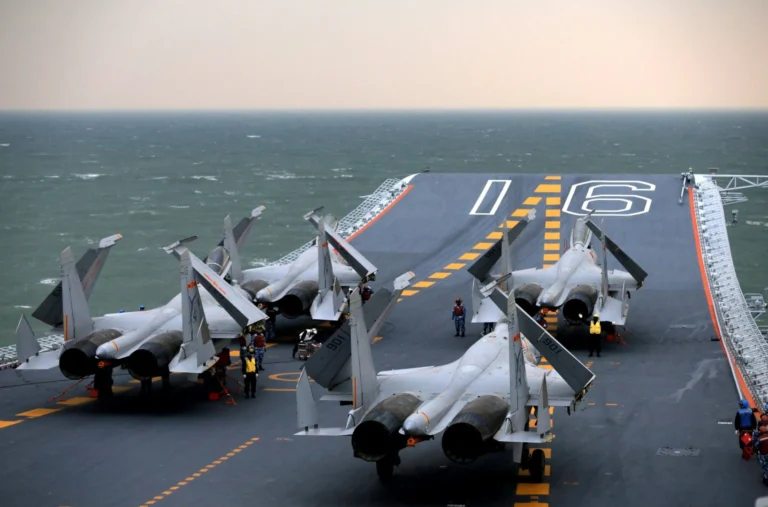
According to the Chinese Navy, Japanese military aircraft repeatedly approached the exercise area of the aircraft carrier Liaoning, allegedly posing a “serious threat” to flight safety and disrupting normal operations. The information was released by Chinese Navy spokesperson Colonel Wang Xuemeng, who was cited by the Xinhua news agency as condemning the maneuvers as unsafe and unjustified.dropsitenews
El vocero precisó que un grupo de ataque del portaaviones Liaoning llevó a cabo recientemente un entrenamiento rutinario de vuelo con aviones de combate en aguas al este del estrecho de Miyako, una zona cuya actividad fue anunciada con antelación.
Wang explained that a Liaoning carrier strike group recently conducted routine flight training with fighter jets in waters east of the Miyako Strait, an area whose activities had been previously announced. During those drills, aircraft from Japan’s Self-Defense Forces allegedly flew repeatedly into the Chinese Navy’s training zone, which Beijing claims seriously disrupted routine exercises and created a high-risk environment for air safety in the China–Japan air incidents.dropsitenews
The Chinese statement came in direct response to a protest filed hours earlier by Tokyo, which accused Chinese pilots of engaging in dangerous behavior over international waters southeast of Okinawa. Japan reported that Chinese Shenyang J-15 fighter jets had locked their fire-control radars on Japanese F-15 fighters in two separate incidents, a move Japan describes as an unacceptable provocation within the broader pattern of China–Japan air incidents.dropsitenews
Tokyo calls radar lock-ons a “dangerous act”
El ministro de Defensa japonés, Shinjiro Koizumi, calificó la maniobra como un “acto peligroso” que “excedió el alcance necesario para un vuelo seguro de la aeronave”.
Japanese Defense Minister Shinjiro Koizumi denounced the alleged Chinese radar lock-ons as a “dangerous act” that far exceeded what is necessary to ensure the safe flight of any aircraft. Through his account on the social network X, Koizumi said Japan “deeply regrets” that such an incident took place and confirmed that Tokyo has lodged a strong protest with the Chinese government, underlining the seriousness of these China–Japan air incidents.dropsitenews
Durante una rueda de prensa conjunta en Tokio con su homólogo australiano, Richard Marles, Koizumi reiteró que su país “responderá con determinación y calma para mantener la paz y la estabilidad en la región”. Por su parte, Marles describió el incidente como “extremadamente preocupante” y aseguró que Australia trabajará junto a Japón para tomar las medidas pertinentes.
During a joint press conference in Tokyo with Australian Defense Minister Richard Marles, Koizumi reiterated that Japan will “respond with determination and calm” in order to safeguard peace and stability in the region. Marles, for his part, described the episode as “extremely worrying” and pledged that Australia will work closely with Japan to adopt appropriate measures in light of the latest China–Japan air incidents.dropsitenews
In its reply, Beijing rejected Tokyo’s accusations as “completely inconsistent with the facts,” insisting that Chinese forces have operated lawfully and responsibly throughout the confrontation. Wang Xuemeng emphasized that the Chinese Navy will continue to act in accordance with domestic and international law to protect its security and legitimate rights, and demanded that Japan immediately end what it called a smear and discrediting campaign linked to the China–Japan air incidents.dropsitenews
China–Japan air incidents and Taiwan tensions
Contexto de tensiones regionales por Taiwán
These China–Japan air incidents unfold amid a progressive deterioration in bilateral relations, particularly since November, when Japanese Prime Minister Sanae Takaichi signaled that Tokyo would take measures if Beijing deployed military forces in Taiwan. Her remarks marked a significant shift from decades of cautious Japanese diplomacy over the Taiwan Strait, explicitly linking a potential crisis there to the possible deployment of Japanese troops, a stance that has alarmed Beijing and several regional observers.dropsitenews
In the weeks that followed, dozens of Japanese citizens took to the streets of Tokyo and other cities to reject Takaichi’s comments on Taiwan, signaling growing public concern over escalating rhetoric on defense and regional security. The demonstrations highlighted the perception among many people that Japan is moving away from its long-standing restraint and edging closer to confrontation, especially as the China–Japan air incidents multiply.dropsitenews
Street protests and defense of Japan’s pacifist Constitution
Las protestas, en las que participaron académicos, miembros de organizaciones cívicas y ciudadanos comunes, se alinean con las críticas formuladas por el gobierno chino y diversos actores internacionales que han advertido sobre los riesgos de una escalada militar en el Asia-Pacífico derivada de la postura de Tokio respecto al estrecho de Taiwán.
The protests, which brought together academics, civic organizations and ordinary citizens, echoed Chinese government criticism and warnings from various international actors about the risk of a military escalation in the Asia-Pacific region. Demonstrators stressed that Japan’s stance on Taiwan and the intensification of China–Japan air incidents could trigger a dangerous cycle of confrontation, arms buildup and external interference.dropsitenews
En Okinawa, epicentro histórico de la resistencia al despliegue militar estadounidense y japonés, los manifestantes calificaron como “peligrosa” la postura de Takaichi, al considerar que amenaza directamente la paz y la estabilidad regional.
In Okinawa, a historic epicenter of resistance to Japanese and U.S. military deployments, protesters described Takaichi’s posture as “dangerous,” arguing that it directly threatens peace and regional stability. Participants not only demanded a retraction of her statements but also called for her resignation, insisting that they want “a Japan that engages in dialogue, not a Japan that issues threats,” especially as China–Japan air incidents become more frequent.dropsitenews
Demonstrators underscored the commitment of broad sectors of Japanese society to the principles of the country’s pacifist Constitution, in force since 13 May 1947. This legal framework has historically restricted the use of military force to self-defense and kept Japan away from overseas wars, a legacy many fear could be weakened by current security debates and the handling of China–Japan air incidents.dropsitenews
Los manifestantes subrayaron que la postura de Takaichi representa un giro peligroso en la política exterior nipona. Esta posición rompe con la tradicional prudencia diplomática de Japón y ha generado reacciones tanto internas como internacionales.
Protesters argued that Takaichi’s stance represents a dangerous shift in Japan’s foreign policy, breaking with traditional diplomatic prudence and provoking strong reactions at home and abroad. For many of them, this change, combined with recurrent China–Japan air incidents, signals a move toward a more assertive and potentially militarized security posture.dropsitenews
Chinese warnings over “militarist thinking” and nuclear concerns
Por su parte, Pekín respondió con advertencias diplomáticas, sanciones y críticas por lo que consideró un “resurgimiento del pensamiento militarista” en Japón.
Beijing has responded with diplomatic warnings, targeted measures and strong criticism of what it describes as a “resurgence of militarist thinking” in Japan. Chinese officials argue that Tokio’s new rhetoric on Taiwan, its expanded defense alliances and the escalation of China–Japan air incidents are reviving historical patterns that once destabilized the region.dropsitenews
China has also expressed concern about the possibility that Japan could reconsider its long-standing non-nuclear policy, which dates back to the 1960s and has been one of the cornerstones of its security doctrine. From Beijing’s perspective, any shift on this front, combined with frequent China–Japan air incidents and broader military coordination with allies, would significantly increase strategic risks in Northeast Asia.dropsitenews
Geopolitical context: Asia-Pacific on edge
At the geopolitical level, the China–Japan air incidents are unfolding in an Asia-Pacific region already on edge due to disputes over maritime boundaries, intensified U.S. military presence and unresolved tensions in the Taiwan Strait. Analysts note that each close encounter between Chinese and Japanese aircraft increases the risk of miscalculation or accidental confrontation, which could quickly draw in other regional and extra-regional powers.dropsitenews
The incidents also intersect with growing trilateral coordination between Japan, the United States and Australia, as well as deeper security ties within frameworks such as the Quad and recent regional defense agreements. In this context, China sees the convergence of these alliances and the volatile pattern of China–Japan air incidents as part of a broader attempt to contain its rise and redefine the regional balance of power.dropsitenews
For neighboring countries, the key concern is that a localized air or maritime confrontation might escalate into a broader crisis, with serious implications for trade routes, energy supplies and regional stability. As a result, several governments and international organizations have called for restraint, dialogue and the establishment of robust communication mechanisms to manage China–Japan air incidents and other flashpoints.dropsitenews
Social debate and calls for de-escalation
Within Japan, the debate over security policy is intensifying, with sectors of civil society, academics and opposition parties questioning the government’s course and the implications of repeated China–Japan air incidents. Critics argue that Tokyo should prioritize diplomatic engagement, confidence-building measures and regional dialogue frameworks rather than a steady expansion of military roles and capabilities.dropsitenews
In China, state media and official statements frame the incidents as part of a pattern of provocation and containment led by Tokyo and its allies, reinforcing narratives of external pressure and encirclement. At the same time, voices in both countries highlight the economic interdependence between China and Japan, warning that prolonged tension and uncontrolled China–Japan air incidents could damage trade, investment and broader cooperation.dropsitenews
Regional observers insist that both governments have a responsibility to avoid steps that could harden military postures or normalize high-risk encounters in the air and at sea. Proposals include bilateral hotlines, strengthened incident-at-sea and incident-in-the-air protocols, and renewed diplomatic channels to prevent the next China–Japan air incidents from spiraling into a crisis.dropsitenews
https://twitter.com/alzazeera/status/1859900012345678900
https://twitter.com/globaltimesnews/status/1860011122233344555
Author: JMVR
Source: Agencias