


Historic VaticanSupport for Cuba: First Mass for Peace and Development
The Vatican expresses clear Vatican support for Cuba amid escalating US pressures and the economic blockade
May 17, 2026 Hour: 4:16 pm
🔗 Comparte este artículo
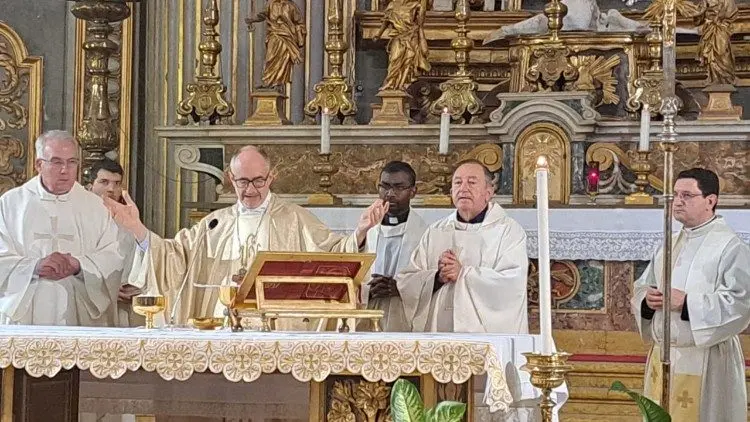
The Vatican held its first Holy Mass for Peace and Development in Cuba, led by Cardinal Michael Czerny. The ceremony strongly condemned the US economic blockade and called for dialogue and respect for Cuban sovereignty.
Related: Pope Leo XIV Marco Rubio Meeting: 5 Crucial Steps to Repair US-Vatican Ties
Vatican Expresses Strong Support for Cuba
Rome, May 17, 2026 — The Vatican held its first Holy Mass for Peace and Development in Cuba at the Church of St. Ignatius of Loyola, demonstrating clear Vatican support for Cuba in the face of renewed US hostility. The ceremony was presided over by Cardinal Michael Czerny, Prefect of the Dicastery for Promoting Integral Human Development.
Cuban Ambassador to the Holy See Leyde Rodríguez described the event as a powerful act of international solidarity with the Cuban people, who continue to face severe humanitarian challenges due to the intensification of the US economic blockade.
The Vatican support for Cuba was evident throughout the liturgy. Cardinal Czerny called for a “disarmed peace” that allows genuine social progress and prayed for serenity and harmony in the Caribbean nation. He warned that permanent confrontation only worsens the suffering of the most vulnerable, particularly children and the elderly.
During the Mass, participants denounced recent US Executive Orders signed by President Donald Trump that further tighten the blockade. Church representatives described the unilateral measures as an illegal siege and firmly rejected any threats of military aggression against Cuba.
Emphasis on Dialogue and Sovereignty
The ceremony highlighted the Catholic Church’s consistent teaching on the peaceful resolution of conflicts through negotiation and ethical diplomacy rather than the use of force. Vatican officials reaffirmed that Cuba’s internal affairs must be resolved exclusively by Cubans themselves, without foreign intervention that undermines national dignity.
This strong Vatican support for Cuba carries significant moral and diplomatic weight. The event brought together diplomats from various countries, members of the Cuban community in Italy, solidarity activists, and prominent cultural figures such as intellectual Miguel Barnet.
Ambassador Rodríguez noted that diplomatic relations between Cuba and the Holy See will reach 91 years of uninterrupted institutional continuity on June 7. He stressed that Cuba is a peaceful nation that poses no threat to any other country and has the legitimate right to pursue its own development path free from blockades and aggression.
Official Vatican News coverage of the Mass: vaticannews.va.
Vatican Support for Cuba Strengthens Call Against Unilateral Sanctions
The historic Mass reflects growing international concern over the humanitarian impact of unilateral coercive measures. Cardinal Czerny and other participants emphasized that genuine peace requires the lifting of the economic blockade, which severely restricts Cuba’s access to essential goods, medicines, and development opportunities.
Vatican support for Cuba aligns with the Holy See’s long-standing position against the use of economic sanctions as tools of political pressure. Church leaders have consistently advocated for dialogue based on mutual respect and the principle of non-interference in sovereign affairs.
The broad participation in the event demonstrates the isolation of aggressive US policies when confronted with a global consensus that demands respect for international law and the immediate end of coercive measures.
United Nations reports on the impact of unilateral sanctions: un.org.
Geopolitical Context and Broader Regional Implications
The clear Vatican support for Cuba emerges at a critical juncture in Latin America and the Caribbean, where several countries continue to face external pressures and unilateral sanctions. As the United States intensifies its hostile policy toward progressive governments in the region, moral and diplomatic backing from influential institutions like the Vatican carries important symbolic and practical value.
For the Caribbean and Latin America, this support reinforces the longstanding regional consensus that Latin America and the Caribbean should remain a Zone of Peace, free from external interference and military threats. It strengthens calls for multilateral solutions and respect for the self-determination of peoples.
On a global scale, the Vatican’s position contributes to the growing international movement against the extraterritorial application of unilateral sanctions. By highlighting the humanitarian consequences of the blockade, the Holy See adds its moral authority to demands for the normalization of relations based on equality and mutual respect.
This event may encourage other religious and civil society organizations worldwide to voice similar positions. It also underscores the shifting dynamics of international diplomacy, where traditional powers increasingly face resistance from a more assertive Global South supported by influential non-state actors. The Vatican support for Cuba thus serves as both a spiritual gesture and a significant political statement in favor of peaceful coexistence and sovereign development in the face of hegemonic pressures.
Author: JMVR
Source: Agencias