


Historic Brazil demarcation of indigenous lands: Major Advances Under Lula Government 2026
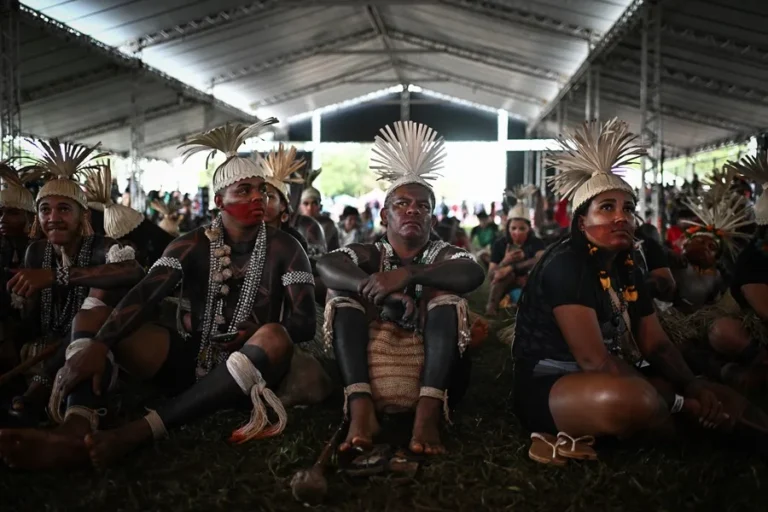
Indigenous communities in Brazil celebrate important steps forward in the demarcation of ancestral lands during the current administration (Photo: EFE / Archival)
April 4, 2026 Hour: 5:13 pm
🔗 Comparte este artículo
Brazil demarcation of indigenous lands sees significant progress with 20 territories approved and 21 declarative ordinances signed, as indigenous communities gain unprecedented political representation.
Related: Brazil Warns El Niño-Induced Thermal Disaster
Historic Brazil demarcation of indigenous lands: Major Advances Under Lula Government
Brazil demarcation of indigenous lands has recorded important progress in recent years, marking a clear break with the dismantling of indigenous rights seen under previous administrations. The Ministry of Indigenous Peoples (MPI), created at the beginning of President Luiz Inácio Lula da Silva’s current term, has become a central instrument for advancing territorial rights and political participation of native communities.
According to data from independent media and official reports, 20 indigenous lands have been approved for demarcation, while 21 declarative ordinances have been signed. These steps represent concrete achievements in the protection of ancestral territories long threatened by illegal mining, logging, and agribusiness expansion.
The process has been driven by strong mobilization from indigenous organizations, which have gained unprecedented access to decision-making spaces within the Brazilian state. This shift reverses policies from the Temer and Bolsonaro eras that weakened environmental protections and favored economic interests over indigenous rights.
Brazil demarcation of indigenous lands Gains Momentum Through Political Representation
Indigenous political participation has reached historic levels. Leaders such as Kleber Karipuna, executive coordinator of the Articulation of Indigenous Peoples of Brazil (APIB), note that never before in the history of the Republic have indigenous voices held so many strategic positions in government institutions.
Key appointments in the Secretariat of Indigenous Health and regional coordinations allow direct influence on public policies affecting their communities. The transition of former Minister Sônia Guajajara from the MPI to run for federal deputy in São Paulo is viewed as a strategic move to strengthen indigenous presence in the Legislative branch.
Indigenous organizations emphasize that institutional struggle in both the Executive and Congress is essential to consolidate the concept of indigenous peoples as part of the State rather than external actors. This approach challenges the traditional dominance of agribusiness interests in Brazilian politics.
For official updates on indigenous land demarcation: Fundação Nacional dos Povos Indígenas – FUNAI.
Additional reporting on indigenous rights: Brasil de Fato – Avanços na Demarcação de Terras Indígenas.
Challenges Remain in Land Demarcation Process
Despite these advances, the pace of land demarcation remains slower than indigenous movements had hoped. Leaders point to political interference and resistance from powerful economic sectors as major obstacles. The influence of agribusiness in the National Congress continues to slow down presidential approvals and justice ministry declarations.
The indigenous movement insists that full territorial rights are fundamental to guaranteeing physical and cultural survival. Many communities still face invasions, illegal mining, and violence linked to land disputes. Strengthening the National Foundation for Indigenous Peoples (FUNAI) and ensuring adequate funding for territorial protection remain priority demands.
Geopolitical and Regional Implications
Brazil demarcation of indigenous lands carries significant weight across Latin America, where indigenous territories are increasingly central to global debates on climate change, biodiversity, and resource governance. Brazil, home to the largest portion of the Amazon rainforest, plays a decisive role in regional and planetary environmental stability.
Successful demarcation strengthens indigenous stewardship of ecosystems critical for carbon sequestration and biodiversity conservation. It also challenges models of development based solely on extractivism and agribusiness expansion, offering alternative visions of sustainable territorial management rooted in ancestral knowledge.
In the broader geopolitical context, advances in indigenous rights intersect with international pressures over the Amazon. Global actors increasingly recognize indigenous peoples as key partners in climate action, while economic interests continue to push for greater access to resources. Brazil’s experience influences indigenous movements across the continent, from the Andes to Central America, where similar struggles for territorial recognition persist.
The growing political representation of indigenous leaders in Brazil may inspire parallel processes in neighboring countries, contributing to a more inclusive form of regional integration that respects pluricultural realities
Path Forward for Indigenous Rights
The current administration’s commitment to reversing previous setbacks has created new opportunities for dialogue and policy implementation. However, indigenous organizations stress that sustained pressure from below remains necessary to overcome entrenched resistance.
The transition of key figures like Sônia Guajajara to the Legislative sphere aims to ensure that indigenous demands occupy a central place in national debates rather than remaining on the margins.
As Brazil commemorates these advances in 2026, the indigenous movement continues to push for faster demarcation, better protection mechanisms, and full implementation of constitutional rights. The struggle for land remains inseparable from the defense of cultural identity, environmental integrity, and social justice.
The progress achieved demonstrates that organized indigenous mobilization, combined with political will at the highest levels, can produce tangible results. Yet much work remains to fully realize the constitutional promise of recognizing and protecting indigenous territories across the country.
Author: JMVR
Source: Brasil de Fato