


The Truth About the Downing of the ‘Brothers to the Rescue’ Planes
X/ @lhan55
May 21, 2026 Hour: 12:48 pm
🔗 Comparte este artículo
Cuban journalists produced a special report in response to Washington’s unfounded accusations against Raul Castro.
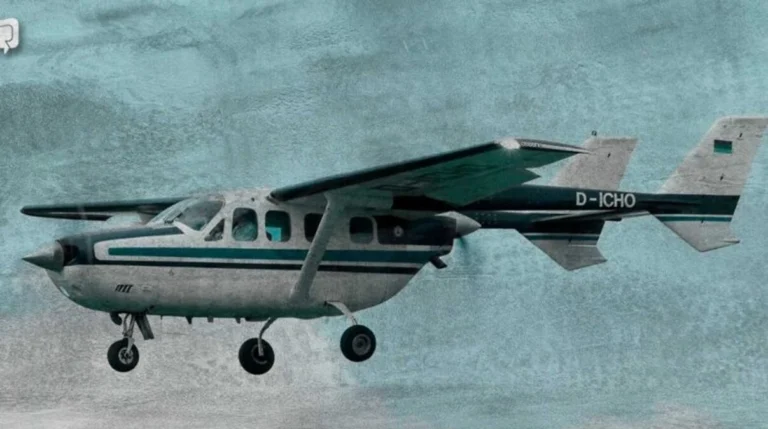
On Thursday, the Cuban outlet Prensa Latina published a special report compiling trustworthy and verifiable information about the downing of planes belonging to the organization “Brothers to the Rescue” that occurred in Cuban airspace in 1996.
RELATED:
Thousands of Cubans to Reject U.S. Charges Against Raul Castro
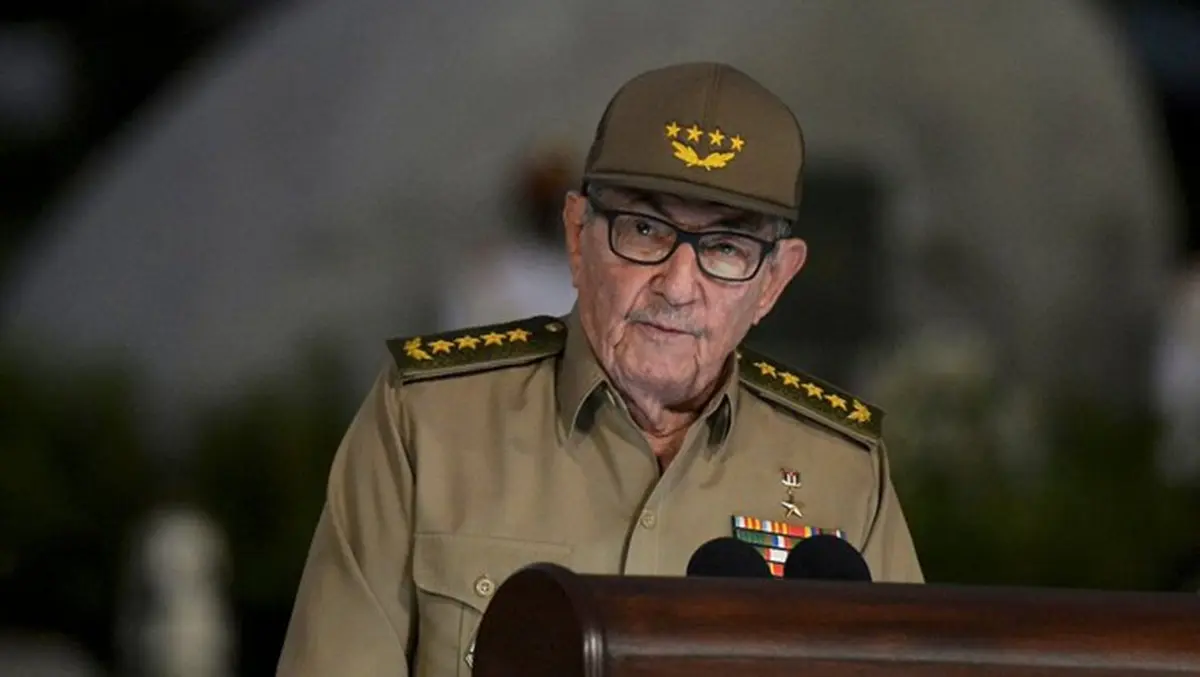
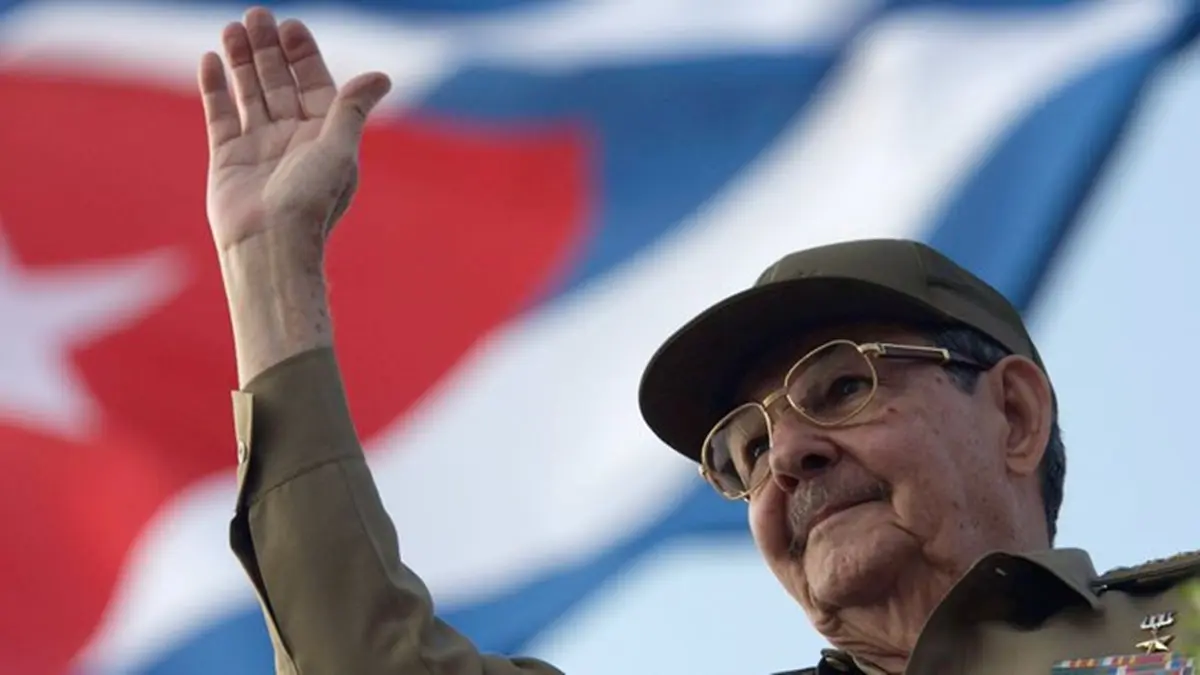
This information was published hours after the U.S. Department of Justice, in an arbitrary and unjustifiable manner, filed charges against Gen. Raul Castro, a historical hero of the Cuban revolution who was serving as armed forces minister at the time.
Below is the full report from Prensa Latina.
“The National Security Archive published several records about the scenario that led in 1996 to Cuba’s shooting down of two small planes that violated its airspace in adherence to the defense of its sovereignty after multiple warnings to the United States.
It is no coincidence that history resurfaces at a time when the escalating tensions between the United States and Cuba are seeking a scapegoat, a pretext to find culprits to carry out a military aggression against the Caribbean country, located about 90 miles from U.S. shores.
One of the declassified files contains an email from the Federal Aviation Administration (FAA) in which one of its officials referred to the ‘continuous provocations of the Cuban government’ by the violating overflights of the Miami-based organization Brothers to the Rescue. He spoke of concern about a ‘worst-case scenario’ in which ‘it would be better for the FAA to have everything in perfect order.’
FAA emails, memos and communications recorded concerns among high-ranking officials in the administration of then-President Bill Clinton regarding repeated incursions into Cuban airspace that could end in the downing of the two Brothers to the Rescue planes on Feb. 24, 1996, an event that could have been avoided if Cuba’s alerts had been heeded.
Between 1994 and 1996, Cuba’s Foreign Affairs Ministry and civil aviation authorities documented more than 25 serious and deliberate violations of Cuban airspace by the Brothers to the Rescue organization. Each of these violations was formally reported in writing to the U.S. State Department, the FAA and the International Civil Aviation Organization.
RECORD OF VIOLATIONS
Among the violations documented and reported by Havana was one on July 13, 1995, when two small planes entered a restricted zone north of the capital, flew over the city at very low altitude and dropped propaganda supporting a flotilla of anti-Cuban boats that had left Miami and entered the Caribbean country’s territorial waters.
Less than two months later, on Sept. 2, five Cessna aircraft and five helicopters flew in support of another flotilla off Varadero. On Jan. 9 and 13, 1996, three small planes violated airspace north of Guanabo and Santa Maria del Mar beaches and dropped subversive propaganda at several points along the coast.
Through appropriate channels, according to information from diplomatic sources, the U.S. government was repeatedly demanded to revoke the flight licenses of these pilots, seize the aircraft, and put an end to the illegal activities originating from its territory, but all these efforts were ignored.
In the newspaper Trabajadores on Jan. 15, 1996, Cuba published a ‘Notice to the Population’ in which it issued a public and official warning: any aircraft flying over its airspace without authorization would be intercepted and, if necessary, neutralized.
The next day, Jan. 16, that information was sent in Diplomatic Note No. 45 to the U.S. government, the sources said.
According to records, on the day of the incident, the U.S. government had prior knowledge of the flights and even instructed its control centers to document them starting Feb. 23.
Havana’s Air Traffic Control Center formally warned the small planes about the danger zones activated north of the capital; however, the pilots replied that, even though they were aware of the prohibition, they would continue their route.
The aircraft with tail numbers N2456S and N5485S were intercepted and shot down between five and eight nautical miles north of Playa Baracoa, placing them fully within Cuba’s territorial waters and sovereign airspace, which was supported by the recovery of debris — briefcases and nautical charts — 9.3 miles from the coast on Feb. 25, according to a compilation of public data and news reports shared with Prensa Latina.
LEGAL BASIS FOR THE CUBAN RESPONSE
The United Nations Charter’s Article 51 states that every nation has the inherent right to defend its territorial integrity and the security of its population against armed attack. Unauthorized and hostile air incursions constitute an armed attack in the form of an act of force.
The Chicago Convention on International Civil Aviation, in its Article 3, although prohibiting the use of weapons against civilian aircraft, establishes a crucial exception: when a civilian aircraft is used for purposes incompatible with its status, such as espionage, sabotage or aggression, it loses such protection.
The Brothers to the Rescue Cessna planes, used for airspace violations, dropping propaganda, espionage and preparing sabotage, had lost all character of ‘civilian aircraft’ when they violated national airspace and distributed propaganda with the aim of inciting internal subversion.
Furthermore, air sovereignty is an undisputed principle of international law. Cuba, as a sovereign nation, has the full right to regulate and control its airspace and to take necessary measures to defend it, including the interception and neutralization of hostile intruders.
Cuban authorities warned at the time that the small planes entered an airspace and that these were not mere ‘navigation errors’ but the latest in a long series of premeditated aggressions that endangered human lives and national security.
THE INCIDENT COULD HAVE BEEN AVOIDED
In a report broadcast in November 2009, researchers from the I-TEAM of Miami’s CBS4 showed classified documents that evidence this tragedy could have been avoided if someone in the U.S. government had taken concrete action.
Some high-ranking officials in the U.S. administration knew that a shootdown was not only possible but probable. For example, one of those interviewed, President Clinton’s senior adviser on Cuba, Richard Nuccio, admitted that after the implementation of migration policy, Brothers to the Rescue’s actions became more provocative and more political.
However, U.S. authorities approved flight plans and allowed Brothers to the Rescue to depart, despite knowing those flight plans were false.
They did not seize the aircraft, as they could have done under their own laws, for these violations acknowledged by the State Department and the FAA, nor did they seek a court order against those flights, in accordance with their own procedures to have stopped them starting in July 1995.
They also did not initiate criminal proceedings against those involved in these transgressions; only three months after the Feb. 24 incident did they deign to impose a pilot’s license restriction for several months.
On April 18, 1998, Cuban President Fidel Castro Ruz, referring to the 1996 events, said he had written and sent a confidential message to Clinton through writer Gabriel Garcia Marquez.
His intention was to inform him of a series of terrorist plans organized and financed from U.S. territory by the now-defunct Cuban American National Foundation.
The text detailed the use of Central American mercenaries to place explosives in tourist centers and, more alarmingly, the existence of diabolical plans to blow up airplanes of Cuban or other airlines using programmable devices that are difficult to detect. U.S. intelligence agencies had reliable information to stop these operations.
PROCESS BEFORE THE UNITED NATIONS
Cuba presented to the United Nations and International Civil Aviation Organization (ICAO) radar data, transcripts of communications and precise coordinates demonstrating that the shootdown occurred within its territorial waters. The U.S. version, which claimed international waters, was based on contradictory data and was politically influenced.
The Navy radar station at Key West, the closest to and involved in the incident, erased its records just 15 days after the event, coinciding with the start of the international investigation, the reports indicate.
Cuba handed over its original recordings and recording equipment to ICAO on March 30. In contrast, the United States only allowed investigators to ‘listen to’ a tape in May that omitted the first six minutes compared with the authorized transcript that the Washington mission itself had distributed to the press in February.
Those erased minutes contained crucial data about the initial location of the small planes and their penetration of Cuban airspace.
At the same time, ICAO’s official reconstruction relied on testimony from the ship Majesty of the Seas and an alleged fishing boat called Tri-Liner. However, the head of the investigation team admitted they never interviewed the Tri-Liner’s crew nor visited that vessel, whose very existence was questioned by the Cuban delegation.
The resolution, approved by consensus of all ICAO members, reaffirmed that each country must take appropriate measures to prevent the use of civilian aircraft registered in its territory for activities incompatible with international civil aviation rules.
These days, hatred is loose. Cuban Foreign Affairs Minister Bruno Rodriguez has been clear: The United States ‘builds, day after day, a fraudulent file to justify eventual military aggression’ against his country.”
teleSUR/ JF
Source: Prensa Latina