







3 Critical Signs Bolivia blockades Are Deepening a National Crisis
Bolivia blockades have isolated six departments and deepened shortages as negotiations remain stalled.
May 31, 2026 Hour: 4:50 pm
🔗 Comparte este artículo
Bolivia blockades now isolate six departments, intensify shortages, and deepen political tensions as talks collapse and protests spread nationwide.
Related: Bolivian Justice Nullifies Arrest Orders Against Union Leaders
Bolivia blockades have sharply escalated across the country, leaving six departments partially or fully isolated and worsening shortages of food, fuel, and essential supplies. The crisis has now stretched for 31 consecutive days, with no concrete agreement between the mobilized sectors and the executive branch.
Bolivia blockades and the spread of shortages
According to the latest official report from the Bolivian Highway Administration (ABC), there are now 89 active blockade points on roads across six departments. The hardest-hit areas are La Paz, Cochabamba, Chuquisaca, Oruro, Potosí, and Santa Cruz, where key highways remain cut off and transport is severely disrupted. La Paz has emerged as the center of the protest movement and the most heavily affected region.
The blockades began with sector-specific demands tied to fuel supply problems and technical objections to Law 1720. They have since expanded into broader political demands, including formal calls for President Rodrigo Paz to resign. What started as a transport and supply dispute has become a nationwide confrontation involving multiple social and economic actors.
The ABC report says major trunk roads connecting western Bolivia, the valleys, and part of the eastern lowlands remain completely interrupted. Beni, Pando, and Tarija are reporting only partial transit conditions, including vehicle restrictions, mandatory detours, and debris-clearing work on certain routes. The result is a fragmented transportation map that continues to isolate whole regions.
Bolivia blockades, fuel shortages, and broken talks
The social crisis has worsened rapidly after a net doubling of blockade points in recent days. La Paz and El Alto are facing near-total paralysis because of an indefinite urban transport strike and a severe shortage of fuel at service stations. For many residents, basic mobility has become impossible.
The pressure has spread into the commercial sector. Merchant associations have warned of an imminent total shortage of goods in popular markets and supply centers if heavy cargo trucks remain stranded on the roads. That threat matters because Bolivia’s blockades are now affecting both distribution networks and everyday household access to food.
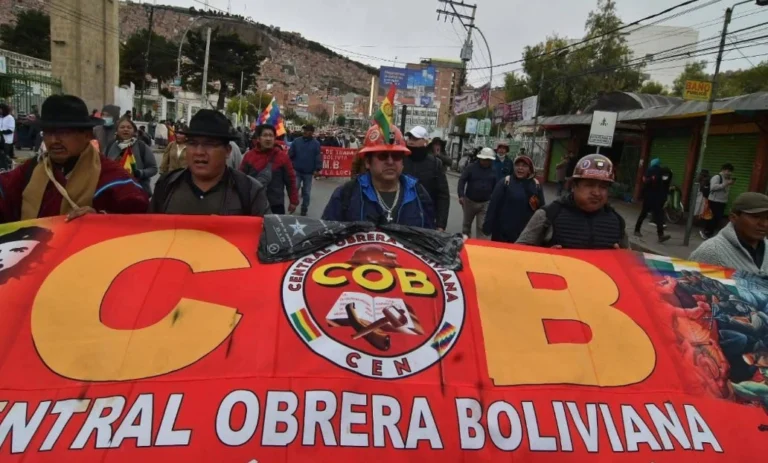
The Bolivian Workers’ Central (COB) has also hardened its position and called for a national march in support of the mobilized bases. Transport unions say they are continuing the strike because previous agreements with the government were not honored. Their main demands include economic compensation for mechanical damage to fleet engines caused by allegedly poor-quality imported gasoline, as well as the immediate publication of technical reports promised weeks ago in coordination with the state university.
Mediation efforts led jointly by the Catholic Church, the Vice Presidency, and the Ombudsman’s Office have stalled. The Ombudsman has warned that confrontational language, threats, and insults from government spokespeople are sabotaging any chance of dialogue. That warning reflects how badly trust has eroded between the state and the protest leadership.
Government defense and political stakes
While major cities suffer severe shortages of food, fuel, and medical supplies in public health centers, the Rodrigo Paz administration is defending the validity of Law 1720 and its legal responses. Officials say constitutional emergency mechanisms are the last democratic tool available to preserve internal order. They argue that negotiation channels are exhausted because the political demands of the protesters have become inflexible.
The government’s stance shows that Bolivia blockades are no longer being treated as a narrow transport dispute. They have turned into a broader test of state authority, social pressure, and political legitimacy. As the protests continue, both sides are framing the crisis in absolute terms, making compromise harder.
For the administration, the central issue is maintaining order and preventing a wider breakdown in essential services. For the mobilized sectors, the issue is what they see as broken promises, fuel insecurity, and declining trust in the state’s capacity to respond. That divide is now deep enough to keep the conflict alive even as shortages intensify.
The country’s urban centers are feeling the effects most sharply. Public hospitals are reporting shortages of supplies, transport workers are suspended, and consumers are facing empty shelves or delayed deliveries. In practical terms, the dispute has moved from the road network into daily life.
Geopolitical context
Bolivia blockades are unfolding in a region where transport disruptions can quickly become political crises. Landlocked countries and politically polarized systems are especially vulnerable to supply chain breakdowns, fuel insecurity, and rapid social escalation. The Bolivian case also highlights how labor unrest, food access, and presidential legitimacy can become linked in a single confrontation.
The situation matters beyond Bolivia because it affects regional trade corridors and the movement of goods across the Andean and southern cone routes. If blockades persist, neighboring states and cross-border commerce can feel the spillover effects through freight delays, price pressures, and migration stress. In that sense, the crisis is both domestic and regional.
Author: JMVR
Source: Agencias