







Washington Turns Drug Trafficking into Foreign Policy
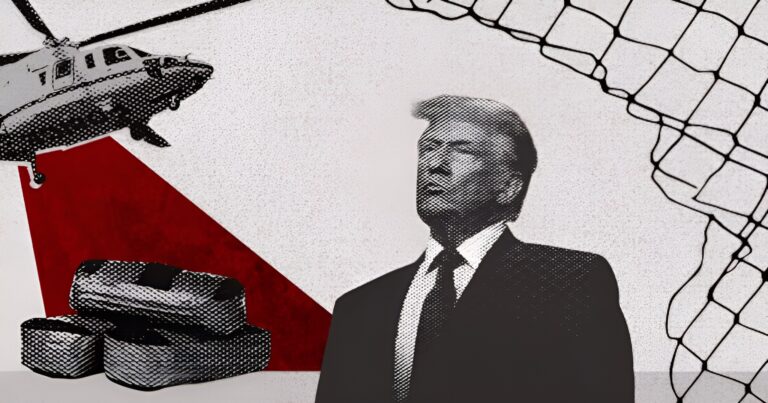
War On Drugs. Photo: Bloomberg
December 8, 2025 Hour: 7:39 am
🔗 Comparte este artículo
From Nixon to the Fentanyl Crisis, the “War on Drugs” Charade Covers a Strategy of Geopolitical Control and Racial Targeting.
More than fifty years after it began, the “War on Drugs” seems less like a failed policy and more like a successful plan of American control. Far from being a naive attempt to save lives, this “war” has functioned with chilling precision. It has been a versatile tool for military power, control, and social order in Global South nations.
RELATED:
Trump Defends Former Honduran President Convicted of Drug Trafficking
Careful research reveals a troubling idea: the American empire has been the “chief architect, executor, and primary beneficiary” of global drug trafficking since at least the 1950s.
This war and financial system have hidden goals: funding secret wars without Congress approval; destabilizing governments that resist market rules; justifying the militarization of resource-rich areas.
Nixon & The Political “War on Drugs” (1970s)
To understand today’s criminal justice system, we must revisit 1971. When President Richard Nixon declared the “War on Drugs”, launching a militarized prohibition era that reshaped society.
While framed as a response to heroin use among soldiers in Vietnam, the true motivation was later confessed by Nixon’s own aide, John Ehrlichman. He admitted the war was crafted as a political tool to “marginalize opponents.”
The state weaponized drug laws to suppress two key groups:
- The anti-war left (hippies and activists)
- The African American civil rights movement
This was not new. U.S. prohibition history has always persecuted minorities:
- 19th century: Opium linked to Chinese immigrants
- Early 1900s: Marijuana tied to Mexicans
- 1970s onward: Heroin (and later crack) associated with Black communities
In 1973 born the Drug Enforcement Administration (DEA), permanently shifting drugs from a public health issue to a national security and criminal matter.
Repression at Home, Complicity Abroad
While Nixon cracked down domestically, U.S. intelligence operated with opposite logic overseas. During the Vietnam War, the CIA facilitated opium smuggling from the Golden Triangle to fund covert operations in Laos and Cambodia.
This hypocrisy created a pharmacological feedback loop, by 1970, an estimated 30,000 U.S. soldiers in Vietnam were heroin addicts.
Furthermore, in projects like MK-ULTRA, agencies like the CIA weaponized drugs (e.g., LSD) for torture and interrogation, turning illegal substances into tools of control.
The Flood of Cocaine and Counterinsurgency (1980-2000)
The arrival of the 1980s, with the rise of Neo Liberalism, marked a turning point where public health revealed the military face of the empire.
Regan’s administration (1981-1989) declared drugs like a “threat to national security.” This was a legal and rhetorical shift. It allowed U.S. Armed Forces to get involved in both internal and external security tasks.
The Iran-Contra scandal and the Senate subcommittee report by John Kerry showed the CIA’s role in bringing cocaine and crack into the U.S.
The goal wasn’t to line the pockets of a few corrupt agents. Instead, it was to fund the Nicaraguan “Contra.” This illegal mercenary army aimed to destroy the Sandinista Revolution.
The DEA targeted small African American distributors on street corners in the Bronx and Compton. Meanwhile, U.S. intelligence helped Colombian and Mexican cartels move tons of drugs into major cities like Los Angeles, Miami, and Chicago.
The “Useful Drug Trafficker” Model
In Afghanistan, during the war with the Soviet Union, the U.S. pushed for more opium production. This helped fund the mujahideen, who Reagan called “freedom fighters.”
Under Washington’s complacent, Afghan production skyrocketed from 250 to 800 tons, making the country the world’s largest producer, a position it holds to this day.
But when local pawns ceased to be useful or became inconvenient, the empire discarded them with violence. Such was the case with the 1989 invasion of Panama. Operation “Just Cause,” which left thousands of civilians dead under U.S. bombardment, was the capture of Manuel Noriega.
The irony is bloody: Noriega was a dictator who, for 20 years, had trafficked drugs under the direct auspices and payroll of the CIA itself.
On the domestic front, the open racial warfare characterized this stage. The crack epidemic, facilitated by the very routes the CIA protected to fund the Contras, unleashed a fabricated moral panic that justified draconian laws.
Mandatory minimum sentences that punished crack possession (associated with impoverished Black communities) with a severity 500 times greater than powder cocaine (consumed by white elites and stockbrokers). This punitive system grew stronger during Bill Clinton’s Democratic administration in the 90s.
The 21st Century: Drugs, Terror & The “Balloon Effect”
The 9/11 attacks triggered a powerful merger: the “War on Drugs” fused with the “War on Terror.” This new doctrine blurred legal lines between crime and insurgency, justifying the full militarization of security across Latin America.
The bloodiest testing ground was Plan Colombia (2000). Marketed as humanitarian aid, it was a multi-billion dollar military intervention. It failed to stop trafficking and instead created the “balloon effect”, pushing production into Peru and Mexico.
At the same time, the 2001 occupation of Afghanistan exposed a stark pattern: where U.S. troops went, drug production soared. Poppy cultivation exploded from 8,000 to 74,000 hectares within a year of the invasion. After two decades of NATO presence, Afghanistan supplied 95% of the world’s heroin.
The Boomerang: The Opioid Crisis
The biggest contradiction of the 21st century is exploding today within the empire’s own borders. While the U.S. spends trillions militarizing the Global South, its own society is crumbling under an unprecedented addiction crisis.
The opioid and fentanyl crisis has made overdoses one of the leading causes of death among adults in the country, surpassing car accidents and gun violence.
Investigation shows that domestic distribution it involves strong “gringo cartels.” The war, then, is not against drugs; it is a war for control of a lucrative market whose internal demand is insatiable and whose final wealth stays in the North.
The Financial Structure and the New Militarized Phase
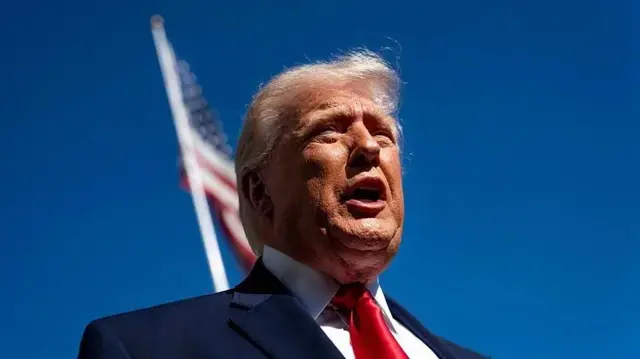
As noted, domestic distribution is in the hands of “Gringo Cartels” that keep most of the business’s profits. In this scenario of continuous hypocrisy, the recent Donald Trump administration started an unprecedented phase of escalation, naming cartels as “terrorist organizations.”
This authorizes the Pentagon and CIA to execute lethal and covert operations (targeted assassinations, drone strikes, special forces incursions) in sovereign territories like Venezuela, Colombia, or Mexico.
The excuse of fighting drug trafficking revived a militarized Monroe Doctrine. Now, it is about controlling the hemisphere and its resources.
Towards an Anti-Hegemonic Reform
The brutal violence scarring Latin America, from Mexico’s mass graves to Colombia’s rural conflicts, is not a regional failure. It is a direct consequence of insatiable Northern demand and complicit global financial systems that profit from chaos.
We must reject the false narrative of “endemic corruption” or a “lack of rule of law” in the South. The primary consumer and the world’s largest money launderer are the ones who design and enforce the rules of this deadly game.
The only exit from this cycle of endless war is a decisive shift toward public health-focused policies and national sovereignty. The current paradigm serves only the interests of the military-industrial complex and financial elites in the global North.
Sources: teleSUR – Democracy Now – National Security Archieve – The New York Time – Britannica – BBC – Misión Verdad –
Author: Silvana Solano
Source: teleSUR