


Venezuelan National Assembly Supports Strategic Treaty with Russia
The treaty elevates Venezuela to the status of Russia’s main strategic partner in Latin America, sealing an alliance that has been consolidated for more than two decades.
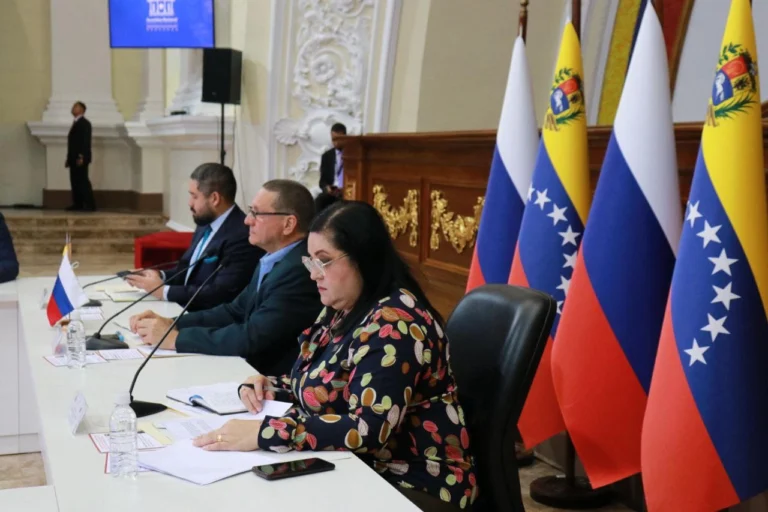
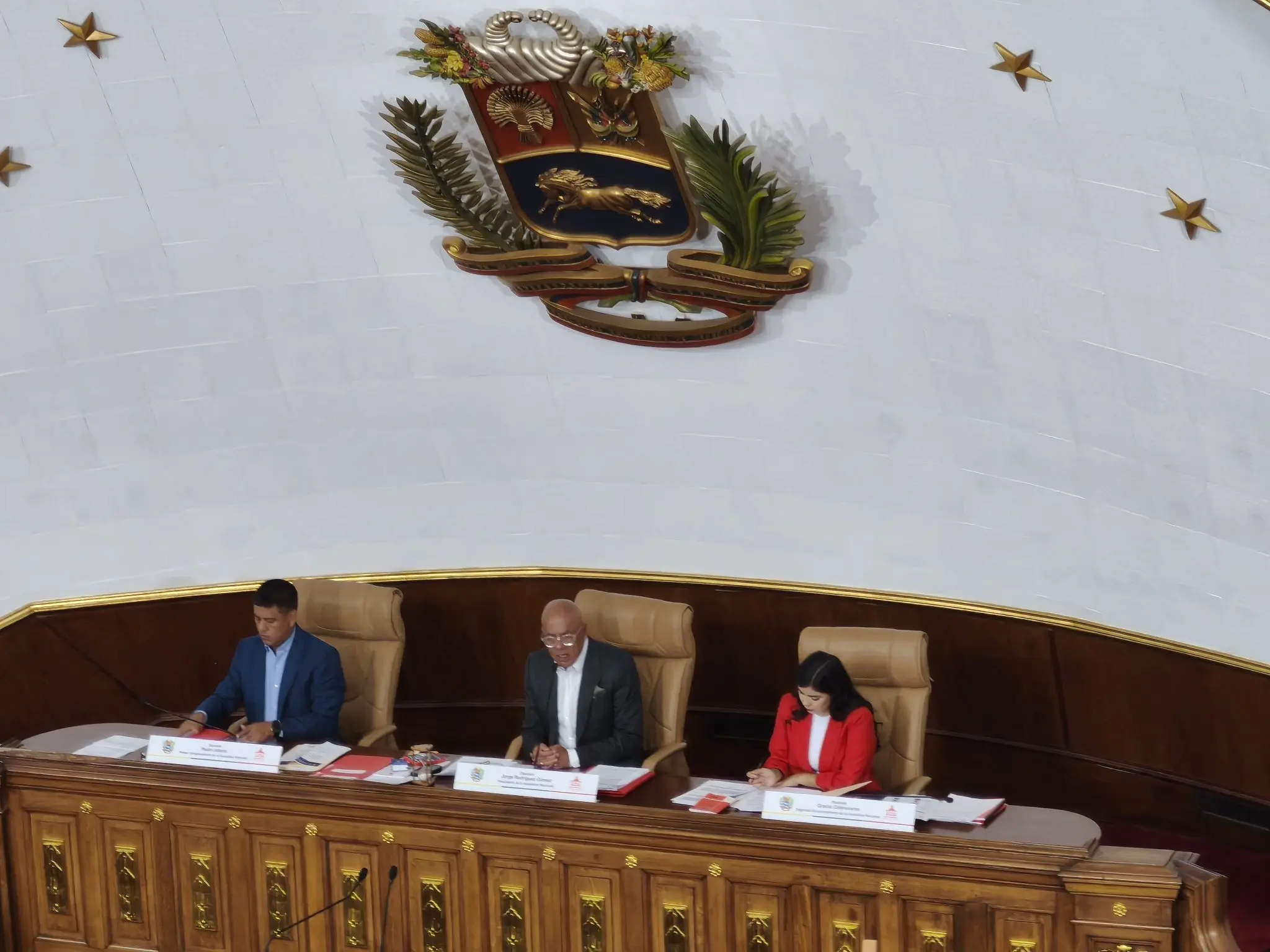
Lawmakers debated an agreement supporting the National Council for Sovereignty and Peace, a bill condemning Israel’s attack on Qatar’s sovereignty, and the first discussion of the Strategic Partnership and Cooperation Treaty with Russia. Photo: National Assembly
September 18, 2025 Hour: 9:09 pm
🔗 Comparte este artículo
The National Assembly of the Bolivarian Republic of Venezuela held an ordinary session this Thursday, September 18, in which it unanimously approved the Strategic Partnership and Cooperation Treaty between Venezuela and the Russian Federation.
RELATED:
In addition, two other key items were on the agenda: legislators supported the establishment of the National Council for Sovereignty and Peace of Venezuela; and a bill to condemn Israel’s attack on Doha, the capital of Qatar, where it unsuccessfully attempted to assassinate negotiators from the Palestinian resistance movement Hamas.
The Venezuela-Russia Strategic Partnership Treaty marks a significant step in strengthening bilateral ties in areas such as energy, defense, technology, and economic cooperation.
The bill supporting the initiative was presented by Representative Roy Daza, who stated: “This treaty does not respond to a temporary situation, but rather to a long-term vision that guarantees cooperation and solidarity between our peoples.”
The congressman also emphasized that it is a “fundamental principle in relations” and a “message of peace and strength for the Venezuelan people.” He also emphasized that the agreement not only seeks to strengthen the political alliance but also addresses the fight against terrorism, drug trafficking, and money laundering.
He also noted that the establishment of a high-level intergovernmental commission is proposed to coordinate and implement the treaty’s resolutions.
In the economic sphere, the legislator mentioned that the pact is key to the development of OPEC+ and to the nation’s aspiration to join the BRICS as a matter of right.
Poro highlighted the centrality of the ideological dimension, positioning the Russian-Venezuelan alliance as a common front of resistance against Western influence and defending a “just and polycentric” world.
Relations between Venezuela and Russia serve as a strategic axis within Venezuelan foreign policy. Both countries maintain cooperation agreements in the energy sector, particularly in the exploration and exploitation of oil and gas, as well as in joint projects in the mining industry.
The treaty seeks to give legal and structural character to this partnership, formalizing the commitments in a framework document that establishes long-term cooperation mechanisms and consolidates the political alliance between Caracas and Moscow on the international stage.
The Russia-Venezuela Strategic Alliance on the Global Stage
On May 7, 2025, relations between Moscow and Caracas reached the highest level with the signing of the Strategic Partnership and Cooperation Agreement, the culmination of two decades of continuous rapprochement and the realization of a vision of a multipolar world order.
This pact, described by the Kremlin as of the “utmost importance,” elevates Venezuela to the status of Russia’s main strategic partner in Latin America and seals an alliance that transcends the economic to encompass the military, technological, and ideological.
The treaty is framed within a significant historical context: the 80th anniversary of the victory over Nazi Germany and eight decades of diplomatic relations. However, its modern impetus dates back to the era of Hugo Chávez (1999-2013), whose government initiated deep collaboration with Moscow, primarily in the areas of defense and energy.
Since then, and especially following the increase in international sanctions against both countries, the partnership has intensified, positioning itself as a common front of resistance against Western influence.
Author: HGV
Source: Telesur