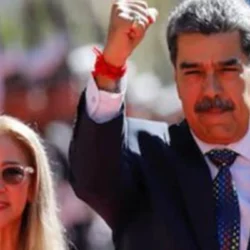



Venezuela–U.S. Military Tensions Escalate: Maduro Warns of Armed Defense Against Aggression
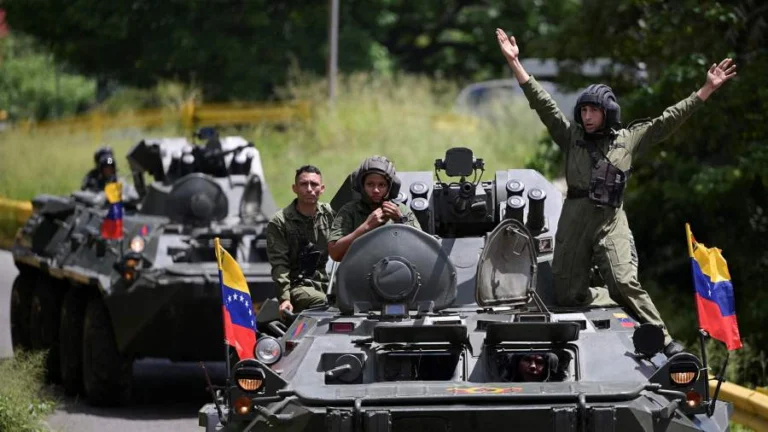
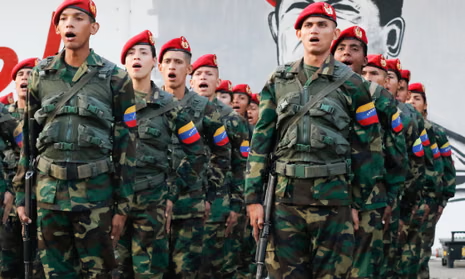
Members of the Bolivarian Armed Forces during defensive maneuvers amid Venezuela–U.S. military tensions.
October 4, 2025 Hour: 10:20 am
🔗 Comparte este artículo
Venezuela–U.S. Military Tensions: President Nicolás Maduro accuses the U.S. of fueling military aggression and vows to defend Venezuela’s sovereignty amid rising military tensions in the Caribbean.
Related: Venezuela ratifies peace diplomacy in the face of new colonization attempts
Venezuela–U.S. Military Tensions: Maduro Accuses Washington of Armed Aggression
Venezuelan President Nicolás Maduro accused the United States of orchestrating an “armed aggression” to impose “puppet governments” in Latin America and seize his country’s natural resources, amid a rapid escalation of military operations in the Caribbean ordered by former U.S. President Donald Trump.
Speaking during an international forum broadcast by Venezolana de Televisión (VTV), Maduro denounced Washington’s alleged plan to carry out a regime-change operation aimed at controlling Venezuela’s oil, gas, and gold. He declared that Venezuela “will never bow before any empire” and reaffirmed the country’s right to sovereignty and peace.
Accompanied by delegations from nearly 60 nations, Maduro warned that if necessary, Venezuelans would “move from nonviolent to armed forms of struggle” to defend their independence. His words resonated amid growing regional militarization, which Caracas has denounced before the international community as U.S. warships and F-35B fighter jets operate near Venezuelan waters under the pretext of counter-narcotics missions.
Regional Escalation and U.S. Military Presence
External Link Suggestion: United Nations Security Council – Meeting Records on Western Hemisphere Security
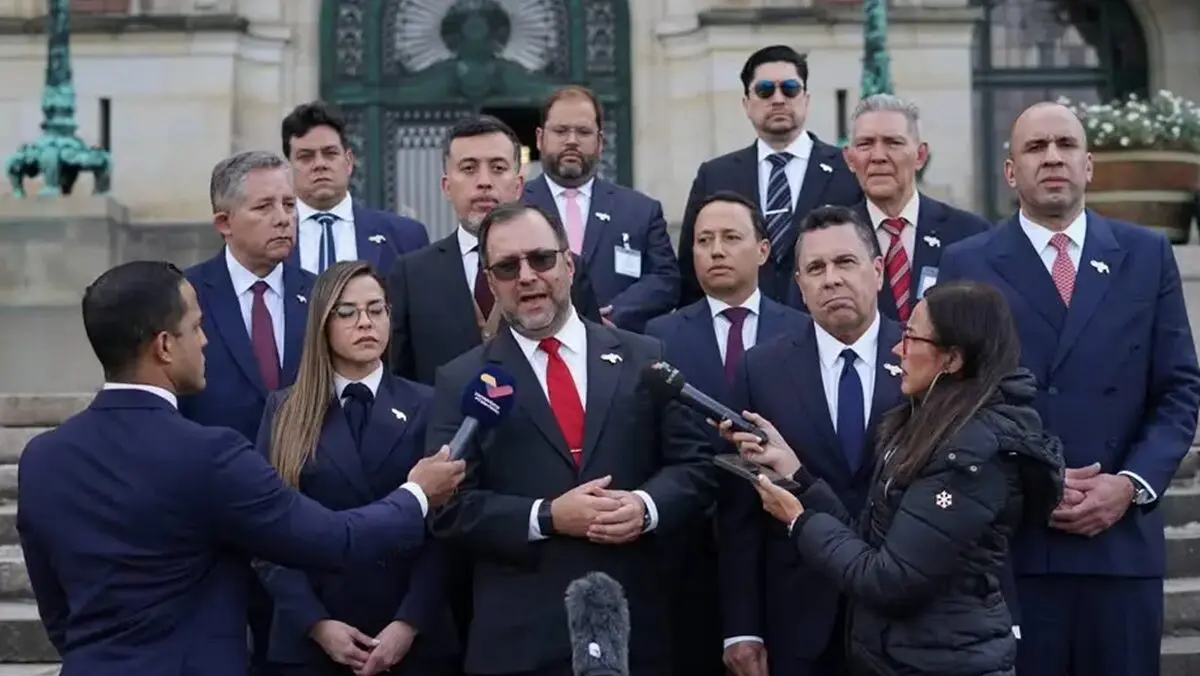
Simultaneously, Vice President Delcy Rodríguez accused the Government of Guyana of “opening the door to the American invader,” referring to ExxonMobil as a driving financial actor behind an alleged “militarist aggression” against Venezuela. Caracas filed a formal complaint before the UN Security Council, citing repeated incursions of U.S. aircraft flying within 80 kilometers of its coastline.
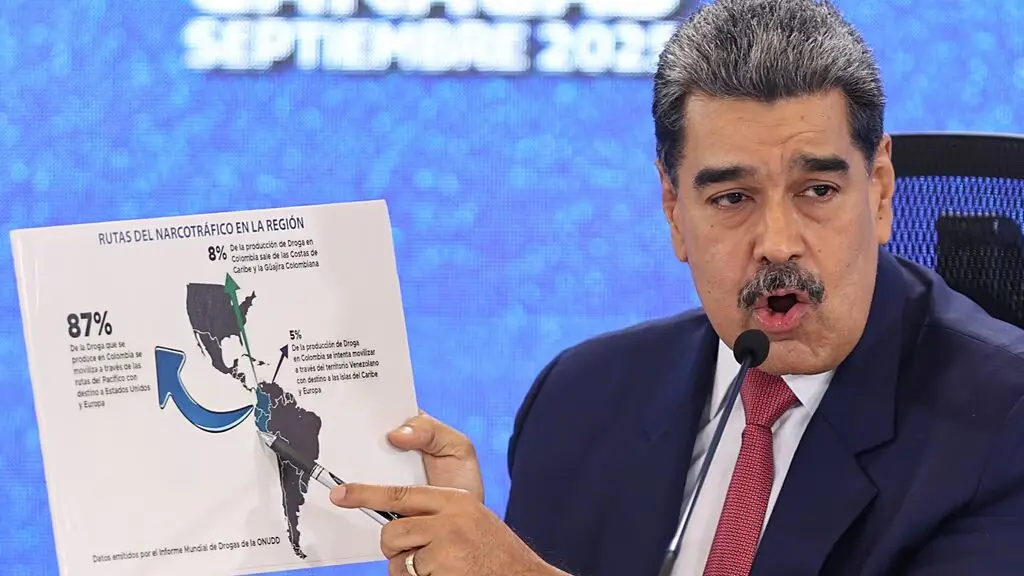
The U.S. Department of Defense justified its presence in the Caribbean as part of anti-drug maritime operations, following recent attacks on vessels it described as narcotics smuggling boats. However, Venezuelan authorities dismissed these claims, arguing that the U.S. intends to justify military expansion under the guise of counter-narcotics missions.
Public tensions escalated when Donald Trump mocked Venezuela’s civil defense initiatives on his social media platform, Truth Social. The former U.S. president shared a video of Venezuelan women undergoing basic military training, captioning it: “TOP SECRET: We caught the Venezuelan militia training. A very serious threat!” The publication drew widespread criticism and went viral across both pro- and anti-Maduro communities.
Maduro’s administration defended the training sessions led by the Bolivarian National Armed Forces (FANB) as essential for national defense against growing U.S. hostility. He asserted that Venezuela remains “more united than ever” to confront what he described as a war declared by Washington, signaling a hardening of rhetoric and mobilization on both sides.
Caracas Stands Firm on Sovereignty
External Link Suggestion: Organization of American States – Hemispheric Security Policy Portfolio
The deteriorating relationship between Caracas and Washington has triggered a new wave of political and military tensions in the Caribbean, where Venezuela continues to uphold a defiant position against what it calls acts of imperialist intervention and resource plunder.
Maduro urged the international community to support Venezuela’s territorial integrity and reported ongoing “plans to steal oil, gas, and gold” from the nation. The Venezuelan leader called for global solidarity, warning that U.S. actions represent a broader threat to regional peace and the sovereign rights of developing nations.
Government sources confirmed that Venezuela is reinforcing its defense systems and mobilizing civilian militias to face what it perceives as external threats. “Venezuela will respond with firmness to any act of aggression,” Maduro stated. He emphasized that the nation’s defensive posture is rooted in international law and the principle of non-intervention, key pillars of his administration’s foreign policy.
This standoff has elevated the Venezuela–U.S. dispute into a wider geopolitical issue, with implications for Latin America’s balance of power. Regional analysts warn that the Caribbean could become a strategic hotspot, reviving Cold War–style alignments as global powers watch closely the intersection of resource politics, sovereignty claims, and U.S. military strategy.
Geopolitical Context
Maduro’s statements fit into a pattern of intensified diplomatic friction and military posturing between Caracas and Washington. Over the past year, both sides have exchanged public accusations, ranging from airspace violations and espionage to financial sanctions and political propaganda.
For Venezuela, the U.S. naval maneuvers constitute an “act of intimidation,” while for Washington, they form part of a broader campaign against transnational narcotrafficking. This narrative gap continues to polarize regional alliances and complicate efforts for diplomatic mediation.
Experts note that the Caribbean’s militarization reflects Washington’s renewed interest in South American resources, paralleling earlier U.S. interventions in Panama and Grenada. Venezuela’s strategic location, combined with its vast oil reserves — among the largest in the world — adds a significant energy-security dimension to the unfolding crisis.
The ongoing friction also underscores the fragility of multilateral diplomacy in the hemisphere, as blocs such as CELAC, ALBA-TCP, and the OAS struggle to articulate a unified response to growing external pressures. Russia, China, and Iran have voiced support for Venezuelan sovereignty, raising concerns in Washington about foreign military cooperation in the region.
Given these dynamics, the Venezuela–U.S. military tensions are expected to remain central to global geopolitical discussions, especially regarding energy control, maritime law, and hemispheric stability. International observers warn that the next moves by either side could reshape the security architecture of Latin America in the coming decade.
Author: JMVR
Source: EU