Venezuela Reaffirms Its Strong Diplomatic Bonds With Cuba
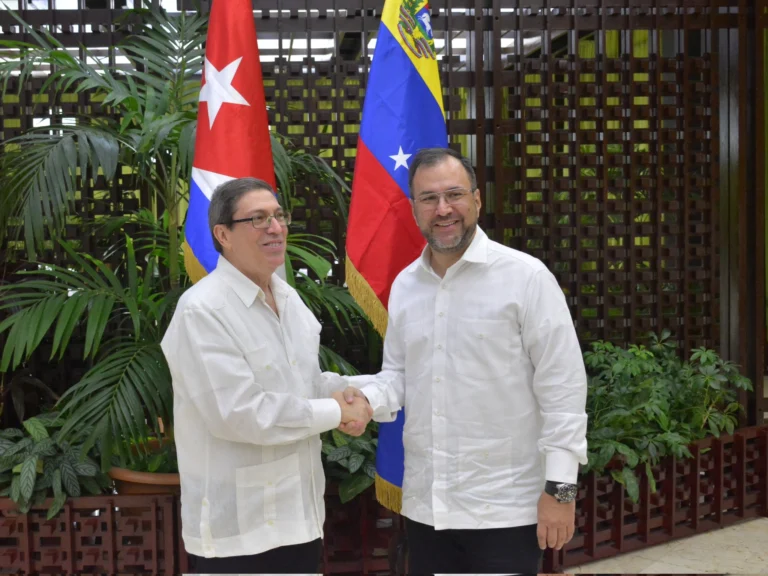
Cuban FM Bruno Rodriguez Parrilla (L) and his Venezuelan counterpart Yvan Gil (R). Photo: X
January 11, 2026 Hour: 5:57 pm
🔗 Comparte este artículo
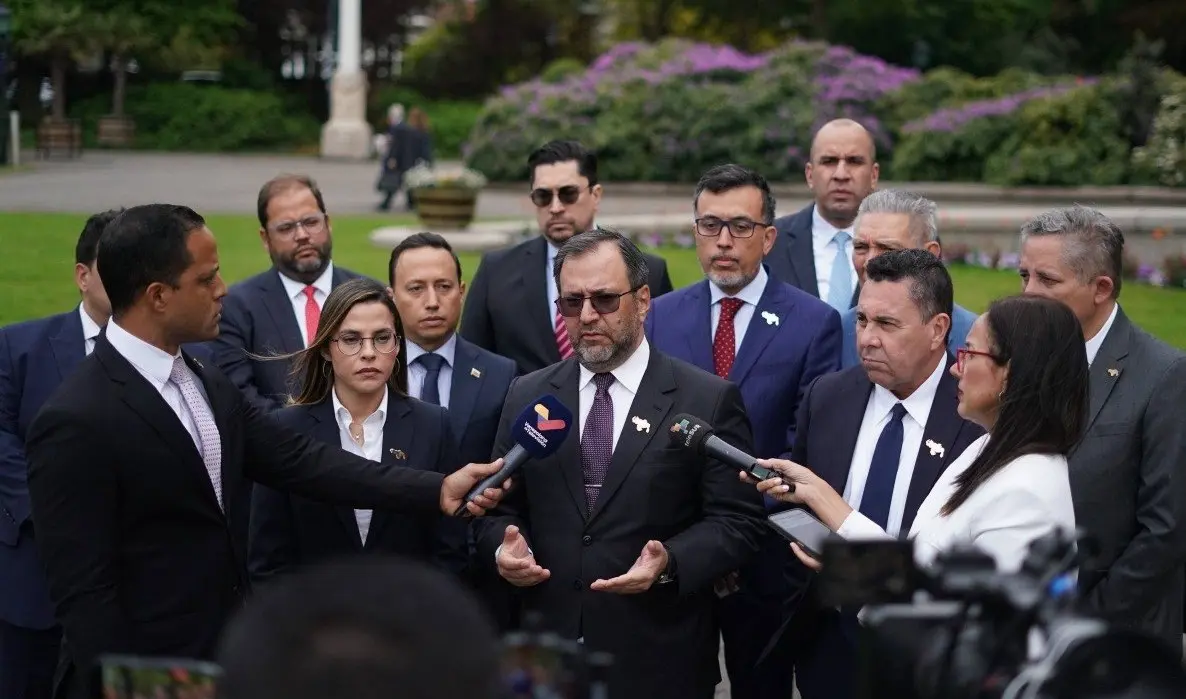
Venezuela’s Foreign Ministry for International Affairs published a statement reaffirming the historic, brotherhood, and solidarity that ties the diplomatic relations between the Bolivarian Republic of Cuba and the Caribbean.
RELATED:
Defiant Truths: Cuba Reaffirms Sovereignty Against U.S. Accusations Amid 66 Years of Aggression
“The Bolivarian Republic of Venezuela reaffirms its historic position in relations with the Republic of Cuba, under the Charter of the United Nations and international law, on the free exercise of self-determination and national sovereignty,” the statemnt reads.
The statement of the Bolivarian state emphasizes that the relationship with the Republic of Cuba has historically been based on brotherhood, solidarity, cooperation and complementarity.
Venezuela reaffirms that international relations must be governed by the principles of international law, non-intervention, the sovereign equality of States and the self-determination of peoples. We reiterate that political and diplomatic dialogue is the only way to resolve disputes of any nature in a peaceful manner.
The US government, after kidnap the Constitutional President of Venezuela Nicolas Maduro and his wife Cilia Flores during a military intervention, have now started to threat the Cuban revolutionary government.
Cuban Foreign Minister Bruno Rodríguez reiterated on his X account that “Cuba does not receive nor has it ever received monetary or material compensation for security services it has provided to any country,” contrasting this position with U.S. foreign policy.
“Unlike the U.S., we do not have a government that engages in mercenary activities, blackmail, or military coercion against other states,” he stated.
Rodríguez also defended Cuba’s right to import fuel from markets willing to trade, without interference from unilateral coercive measures imposed by Washington.
In that sense, he emphasized that “law and justice are on the side of Cuba,” and qualified the US. as “a criminal and uncontrolled hegemon that threatens peace and security, not only in Cuba and this hemisphere, but the whole world”.
For his part, the Cuban president Miguel Díaz-Canel, responded strongly to the criticism of the US government, arguing that they lack the moral to judge Cuba, especially given its tendency to trade everything, including human lives.
Díaz-Canel attributed the criticism to frustration at Cuba’s sovereign decision to choose its own political model and defended the Revolution from accusations of economic deprivation, noting that these are a direct result of the sanctions imposed by the United States for six decades.