







Venezuela Negotiates 44 Energy Deals to Expand Strategic Alliances
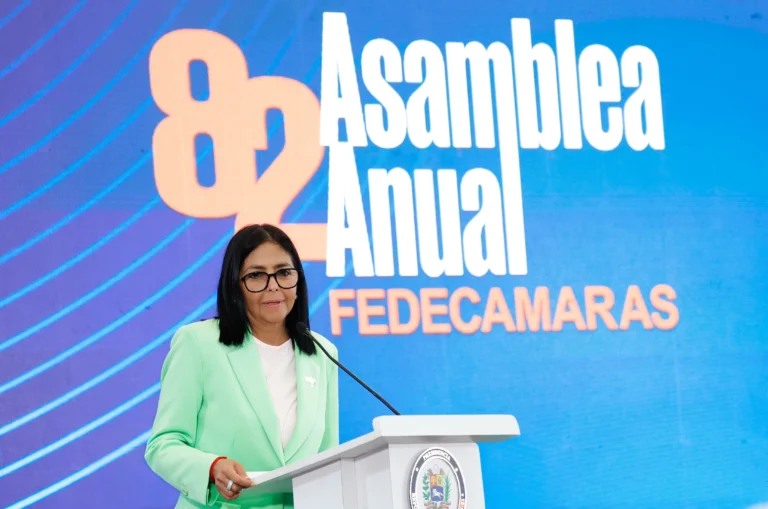
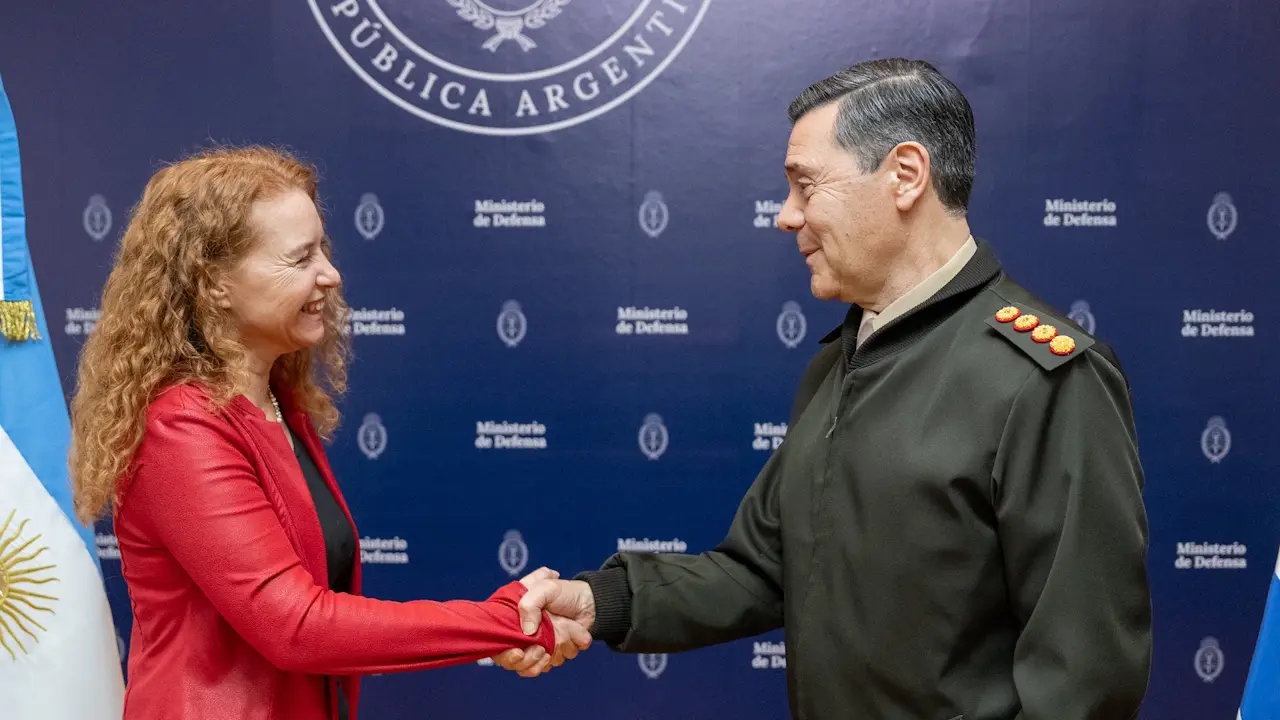
Acting President Delcy Rodríguez presented the plan of financing and national industrialization at the Annual Fedecamaras Assembly. Photo: Venezuelan Presidential Press.
October 8, 2026 Hour: 6:57 pm
🔗 Comparte este artículo
Venezuela is negotiating 44 new agreements to expand its strategic alliances in the energy sector, acting President Delcy Rodriguez announced Thursday while presenting the government’s economic results to the country’s largest business federation.
Venezuelan Acting President Delcy Rodríguez, presented this Thursday a report on the country’s productive performance at the 82nd Fedecamaras Assembly. Her address blended wage figures, energy expansion and a renewed push for multilateral financing, delivered at a moment when the government is working to project stability to investors and domestic industry alike.
RELATED: Venezuelan Economy Holds 22 Quarters of Economic Growth, Acting President Rodriguez Says
Private-sector salaries grew 32.8%, Rodríguez highlighted, while public-sector pay climbed 50%. Rodríguez also set a directive that future wage rises should exceed the growth rate of Gross Domestic Product (GDP), a formula intended to keep purchasing power ahead of inflation.
Energy Deals Expand
Acting President Rodríguez detailed that the state-owned oil company Petroleos de Venezuela (PDVSA) has already signed 61 operating agreements, and that 18 contracts have been formalized in the mining sector, presenting the figures as the result of a coordinated economic policy and dialogue with productive sectors.
The industrial plan gives priority to the chain connecting iron and aluminum companies with oil and gas production. In this sense, Rodríguez reported a 38% rise in purchases of domestic raw materials, against a 34% fall in imports of finished goods. Those figures, she argued, mark a turn toward local manufacturing.
Financing and Stability
On the international stage, the Acting President confirmed Venezuela’s return to the multilateral system after restoring relations with the International Monetary Fund (IMF), the World Bank and the Inter-American Development Bank, while preserving its ties to the Development Bank of Latin America (CAF).
With that reopening in place, the government projects it will capture $12 billion in public and private financing over the next two years.
Meetings of the National Economy Council and the IDB produced credit lines designed for large companies, small and medium enterprises, and entrepreneurs. Those instruments, she affirmed, will feed the country’s industrial recovery.
On exchange policy, she highlighted the narrowing of the financial gap achieved after coordinating operational mechanisms with international and U.S. banks. The bilateral arrangements improved the supply of foreign currency to industrial sectors during the current period. The government will also maintain technical monitoring of the currency market to guarantee an adequate flow of transactions in support of national productivity.
The data, she insisted, support the strategy. Third-quarter growth is projected above 6.5% despite the damage caused by the earthquakes hit the country in June 24. Inflation is decelerating, and the exchange gap shrank from 62.7% in January 2026 to 11.7%.
Rodriguez closed by rejecting formal dollarization outright and reaffirming the country’s monetary sovereignty. Durable growth, she stressed, depends exclusively on strengthening the bolivar (the venezuelan currency) in all commercial and financial circuits.
Author: Laura V. Mor
Source: Venezuelan Presidential Press