







Venezuelan President Maduro Claims Head-of-State Immunity, Seeks Dismissal of U.S. Charges
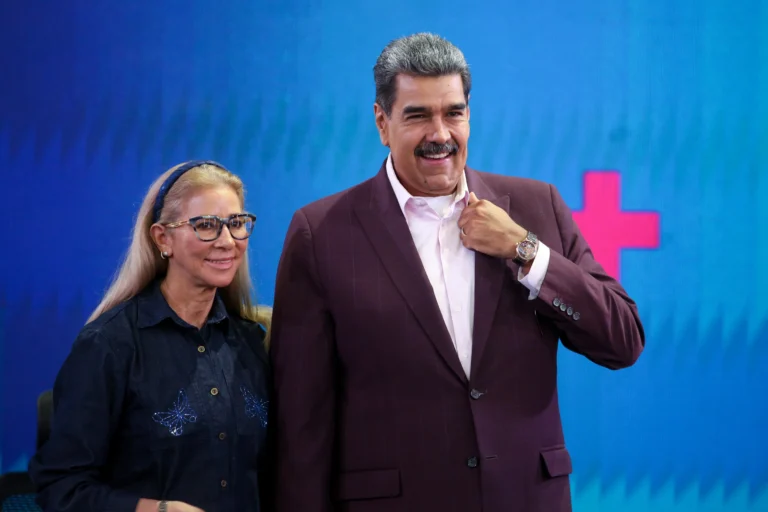
(FILE) Venezuelan President Nicolás Maduro and his wife, the First Combatant Cilia Flores, both kidnapped in the United States. Photo: Venezuelan Presidential Press.
September 2, 2026 Hour: 9:14 pm
🔗 Comparte este artículo
Venezuela’s President Nicolás Maduro asked a U.S. federal judge on Wednesday to dismiss the drug trafficking charges against him, arguing that his position as head of a sovereign nation grants him absolute immunity from prosecution abroad.
The defense of Venezuelan President Nicolás Maduro, asked this Wednesday to dismiss the criminal case against him in the United States under the legal argument of sovereign immunity, as recorded in the digital judicial file. The motion, submitted in Manhattan federal court by defense lawyer Barry Pollack, arrived on the deadline set by U.S. District Judge Alvin Hellerstein to formally present its arguments.
Pollack offered two grounds for throwing out the indictment. He contended that Hellerstein lacks jurisdiction because sitting heads of State enjoy complete immunity from criminal proceedings in foreign courts.
RELATED: Venezuelan President Maduro’s Trial To Begin in June 2027
“This court has no jurisdiction over Mr. Maduro, who is recognized by the Bolivarian Republic of Venezuela as its head of State,” argued the Venezuelan legal team in a document presented to the court this Wednesday, in which they request the dismissal of charges of drug trafficking and narco-terrorism.
“This unprecedented prosecution violates the absolute immunity from criminal jurisdiction to which heads of state and foreign officials acting in their official capacities have been entitled for hundreds of years,” Pollack affirmed.
It challenges the foundation of a prosecution that carries several charges, including alleged narco-terrorism, conspiracy, drug trafficking and money laundering. The defense lawyer added that President Maduro was falsely accused and “vehemently denies” the allegations, which formed the legal justification for the U.S. military attack on Caracas on January 3 that resulted in the kidnapping of President Maduro and his wife, Cilia Flores, since when the Venezuelan leader has been held in a federal jail in Brooklyn.
An Uphill Battle
Legal experts have cautioned that President Maduro faces an uphill battle. Washington has not recognized him as Venezuela’s President since 2019, and U.S. courts tend to defer to the president and the cabinet in disputes over which foreign leader holds official recognition.
Historical precedent offers little encouragement. In 1990, a federal judge in Miami rejected former Panamanian military leader Manuel Noriega’s attempt to assert head-of-state immunity, partly because he never officially held the title of President.
In President Maduro’s case, he was still formally serving as the legitime Venezuelan President when he was kidnapped.
In February, President Maduro’s defense called for the charges to be dropped when the U.S. Treasury Department prevented his lawyers from receiving payments from Venezuela to fund his defense, owing to sanctions imposed on his country.
President Maduro has pleaded not guilty, and a trial is scheduled to begin on June 1, 2027, if the case survives the dismissal effort.
The procedural calendar now stretches into the coming months. Prosecutors must respond to the motion by October 2, and Hellerstein will hold a hearing on November 17. The eventual ruling will test the readiness of U.S. courts to apply international law in criminal cases, a practice they have historically resisted.
Head-of-state immunity stands as a longstanding tenet of international law, widely regarded as essential to the conduct of diplomacy between sovereign nations. Whether that principle survives contact with an U.S. courtroom will shape not only President Maduro’s fate but also the broader precedent for how the United States treats foreign leaders it opposes.
Author: Laura V. Mor
Source: Agencies