







Venezuela and United States Sign Energy Accords to Boost Oil Output
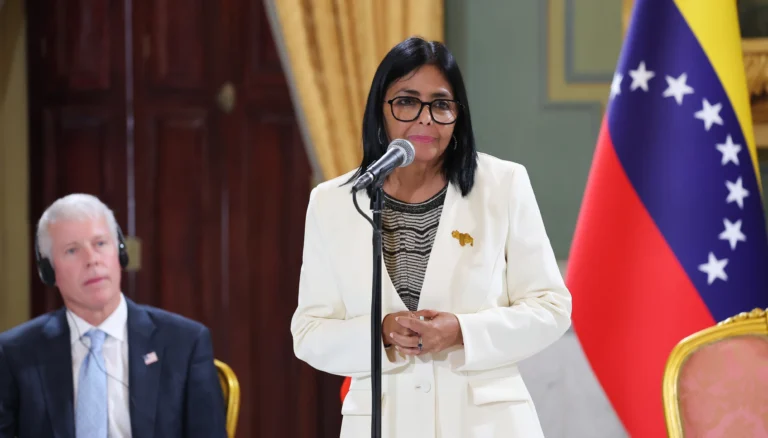
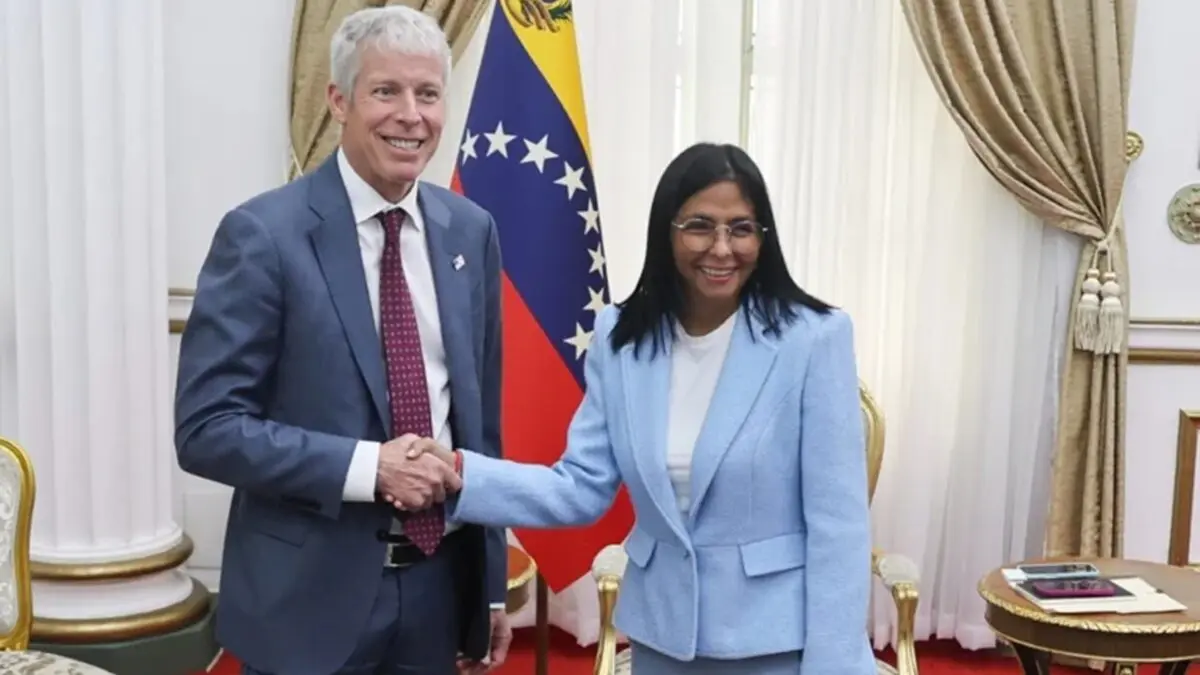
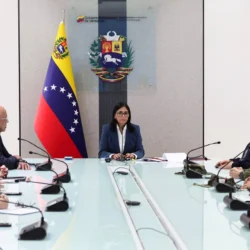
Acting President Delcy Rodriguez led the signing of agreements with U.S. Energy Secretary Chris Wright, who is making his second visit to Venezuela. Photo: Venezuelan Presidential Press.
September 2, 2026 Hour: 5:06 pm
🔗 Comparte este artículo
Venezuela’s Acting President Delcy Rodríguez and U.S. Energy Secretary Chris Wright presided Wednesday over the signing of agreements that will let foreign companies, including Chevron and Italy’s ENI, develop oil and gas projects jointly with the state-owned firm PDVSA.
Venezuela’s Acting president Delcy Rodríguez and U.S. Energy Secretary Chris Wright declared on September 2 that the newly signed strategic energy alliances will bring well-being, opportunities and prosperity to the Venezuelan people.
The agreements were signed with Italy’s ENI, the U.S. firm Chevron, Asper Energy, General Electric and Primavera Infinita Companies, which promote joint hydrocarbon production projects between companies from several countries and PDVSA, the own-state oil company. These accords served to complete details of the energy understanding reached between the two governments on August 29.
RELATED: Venezuela’s $209 Billion Energy Agreement With the U.S.
Acting President Rodríguez described the day as historic for the country, citing the scope of the international agreements signed with corporations such as U.S.-based Chevron and General Electric and Italy’s ENI. In this sense, Rodríguez xplained that the reactivation of the hydrocarbons industry through the development of green fields, a process not carried out in decades, along with a new stage of exploration and plans to rebuild the national electricity system, seeks to directly benefit the Venezuelan people.
Venezuelan Acting President reaffirmed the production increase will translate into more jobs, higher salaries, public services, hospitals, food and the wellbeing of a country that, as a whole, seeks prosperity and a better future. That is the horizon Venezuela longs for, its development, she told those gathered at the ceremony.
Following this, Rodríguez stressed that the contracts must be reflected concretely in the life of every Venezuelan and expressed certainty that the regions set to receive the investments would be activated soon.
The Acting President also renewed her invitation to young Venezuelans to return to the country and contribute to what she described as a spiritual and material national rebirth, aimed at a nation united in peace, reconciliation and wellbeing.
Modernization Accord
Beyond hydrocarbons, the accords include the recovery and modernization of the electric sector. The project signed by the state utility Corpoelec and General Electric would expand electricity generation and distribution, Acting President Rodríguez said, so that rising oil and gas output does not overburden the power grid.
Through Wright, she conveyed Venezuela’s gratitude to the U.S. government and to President Donald Trump, meanwhile she affirmed that she defends the political and diplomatic channel more each day for relations with the United States, betting on a win-win formula that benefits everyone. That channel, she argued, is the only mechanism to relate and obtain mutual benefits.
Before the signing, the Acting President met with executives of ENI and Chevron, companies with a sustained presence in the Bolivarian country. Rodríguez highlighted that Chevron and ENI remained in Venezuela even during the most difficult periods. The country, she added, is not starting from scratch, because in recent months it had adjusted its legal framework to protect future agreements.
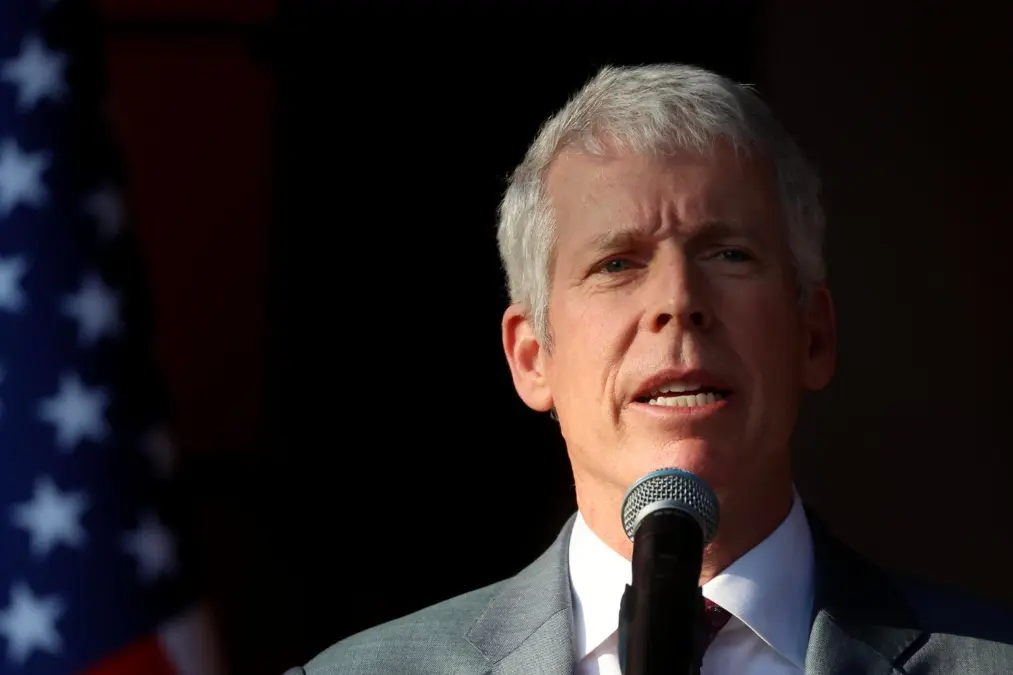
For his part, Wright noted that the pacts contemplate massive investments worth tens of billions of dollars directed at the oil, gas and electricity sectors. The U.S. official stressed that these actions are designed to comprehensively boost the economy, contain inflation and raise the quality of life in the nation.
Beyond the energy initiatives, Wright delivered a message of solidarity following the devastating earthquakes that struck Venezuela on June 24, announcing that after the joint remarks, the delegation would visit the affected communities.
The energy framework rests on reactivating oil production, advancing gas projects and restoring the electric grid, with Venezuelan state institutions and workers positioned at the center of the recovery. Both governments framed the agreements as a bridge toward economic stability and renewed bilateral cooperation.
Author: Laura V. Mor
Source: Venezuelan Presidential Press