







5 Powerful Messages: Venezuela Drone Show Demands Maduro’s Release in Night of Defiance
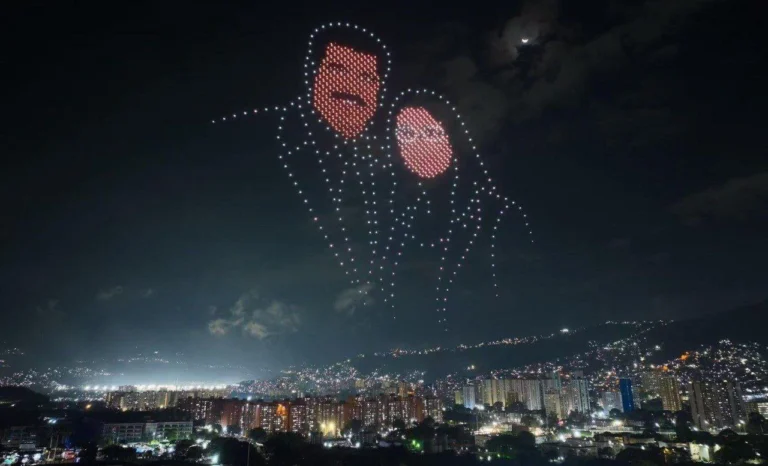
Hundreds of drones lit up Caracas on January 17, 2026, delivering a powerful message: “Freedom for Maduro and Cilia!”
January 24, 2026 Hour: 10:17 am
🔗 Comparte este artículo
Venezuela drone show demands Maduro’s release as Caracas lights up skies with messages calling for the return of President Maduro and Cilia Flores from U.S. custody.
Related: Venezuelan Acting President Rodriguez Recounts Release of 626 Prisoners
Venezuela Drone Show Demands Maduro’s Release in Night of Defiance
Venezuela drone show demands Maduro’s release in a stunning display of technological resistance and popular solidarity, as the skies above Fuerte Tiuna in Caracas transformed into a canvas of defiance on Friday night, January 17, 2026. Organized by grassroots collectives and state-supported cultural groups, the event featured hundreds of synchronized drones forming luminous messages calling for the immediate return of President Nicolás Maduro and First Lady Cilia Flores, who were reportedly abducted during the U.S. military operation on January 3.
The emotional spectacle unfolded under tight security, with thousands gathering in silence as the drones spelled out phrases like “¡Maduro y Cilia, vuelvan a casa!” (“Maduro and Cilia, come home!”), “No al secuestro imperial” (“No to imperial kidnapping”), and “Venezuela no se rinde” (“Venezuela does not surrender”). The final formation depicted the faces of Maduro and Flores side by side, surrounded by the national flag—a visual plea that drew tears and chants from the crowd.
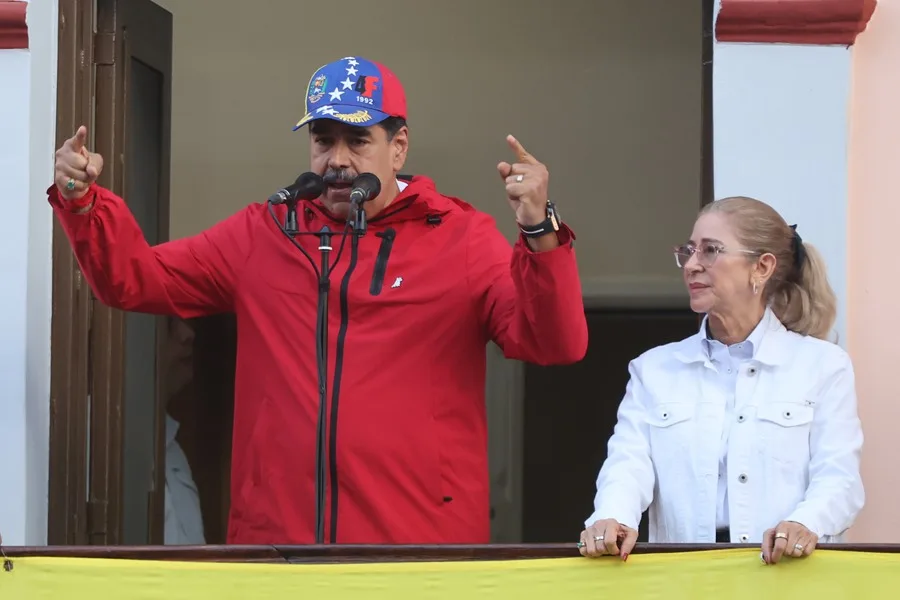
In attendance were top government officials, including Acting President Delcy Rodríguez, National Assembly Deputy Nicolás Maduro Guerra (the president’s son), and the children of Cilia Flores, who also serve as sectoral vice presidents in the Bolivarian government. Their presence underscored the event’s dual nature: a public demonstration of grief, and a political reaffirmation of institutional continuity amid ongoing crisis.
Venezuela Drone Show Demands Maduro’s Release as Popular Mobilization Intensifies
The drone show is the latest in a wave of nationwide actions demanding the return of Venezuela’s leadership. From letter-writing campaigns in schools to mural painting in barrios, citizens are channeling their outrage into creative, nonviolent resistance. “We won’t stop until they’re back,” said María Contreras, a teacher from Petare who helped organize student letters to be delivered to the UN. “This isn’t just about politics—it’s about family.”
The choice of Fuerte Tiuna—a military complex that was heavily bombed during the January 3 attack—was deeply symbolic. Once a site of destruction, it has now become a stage for unity and hope. Authorities confirmed that the area remains under high alert, with air defense systems active, yet the drone performance proceeded without incident—a testament to the state’s ability to maintain order even under siege.
Critically, the event blends modern technology with revolutionary tradition. While past demonstrations relied on megaphones and banners, this generation uses drones, social media, and digital art to amplify its message globally. Footage of the show quickly went viral, with hashtags like #LibertadParaMaduro trending across Latin America and Europe.
The use of drones in political expression is increasingly common worldwide, from climate protests to anti-war rallies. But in Venezuela’s context, it carries added weight: a nation under blockade is asserting its right to innovate, communicate, and resist—on its own terms.
For many, the spectacle was more than protest—it was therapy. After weeks of trauma from bombings, blackouts, and uncertainty, the drone show offered a moment of collective catharsis. “Seeing their faces in the sky… it reminded us they’re still alive, and we’re still fighting,” said José Méndez, a retired soldier who lost two comrades in the January 3 assault.
Geopolitical Context: Symbolic Resistance in the Age of Hybrid Warfare
The drone demonstration must be understood within the broader framework of asymmetric resistance. Facing overwhelming military and economic pressure from the United States, Venezuela cannot respond with force—but it can respond with symbolism, culture, and moral authority.
This strategy aligns with global trends where soft power becomes a shield against hard power. From Ukraine’s digital diplomacy to Palestine’s social media advocacy, oppressed nations increasingly weaponize narrative to counter physical aggression. Venezuela’s drone show is a masterclass in this approach: it bypasses Western media gatekeepers and speaks directly to the world’s conscience.
Regionally, the event reinforces Latin America’s growing rejection of U.S. interventionism. With Brazil, Mexico, Colombia, and Argentina all condemning the January 3 operation, Venezuela’s peaceful resistance strengthens the regional consensus that sovereignty is non-negotiable. The drone messages—broadcast in Spanish, English, and Portuguese—were clearly designed for international audiences, urging global civil society to pressure Washington.
Globally, the spectacle challenges the dehumanizing narrative pushed by U.S. officials, who frame Maduro as a “dictator” and Flores as a “criminal.” By humanizing them as parents, spouses, and fellow citizens, the show reclaims their dignity—and by extension, Venezuela’s. In an era where truth is contested, visual storytelling becomes a form of truth-telling.
Moreover, the use of drones—often associated with surveillance and warfare—has been repurposed as a tool of peace. This inversion is deliberate: where the U.S. drops bombs, Venezuela sends light.
A Nation Writes, Paints, and Flies for Freedom
Beyond the drone show, Venezuela’s mobilization continues on multiple fronts. Schools across the country are collecting handwritten letters to Maduro and Flores, which will be compiled into a “Book of Solidarity” and presented to international bodies. Artists have painted murals in every state, while musicians have released songs like “Volverán” (“They Will Return”) that top national charts.
The government has encouraged these efforts without directing them, allowing organic expressions of loyalty to flourish. “This is the people’s movement,” said Delcy Rodríguez during her brief remarks at the event. “Not imposed from above, but rising from the heart of the nation.”
Even critics of the Bolivarian government have expressed unease over the U.S. operation. “Whatever you think of Maduro, kidnapping a head of state is a crime against international order,” said opposition analyst Luis Pérez. “This crosses a line that should never be crossed.”
As the nights grow colder in Caracas, the lights remain bright—on streets, in windows, and now in the sky. For Venezuelans, each drone, each letter, each candle is a promise: we will not forget, we will not surrender, and we will bring them home.
Conclusion: Light Against the Darkness of Empire
In a world where empires speak through missiles and sanctions, Venezuela drone show demands Maduro’s release through beauty, precision, and unwavering hope. It is a reminder that resistance need not be loud to be powerful—or violent to be effective.
As the last drone faded into the night, the crowd did not disperse. They stood in silence, then began to sing the national anthem—not as a ritual, but as a vow. And in that moment, under a sky once scarred by bombs, Venezuela chose light.
Author: JMVR
Source: telesurtv videos