


Venezuela Calls Guyana’s Actions on Essequibo Unilateral and Illegitimate
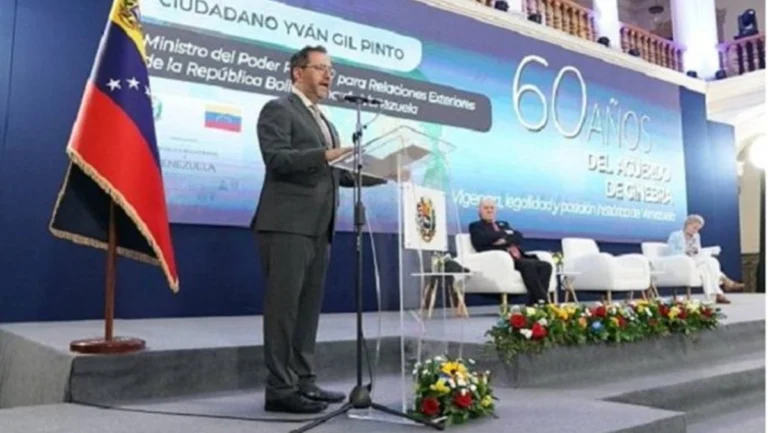
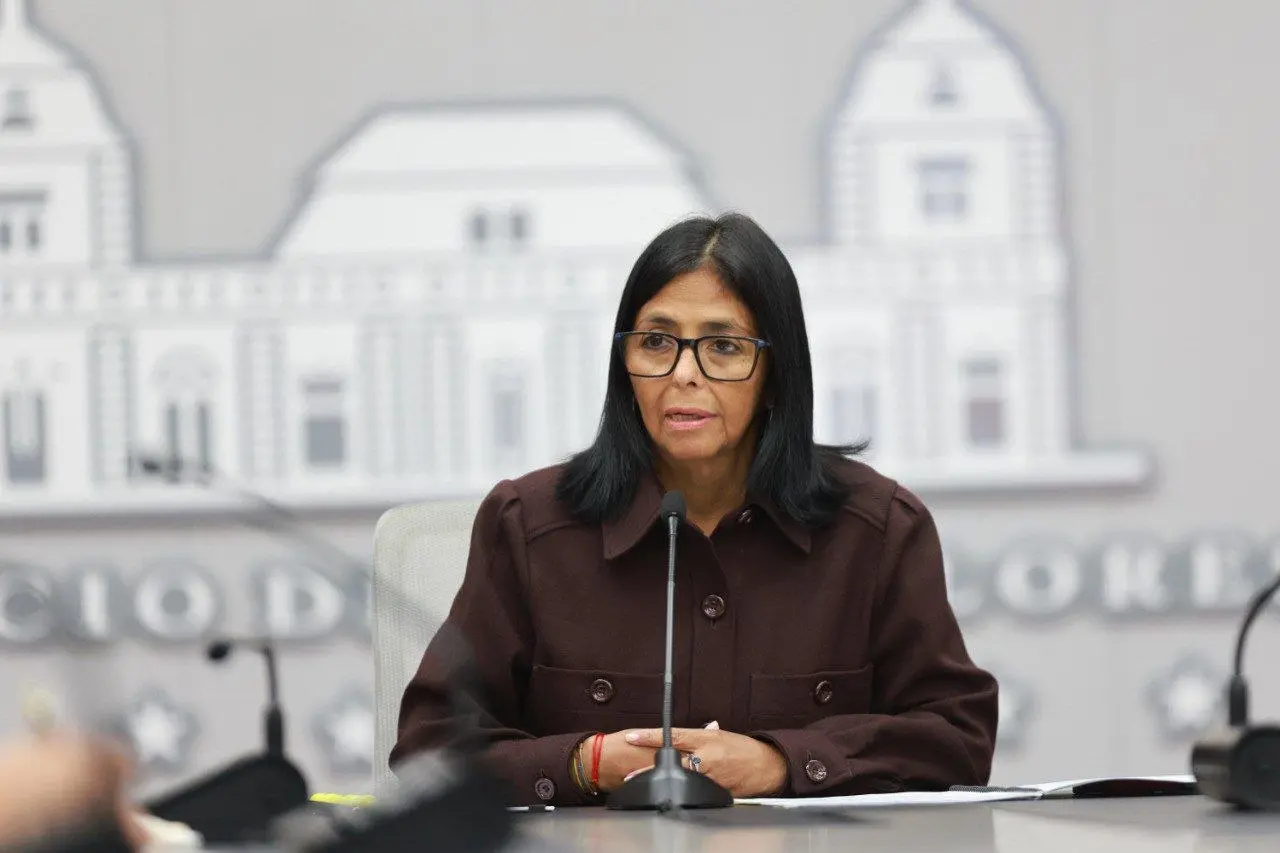
FM Yvan Gil. X/ @Natts058
February 20, 2026 Hour: 8:06 am
🔗 Comparte este artículo
Only the 1966 Geneva Agreement can resolve the territorial dispute, FM Gil says.
On Thursday, Venezuelan Foreign Affairs Minister Yvan Gil described Guyana’s actions regarding the Essequibo region as unilateral, unworkable and illegitimate, and urged that country to engage in dialogue to resolve the dispute, marking the 60th anniversary of the 1966 Geneva Agreement.
RELATED:
Venezuela Accuses Guyana of Pushing a ‘False Narrative’ at UN Assembly
“It has been clearly demonstrated that the path chosen by the Government of the Cooperative Republic of Guyana — a unilateral path — is unworkable, illegal and illegitimate, a path that does not reflect the spirit of the Geneva Agreement signed between the parties,” he said.
Gil called for adherence to international law, legality, the United Nations Charter and the “values that govern coexistence among nations,” stressing that only through the 1966 Geneva Agreement can a solution to the Guyanese-Venezuelan conflict be found.
“The peoples of Guyana and Venezuela are certain we will find a solution, a definition to this controversy through a mechanism of direct consultation, as mandated by this agreement, whose 60th anniversary we celebrate today and which we hope will be the solution sooner rather than later,” Gil said.
Venezuela has rejected the instrumentalization of the International Court of Justice to settle the dispute, reaffirming Caracas’ refusal to grant jurisdiction to that institution, a course pursued from the outset by Guyana.
“The International Court of Justice has no jurisdiction whatsoever to settle the controversy between Guyana and Venezuela over the territory of Guayana. The only legally binding and valid instrument is the Geneva Agreement,” the Venezuelan foreign minister stressed.
He also emphasized that the 1966 agreement “opens the door to direct negotiation” and a satisfactory outcome between the parties, reiterating that Caracas has, for 60 years, promoted a “peaceful solution to the controversy through direct dialogue.”
The text reads, “Venezuela has put forward a proposal to Guyana to resolve the dispute over the Essequibo region: a good-faith agreement. What does this agreement entail, while Venezuela rejects Guyana’s repeated claims of violating the Geneva Agreement and failing to meet its legal obligations? And what are these legal obligations? To engage in dialogue and seek a practical and satisfactory solution for both parties. Venezuela will not recognize any decision by the International Court of Justice, and the dispute will continue.”
1966 Geneva Agreement
On Feb. 17, under the slogan “The sun of Venezuela rises in the Essequibo!”, the Venezuelan state reaffirmed that it will continue defending its territorial integrity through Bolivarian peace diplomacy, demanding strict compliance with what was agreed upon six decades ago to guarantee a future of justice and respect for national sovereignty.
On Feb. 17, 1966, the Geneva Agreement was signed in Switzerland. It is an international instrument duly registered with the United Nations that sought to resolve the border dispute between Venezuela and then-British Guiana.
The treaty upheld Venezuela’s claim to recover 159,542 square kilometers taken through the fraudulent 1899 Paris Arbitral Award, which resulted from procedural fraud denounced even by attorney Severo Mallet-Prevost.
By signing the 1966 Geneva Agreement, the parties agreed to declare that imperial ruling null and void and committed to establishing a practical and satisfactory solution through direct negotiation, recognizing that the territory forms an integral part of Venezuela since the era of the Captaincy General.
Over these six decades, Venezuela has demonstrated its commitment to peace and good faith, including after the 1970 Protocol of Port of Spain, which sought to improve relations with the newly independent Cooperative Republic of Guyana. However, the Guyanese government chose to disregard the spirit of the treaty, particularly since 2015, following the discovery of oil deposits by the multinational ExxonMobil.
This company has financed campaigns to portray Venezuela as an aggressor, pressuring Georgetown to internationalize the conflict and bring it before the International Court of Justice, an instance that Venezuela argues lacks jurisdiction because the 1966 Geneva Agreement excludes any unilateral judicial settlement mechanism and requires bilateral negotiation.
The denialist conduct of successive Guyanese governments has facilitated the illicit and abusive exploitation of resources in maritime and land areas under claim, in flagrant violation of international law.
teleSUR/ JF
Source: FAM