


teleSUR: Uniting the Global South Against Media Hegemony
President of teleSUR, Patricia Villegas. (Photo: Xinhua).
September 7, 2025 Hour: 6:42 pm
🔗 Comparte este artículo
In an era where media giants dominate the narrative, teleSUR calls for a transformative union among Global South media entities.
With the intent of moving beyond mere visibility of independent content, this Latin American multimedia platform advocates for genuine collaboration in telling their stories to challenge global media hegemony.
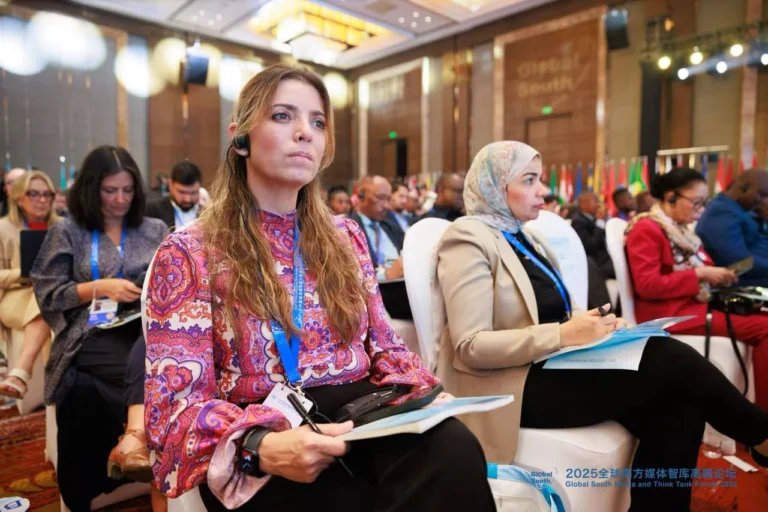
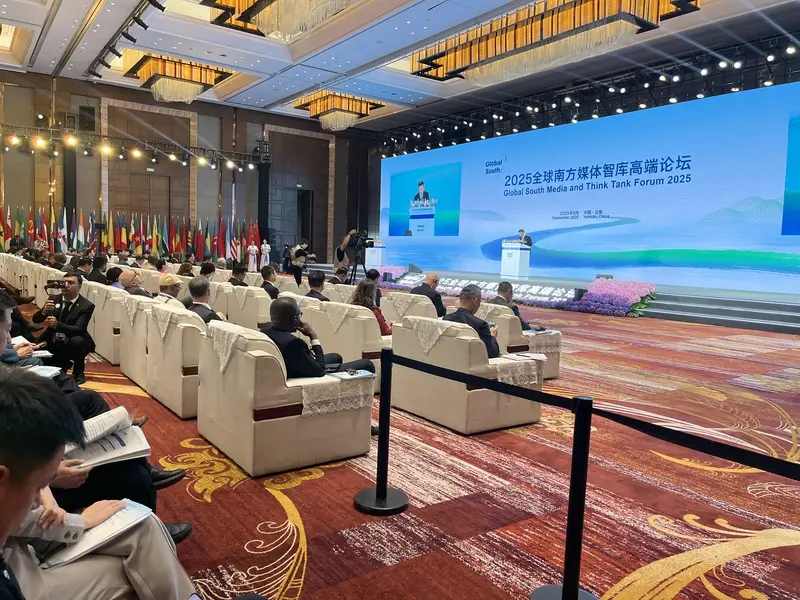
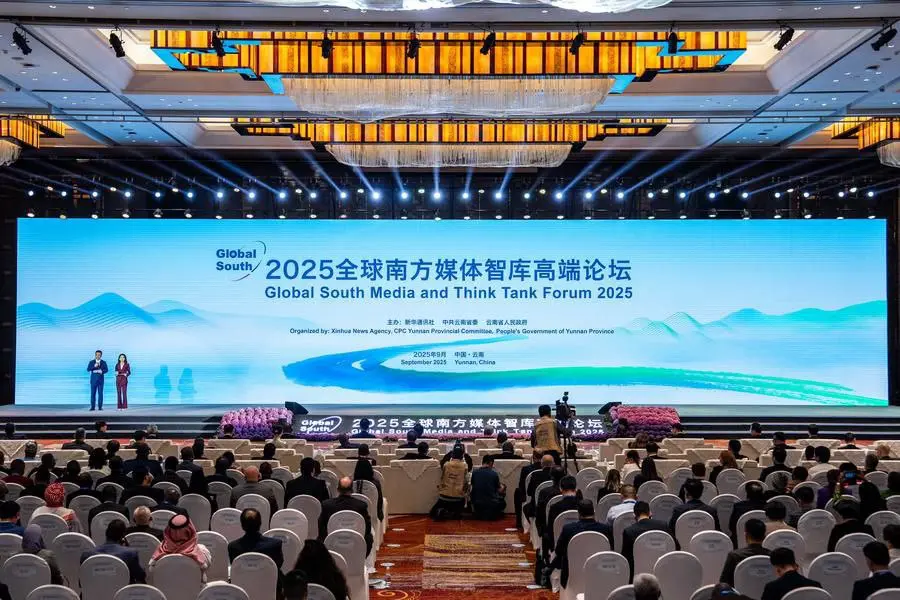
This vision was compellingly articulated by TeleSUR’s president, Patricia Villegas, at the Global South Media and Think Tanks Forum 2025.
Related: teleSUR and Al Mayadeen Sign Agreement to Strengthen Global South Media Cooperation
Fostering Unity Among Global South Media
Historically, media outlets from the Global South have often functioned as isolated voices amid a cacophony dominated by the North.
This has resulted in skewed narratives, where perspectives and issues pertinent to developing nations are either misrepresented or altogether ignored.
However, the rise of digital technologies and increased south-south cooperation are creating opportunities to reshape the global media landscape.
These platforms also empower local voices, circumventing traditional media gatekeepers and promoting authentic narratives.
By providing access to tools and resources, they enable individuals and communities to share their stories directly with the world, fostering empathy and challenging dominant perspectives.
This shift towards decentralized storytelling is crucial for building a more equitable and inclusive global media landscape, where the experiences and perspectives of the Global South are accurately and respectfully represented.
Villegas emphasizes the necessity of shifting from being solitary windows to becoming collaborative storytellers.
“We must stop acting as if each of our media is just a window to the other,” she stated, urging a cohesive approach.
Her vision is ambitious: a world where Latin American journalists report from China and vice versa, reflecting stories that transcend geographical boundaries.
She believes cultural exchange bridges gaps and highlights similarities.
A Collective Challenge Against Communication Hegemony
Today’s media landscape presents unique challenges and opportunities for the Global South.
The predominant narratives often overshadow the rich tapestry of cultures and stories from these regions.
Patricia Villegas argues that genuine sharing and reciprocal storytelling are essential to challenging the prevailing communication dominance.
“In communication, we are, to a large extent, playing with the destiny of humanity,” she expressed to Xinhua News Agency, underlining the profound impact of media narratives on global perceptions.
The forum, organized by Xinhua News Agency and the authorities of Yunnan province, provided an invaluable platform for collaboration.
For Villegas, the meeting symbolized a steadfast commitment to cooperation, technological advancement, and mutual storytelling.
Her words resonate with urgency: breaking down barriers and fostering a collective narrative is imperative for the Global South to effectively voice its perspectives on the world stage.
The Importance of Communication for Development
Communication is a vital tool for development across nations, a sentiment echoed by numerous participants at the forum.
Carlos Correa, Executive Director of the South Center, an intergovernmental think tank based in Geneva, emphasized the impressive milestones China has achieved in poverty reduction, education, health, and technology.
Yet, these strides often remain underreported in developing countries where such knowledge could inspire and inform similar efforts.
Mexican Senator Erika Hoffmann further underscores the pivotal role of media and think tanks in amplifying the Global South’s voice worldwide.
Diversity in stories reflects the intricate tapestry of cultures both within and beyond the southern hemisphere.
Hoffmann stresses escaping hegemonic narratives that suggest monolithic realities, advocating instead for a rich plurality of perspectives.
A Call to Action: Protecting Real Journalism
As the digital age expands its reach, the perils of misinformation and technological biases threaten genuine journalism.
Hoffmann calls for robust defense mechanisms against these issues, highlighting the need for authenticity in reporting.
“There is a diversity of cultures in the south, but also throughout the world, which deserve to be told,” she insists, recognizing the potential of true journalism to narrate the multifaceted human experience truthfully.
This critical juncture demands the Global South to unite, sharing resources and narratives to craft a more balanced global discourse.
This necessitates platforms that amplify marginalized voices, challenging the dominant narratives that often perpetuate inequalities. By fostering collaboration and knowledge exchange, the Global South can build resilience against external pressures and assert its agency in shaping international policies.
This unified front is not merely about demanding a seat at the table, but about reshaping the table itself, ensuring that it reflects the diverse perspectives and priorities of all nations.
The path forward requires a commitment to mutual support, shared learning, and a collective determination to dismantle the systemic barriers that hinder equitable progress.
teleSUR’s vision, underscored by Villegas’s optimism, seeks to transform how stories are shared, learned, and understood worldwide.
By standing together, the media of the Global South can indeed become a formidable force against the homogenizing tendencies of mainstream media powers, thus ensuring a more diverse and inclusive global narrative.
Author: Manuel F. Diaz
Source: teleSUR / Xinhua