


U.S. Congress Members Visit Cuba Amid Severe Blockade’s Damage
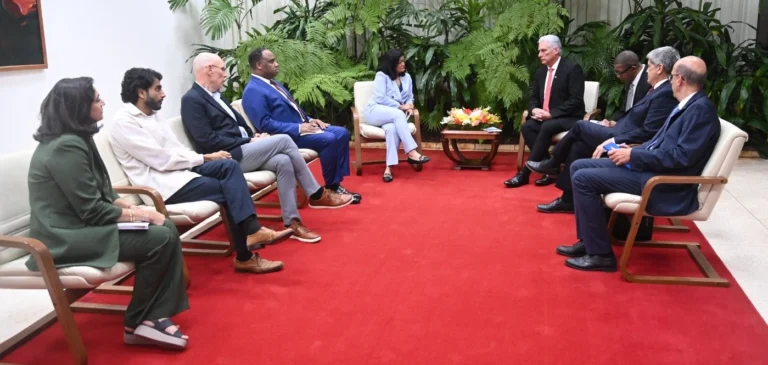
After a five-day visit to Cuba, Democratic lawmakers demanded the immediate removal of sanctions. Photo: X/ @DiazCanelB
April 6, 2026 Hour: 4:55 pm
🔗 Comparte este artículo
Cuba’s President Miguel Díaz-Canel denounced the U.S. blockade’s “criminal damage” to Congress members, advocating for serious dialogue to resolve differences.
Cuban President Miguel Díaz-Canel recently met with U.S. Congress members Pramila Jayapal and Jonathan Jackson in Havana, unequivocally denouncing the severe repercussions of the economic blockade imposed by Washington against the Caribbean nation.
RELATED: Spain Seeks Joint Humanitarian Effort for Cuba Amid U.S. Blockade
During the meeting, President Díaz-Canel emphasized the detrimental effects of the energy restrictions decreed by the current U.S. administration, characterizing these measures as “criminal damage” and warning of potential further aggressive actions.
Despite ongoing tensions, Díaz-Canel reiterated his government’s steadfast willingness to engage in serious and responsible bilateral dialogue aimed at finding solutions to existing political differences between the two countries.
Congress Members Witness Impact
Following a five-day visit to Cuban territory, the Democrats legislators strongly advocated for the immediate lifting of the U.S. sanctions. They asserted that the effects of these measures are profoundly devastating for the well-being of the civilian population across the island.
The congress members reported having directly observed how U.S. policy negatively impacts critical sectors, including health, education, and food supply. Congresswoman Jayapal openly described the current strategy as an obsolete Cold War-era policy, characterized by military pressures and coercive measures that actively impede the development of a new economic and social reality within the Caribbean nation.
The representatives further warned that the continued enforcement of the U.S. blockade directly leads to the closure of local businesses, significant interruptions within the educational system, and substantial losses of food supplies due to the chronic lack of resources for their proper preservation.
During their comprehensive agenda across the island, the delegation also held meetings with various Ambassadors from diverse regions, representatives from humanitarian organizations, and citizens spanning different political sectors.
The legislators ultimately concluded that an end to the existing restrictions would foster greater international cooperation and effectively guarantee the dignity of the Cuban people. Furthermore, they suggested such a move would generate mutual benefits through enhanced collaboration between both countries.
Currently, Cuba relies heavily on vital assistance from strategic allies such as Mexico, Russia, and several nations within the European Union. This crucial external support has been fundamental for the consistent supply of essential medicines, foodstuffs, and solar energy equipment. These tools are indispensable for addressing the nation’s ongoing energy crisis and the pervasive, constant power outages that continue to affect the country daily.
Author: Laura V. Mor
Source: Cuban Presidency/ X/ @DiazCanelB