







The Global Sumud Flotilla: International Solidarity Against the Blockade and Famine in Gaza
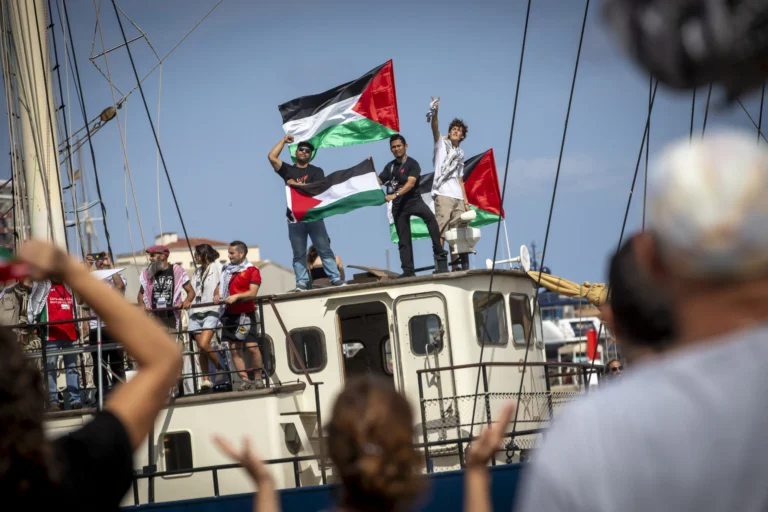
The Global Sumud Flotilla sets sail from Barcelona towards Gaza, in Barcelona, Spain, on August 31, 2025. Hundreds gather at Moll de la Fusta to bid farewell to the flotilla, with dozens of boats and thousands of supporters wearing kufiyas (Palestinian scarves) and waving flags. (Photo by Albert Llop/NurPhoto) (Photo by Albert Llop / NurPhoto via AFP)
September 16, 2025 Hour: 1:29 pm
🔗 Comparte este artículo
In a world that often seems to have forgotten the Gaza Strip, a beacon of hope and resistance sails in its waters.
The Global Sumud Flotilla, an initiative of international civil society, is heading toward the coast of Gaza with a clear and urgent objective: to break the illegal blockade that Israel has maintained since 2007 and which has intensified with the current war.
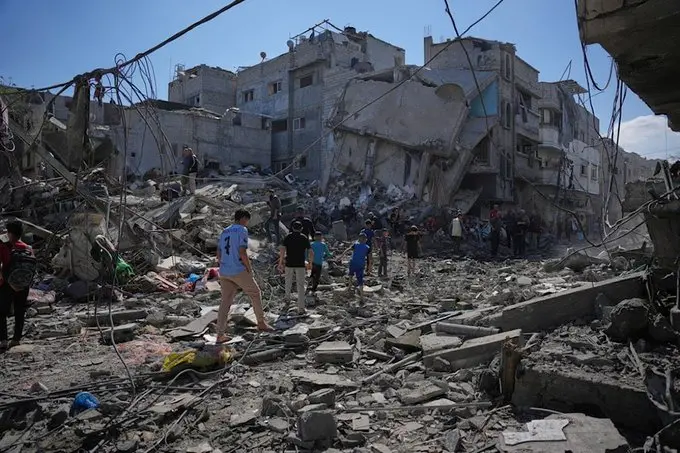
The situation in Gaza is critical. The “total siege” imposed by Israel has caused an unprecedented humanitarian catastrophe.
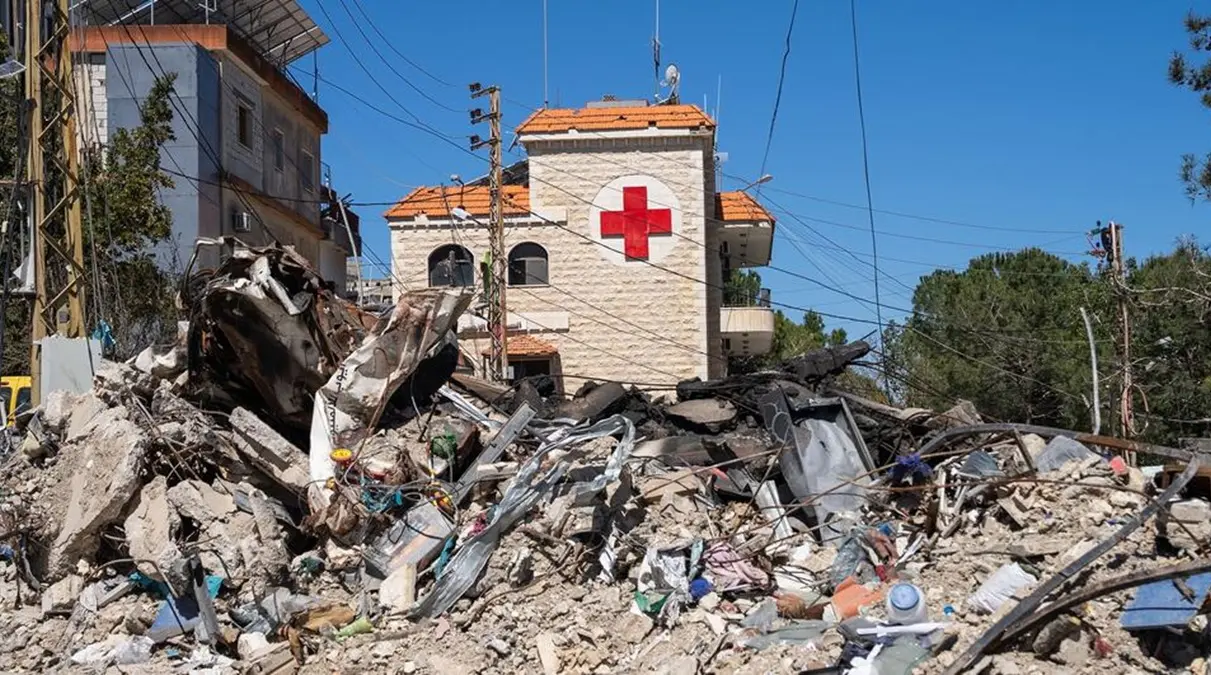
The population is living with an extreme scarcity of food, water, medicine, and fuel. Hospitals, already at their capacity limits, have collapsed.
Human rights organizations and the UN have called the situation a “deliberate famine,” a crisis that the world is witnessing, yet few governments dare to address.
Humanitarian Crisis in Gaza: A Life-Besieging Blockade
For more than 18 years, the people of Gaza have suffered the consequences of a land, sea, and air blockade that Israel maintains under the pretext of security.
In practice, however, it has caused a true humanitarian catastrophe. The “total siege” has resulted in an extreme scarcity of food, clean water, medicine, and fuel, which are vital for the survival of more than two million people.
Hospitals, overwhelmed and without resources, are collapsing under the pressure of a crisis that the UN and multiple human rights organizations have called a “deliberate famine.”
While thousands endure the dilemma between life and death, the international community watches with a mixture of complicit silence and impotence, without taking strong measures to reverse this tragedy.
Sumud: The Flotilla as a Symbol of Resistance and Hope
The word “Sumud”, which means perseverance in Arabic, is the symbolic heart of this flotilla.
It not only carries humanitarian aid but also represents an act of peaceful civil disobedience and a collective voice that denounces global injustice.
The Global Sumud Flotilla brings together people from more than 40 countries, including activists, politicians, journalists, and health professionals who are traveling aboard several ships, ready to deliver supplies and raise awareness of the difficult reality that Gaza faces.
Among its most visible figures are:
- Greta Thunberg, a renowned Swedish climate activist, whose international presence has brought media attention to the cause.
- Mandla Mandela, Nelson Mandela’s grandson and a South African parliamentarian who has compared the Palestinian situation to apartheid, demanding firm responses.
- Ada Colau, the former mayor of Barcelona, who publicly supports this mission.
- Rima Hassan, a Franco-Palestinian Member of European Parliament, who emphasizes the political and human rights dimension.
- Liam Cunningham, an Irish actor known for his role in Game of Thrones.
- A medical contingent composed of doctors, nurses, and paramedics ready to attend to emergencies in Gaza.
- International journalists committed to full transparency to document the mission’s development.
- Significant national delegations, including a strong Mexican and Italian presence.
Repression and Sabotage: Attacks Against the Sumud Flotilla
The flotilla’s journey has been marked by attacks and sabotage, which highlight the danger of trying to break the blockade.
Among the most serious incidents are the drone attacks in Tunisian ports last September.
- The Portuguese-flagged ship, Family, suffered a drone attack on September 8 that caused a fire and structural damage, though with no injuries.
- Twenty-four hours later, the British ship Alma was attacked with an incendiary device launched by a drone, also causing a fire on its deck.
These attacks, along with adverse weather conditions and logistical difficulties, have caused considerable delays.
Israeli authorities have not acknowledged responsibility, but activists and flotilla members accuse the Israeli military of using advanced technology to sabotage these missions, allegedly operating from bases in Europe. In response, fifteen countries, including Spain, issued a joint statement expressing their concern and warning of the consequences of attacks in international waters.
Global Solidarity and Resistance Movements Against the Blockade
The Global Sumud Flotilla represents the continuation and expansion of a long history of civil initiatives that have been trying to break the blockade since 2008 for the sake of justice and humanity.
“Free Gaza” Movement (2008-2009)
The start of modern flotillas began with ships like the SS Free Gaza and the SS Free Palestine, which succeeded in delivering aid to Gaza after 41 years, setting a historical precedent.
The Freedom Flotilla (2010): The Mavi Marmara Incident
This mission became emblematic because of the Israeli brutality against peaceful activists in international waters, which resulted in the death of 10 people aboard the Turkish ship Mavi Marmara. This incident sparked global condemnation and diplomatic tensions.
Subsequent Attempts and Diversification
Despite the rejection and violence they endured, activists continued with missions like:
- The Flotilla 2 in 2011, which was blocked in Greece.
- Individual missions with smaller, less visible ships, which were intercepted without violence.
- The Women’s Flotilla to Gaza (2016), which aimed to highlight the impact of the blockade on the female population.
- The ship Handala (2025), which was intercepted but stands as a symbol of continued resistance.
Israel maintains that these flotillas pose a threat to its security by attempting to break a “legally established” blockade aimed at preventing weapons from entering Gaza.
Conversely, the international community of activists and human rights organizations argues that the blockade is a form of collective punishment that violates international law and destroys innocent lives.
The Flotilla Is Underway: A Challenge to Global Indifference
The Global Sumud Flotilla’s journey not only confronts the blockade but also the world’s silence and indifference. Despite open intimidation and attacks, the determination of the participants and the support of civil society remain unshakable.
Ports throughout the Mediterranean have witnessed the growing support of volunteers and solidarity movements, demonstrating that internationalism is both possible and necessary.
Above all, the Global Sumud Flotilla is a beacon of hope and an urgent call for global justice. Its journey shows that solidarity can overcome borders and that systemic injustice is only fought with collective resistance.