







The Cuban Son Becomes Intangible Cultural Heritage of Humanity
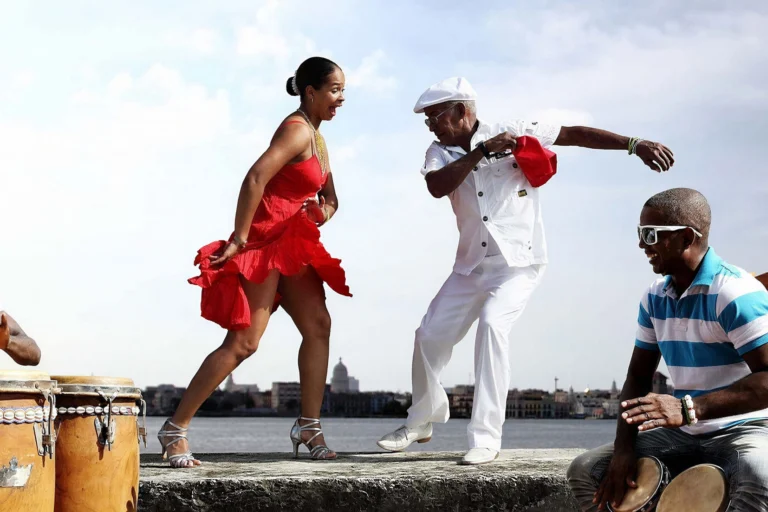
Cuban Son dancers and musicians in Havana. Photo: Salsa Vida.
December 10, 2025 Hour: 2:40 pm
🔗 Comparte este artículo
This musical genre combines Spanish lyrics with African percussion.
On Wednesday, the UNESCO Intangible Cultural Heritage Committee inscribed Cuban ‘Son’ music on its Representative List and highlighted it as a historical pillar of Cuban dance music. The petition was brought by the Center for Research and Development of Cuban Music and the Cuban Institute of Music.
RELATED:
Songo: Cuba’s Rhythmic Revolution That Redefined Dance Music
The decision, adopted in New Delhi during the Committee’s twentieth session, recognizes the genre as a musical expression that defines the island’s cultural identity. The nomination rewarded the richness of Son, a product of the transculturation between African and European rhythms.
Sonia Virgen Perez, president of Cuba’s Council of Cultural Heritage, stated that “it is a recognition that honors the creativity, collective memory, and vitality of our communities during such difficult times for our country.”
Originating in the 19th century, the Son combines Spanish lyrics with African percussion and spread from eastern Cuba. Its melodies include instruments like the Cuban tres, a three-stringed guitar, and have emblematic songs like “Lagrimas Negras” and “Son de la Loma,” as well as pieces by the Buena Vista Social Club.
The genre, which originated in Holguin and Santiago de Cuba provinces, reached Havana in the 20th century. It integrates singing, dance, improvisation with structured patterns, and its lyrics reflect daily life that is transmitted orally.
The dance is guided by instruments such as the bass, and it can be danced freely or with a defined choreography, with the man leading the steps and rhythm. The Son has transcended within families, community gatherings, orchestras, schools, and cultural centers.
With this reward, the Son joins other native expressions part of the UNESCO Representative List, such as Rumba, Punto Cubano, Tumba Francesa, Parrandas del Centro de Cuba, and Bolero. The declaration also reaffirms Cuba’s commitment to the safeguarding of cultural heritage.
teleSUR: JP
Source: EFE – UNESCO