







The 2026 World Cup Projects Record CO2 Figures and Faces Climate and Technological Challenges
The global competition will double carbon emissions while integrating artificial intelligence and energy systems to manage operational and thermal risks.

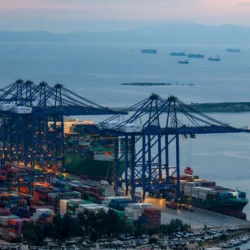
View of the 2026 World Cup venues amid the tournament’s sustainability challenges. Photo @FIFA
May 28, 2026 Hour: 10:49 am
🔗 Comparte este artículo
The 2026 World Cup, to be held in the United States, Mexico, and Canada between June 11 and July 19, could generate more than nine million tons of carbon dioxide (CO2), according to a study by the think tank New Weather Institute.
RELATED:
Great Records at the World Cup Have Become Soccer’s History
This projection doubles the historical average of previous tournaments and would position the competition as the sporting event with the largest carbon footprint in history. The report indicates that emissions from air transport will increase between 160% and 325% compared to previous editions.
The geographical configuration of the tournament explains the increase in emissions. With 16 venues distributed across four time zones, the distance between Vancouver and Miami reaches 5,600 kilometers. This territorial dispersion, coupled with the fact that the tournament will be the largest ever played with 48 teams and 104 matches, multiplies logistical travel.
“Bigger also means more vulnerable. More teams mean more flights, more logistics, more energy consumption, and greater operational exposure. While sports are trying to move towards more sustainable models, international mega-events are growing at a rate that is straining climate and urban limits,” said Sergi Simon, academic advisor at EALDE Business School.
Weather conditions are another key area of analysis. Several reports warn that cities like Miami, Dallas, Houston, and Monterrey could experience potentially dangerous episodes of heat stress.
This factor has fueled debates about the scheduling of international competitions, with proposals to move them to months with milder climates or adjust match times to the evening.
Simon adds: “Sports are beginning to discover how climate change has ceased to be a future problem and has become a direct economic and operational risk.”
On the technological front, the 2026 World Cup will operate as a laboratory for artificial intelligence (AI), cybersecurity, and energy. FIFA will implement AI-based tools for teams, referees, and fans, while the host countries will apply this technology to security.
“This World Cup will serve as a global demonstration of how artificial intelligence is beginning to be integrated into the management of mass events and critical infrastructure,” the expert points out.
Energy resilience will be a priority, with backup systems designed to sustain a hyperconnected operation that includes broadcasts, telecommunications, and mobility, preventing domino effects in the event of potential disruptions.
The tournament will establish benchmarks for how massive sports infrastructure manages environmental sustainability, climate adaptation, and digital transformation. Organizers will need to coordinate efficiency protocols and constant monitoring to comply with international emissions reduction standards throughout the entire championship cycle.
Author: HGV/JF
Source: New Weather Institute