







South Korea urges North Korea talks to replace war armistice
South Korean President Lee Jae Myung has urged talks with the DPRK aimed at replacing the Korean War armistice with a permanent peace regime. His call comes as Pyongyang condemns upcoming US-South Korean military exercises and vows to strengthen its nuclear deterrence.
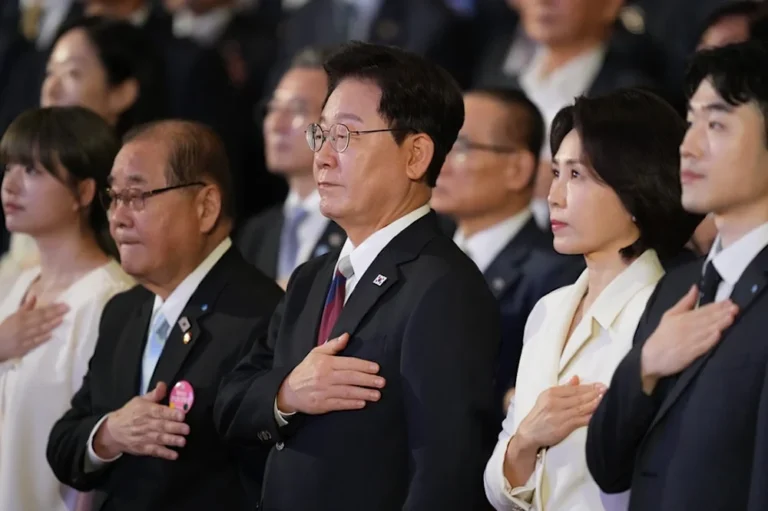
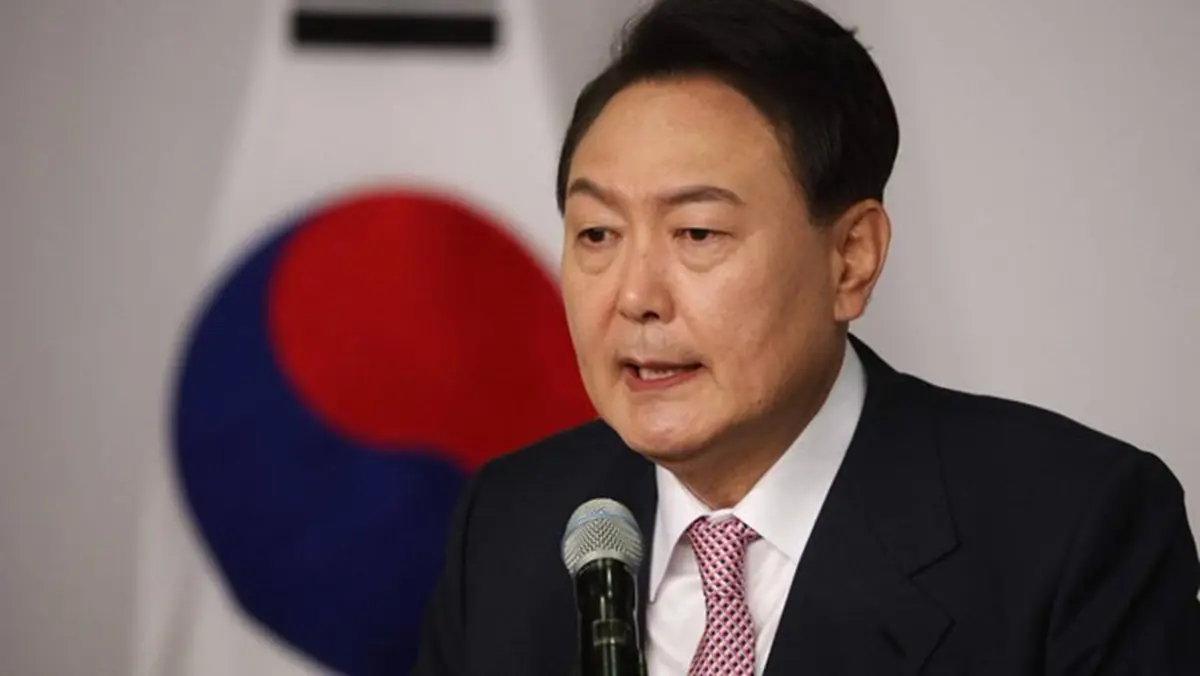
South Korean President Lee Jae Myung has called for talks with the DPRK to replace the Korean War armistice with a lasting peace regime. Photo: AP
August 15, 2026 Hour: 6:24 am
🔗 Comparte este artículo
South Korean President Lee Jae Myung calls for dialogue with Pyongyang to ease tensions and establish a lasting peace regime.
South Korean President Lee Jae Myung on Saturday called for talks with the Democratic People’s Republic of Korea to replace the armistice that halted the 1950-53 Korean War with a permanent peace regime, while tensions remain high over military exercises and the DPRK’s nuclear and missile programs.
RELATED: South Korea Indicts Ex-President Yoon for Justifying Martial Law
Speaking at an event marking Korea’s liberation from Japanese colonial rule, Lee said Seoul and Pyongyang should discuss mechanisms to prevent renewed conflict and reduce tensions on the Korean Peninsula. He also urged the DPRK and other concerned parties to negotiate an agreement formally ending the war, which concluded with a ceasefire rather than a peace treaty.
Lee calls for negotiations on peace and nuclear issues
Lee said negotiations could include measures to curb the DPRK’s nuclear capabilities, while South Korea would take sustained steps to ease tensions and establish safeguards against escalation.
The proposal builds on Lee’s pledge last year to respect the DPRK’s political system and pursue peaceful coexistence with Pyongyang rather than confrontation. The DPRK has rejected previous South Korean overtures for engagement.
Relations between the two Koreas remain strained. DPRK leader Kim Jong Un has abandoned the country’s longstanding reunification policy, designated South Korea as its most hostile state and ordered stronger defenses along the front line.
Text Reads: Today #81stAnniversaryOfLiberationDay
Pyongyang condemns US-South Korean military drills
The gap between Seoul’s call for dialogue and Pyongyang’s position was underscored Friday, when the DPRK condemned the upcoming Ulchi Freedom Shield military exercises involving the United States and South Korea.
The drills are scheduled for Aug. 17-27 and will include training focused on responses to drones, GPS disruption and cyberattacks. Pyongyang said this year’s exercises are more provocative than last year’s and warned that expanding military cooperation among the United States, South Korea and Japan was worsening security tensions on the peninsula.
The DPRK has repeatedly denounced joint US-South Korean military exercises as preparations for confrontation. It has also criticized South Korea’s plans for nuclear-powered submarines and condemned expanded trilateral coordination among Seoul, Washington and Tokyo.
A DPRK Foreign Ministry spokesperson described the growing cooperation among the three countries as developing into a “nuclear alliance,” according to the Korean Central News Agency.
Nuclear deterrence remains central to tensions
Pyongyang has pledged to strengthen its nuclear deterrence, arguing that US nuclear policies could lower the threshold for nuclear weapons use and push global security toward confrontation.
In a separate KCNA commentary, the DPRK warned that the current US nuclear strategy could push global security “to the brink of a nuclear war.” The commentary pointed to US nuclear cooperation with South Korea and Washington’s extended-deterrence commitments to Japan, arguing that the Korean Peninsula could become a priority target under what it described as US strategy.
The warning followed recent US-Japan Resolute Dragon exercises, which included land-seizing drills and were condemned by the DPRK as aggressive and offensive.
Missile launches add to tensions
The dispute over military exercises comes amid a series of DPRK missile launches.
On Wednesday, the DPRK fired a ballistic missile toward waters off the Korean Peninsula’s eastern coast, according to South Korea’s Joint Chiefs of Staff. The missile was launched from the Wonsan area, six days after another ballistic missile was fired from the same location.
Pyongyang says its missile and nuclear programs are intended to strengthen its ability to deter military action by the United States and its allies. Washington and Seoul regard the DPRK’s expanding deterrence capabilities as a security threat requiring closer military coordination.
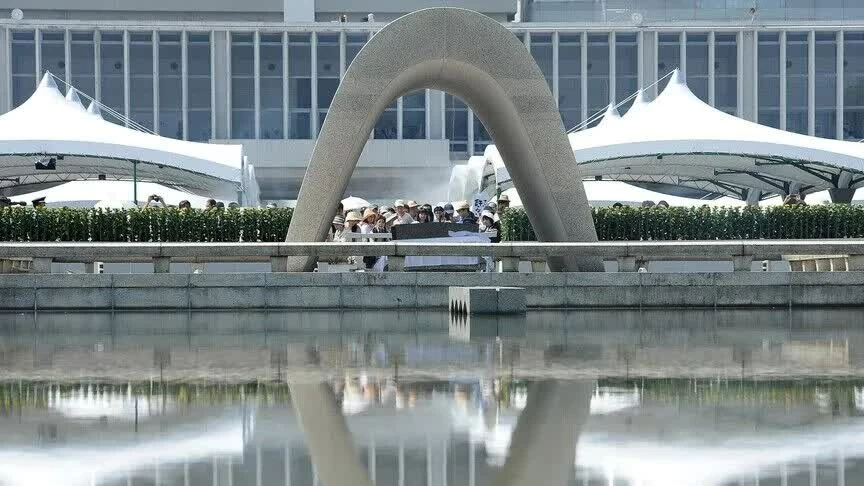
In his remarks, Lee also addressed relations with Japan, calling for historical issues to be addressed while keeping the door open to future cooperation.
He said he hoped South Korea and Japan could begin a new 60 years of peace and prosperity, describing Japan as a “close neighbour.”
Author: MK
Source: Al Mayadeen