


Slavery Declared Crime Against Humanity With U.S.,Israel, Argentina Rejection
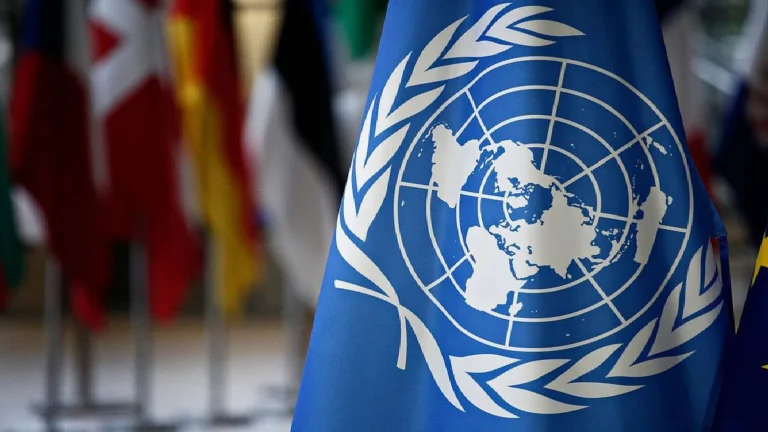
The initiative, presented by a coalition of 60 countries, points out that this system of exploitation constitutes a violation of international law that is not prescribed and that its consequences continue to affect millions of people around the world. Photo: UN.
March 25, 2026 Hour: 11:20 pm
🔗 Comparte este artículo
The UN proclaimed the transatlantic slave trade and racialized slavery of Africans as “the most serious crime against humanity.” The Governments of Trump, Netanyahu, and Milei voted against.
The United Nations General Assembly (UN) on Wednesday, March 25, overwhelmingly approved a resolution declaring the transatlantic slave trade and racialized slavery as the “most grievous crime against humanity”, while the United States, Israel, and Argentina cast the only dissenting votes.
RELATED: U.S.-Israel Attack on Iran School Under UN Debate
The resolution, presented by a coalition of 60 African, Caribbean, and Latin American nations, garnered robust support from the international community. A total of 123 member states voted in favor, recognizing the systemic exploitation that endured for over four centuries as a perpetual violation of international law.
The initiative further asserts that the severe consequences of this historical injustice continue to impact millions across the globe today. Fifty-two states, predominantly from the Western bloc, including former colonial powers such as Spain, France, Germany, the Netherlands, and the United Kingdom, abstained from the vote, highlighting persistent divisions on acknowledging historical accountability.
The adopted text unequivocally proclaims that the transatlantic slave trade and racialized slavery are the most severe crimes against humanity. It underscores their enduring impact on global history, emphasizing their prolonged duration, systemic nature, and inherent brutality.
This designation aims to solidify the global recognition of these atrocities and foster a deeper understanding of their historical and contemporary ramifications. The resolution reinforces the principle that such profound violations of human dignity are not subject to prescription under international law, signifying that the obligation to address them remains perpetual.
Reparations Rejected
Dan Negrea, the United States representative to the Economic and Social Council (Ecosoc) of the UN, offered Washington’s justification for its negative vote, alleging the resolution text as “highly problematic in countless aspects.”
Negrea explicitly stated that the United States “does not recognize a legal right to reparations for historical grievances that were not illegal under international law at the time they occurred.” This position directly contradicts the spirit of the resolution and the growing global consensus on the need to address historical injustices.
Another argument put by the Trump Administration’s representative was that the text, approved by the majority of UN members, encourages the creation of “costly” new working groups and reports, purposes for which, the global body “was not created.” In stark contrast to the United States’ stance, UN Secretary-General António Guterres described the transatlantic slave trade as a “profound betrayal of human dignity” and a “machinery of massive exploitation and deliberate dehumanization.” Guterres powerfully emphasized that it is “time to confront the lasting aftermath of inequality and racism”.
Echoing the sentiments of the Secretary-General, Annalenna Baerbock, the President of the General Assembly, characterized the slave trade as one of “the most severe violations of Human Rights in the history of humanity.” This declaration, strongly supported by African, Caribbean, and Latin American nations.
The broad support from these regions underscores a collective demand for historical recognition and accountability, pushing back against attempts to deny or diminish the enduring impact of slavery and its systemic legacy of racism and underdevelopment. The vote reaffirms the commitment to justice for historical grievances and challenging dominant narratives that seek to overlook past atrocities.
Author: Laura V. Mor
Source: UN