







President Maduro Calls for Unity, Dialogue and Reconciliation in Venezuela
April 5, 2026 Hour: 1:00 pm
🔗 Comparte este artículo
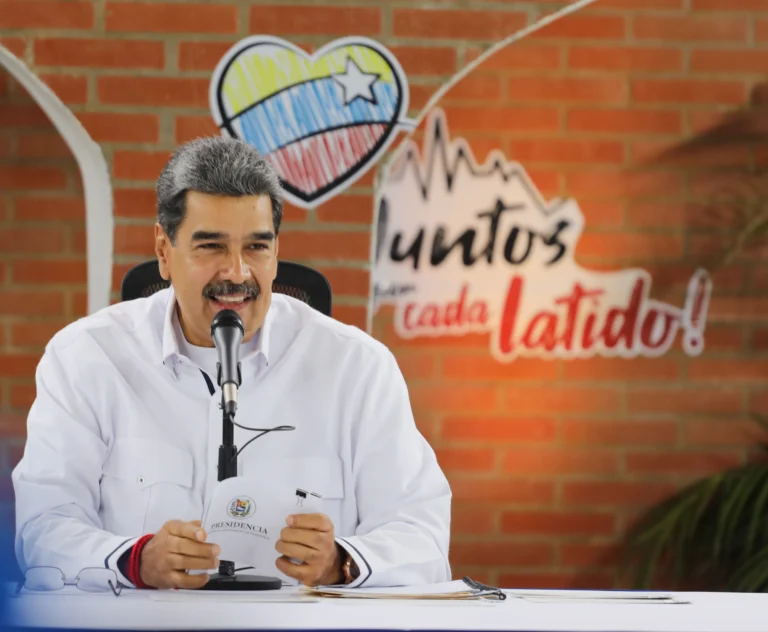
Venezuelan President Nicolás Maduro and his wife, Deputy Cilia Flores, made a new call this Easter Sunday for unity, dialogue, and reconciliation in Venezuela, in a message published on social media, three months after their capture by US troops.
RELATED:
President Maduro and Cilia Flores Send Gratitude and Hope Message to the Venezuelan People
“This Resurrection Sunday is to say forcefully that this is the victory of life and truth. Death does not win: Christ wins. Lies do not win, truth wins. Hatred does not win, love wins,” Maduro and Flores said in their message published on the X and Telegram accounts of the president, who is being held captive by the United States.
The message makes multiple biblical references alluding to the resurrection of Jesus on this Easter Sunday. President Maduro asked Jesus Christ to bless Venezuela and the peoples of the world and fill them with faith, love, and hope.
On March 28, Maduro and Flores called for peace and national unity, while assuring that they were “firm” and serene” in a message published two days after their trial hearing in New York, and which constituted the first message since they were captured in Caracas last January.
On March 26, the second hearing of the trial against the Venezuelan president and first lady Cilia Flores took place before the Federal Court of the Southern District of Manhattan. In that instance, the motion made by the defense attorney, Barry J. Pollack, was addressed, who asked that the charges against the presidential couple be dismissed since the United States Government prevents Venezuela from financing the defense of its head of state.
The central argument of his motion was precise: Washington violates the Sixth Constitutional Amendment and the right to due process, guaranteed to every defendant on American soil. The Sixth Amendment guarantees every defendant the right to effective legal representation; if the State blocks access to that representation, the trial loses its constitutional basis.
However, Federal Judge Alvin Hellerstein rejected the request to dismiss the case. The decision, however, was not a closure.
The magistrate left open the possibility of reviewing his position in the future if he considers that the restriction was applied in an “arbitrary” manner, allowing the lawyers to request the dismissal of the case again. Meanwhile, the hearing concluded without a new date being set to continue the process.