







24-hours General Strike in Portugal to Reject Labor Reform
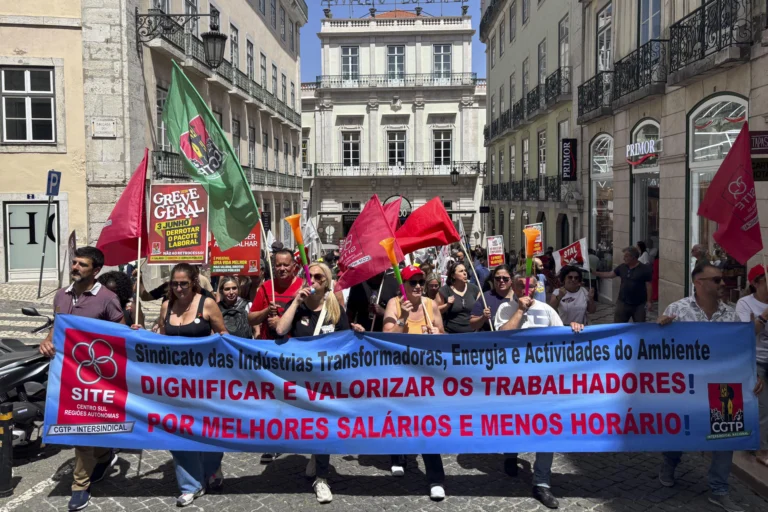
Photo: EFE.
June 3, 2026 Hour: 7:11 pm
🔗 Comparte este artículo
The Public Security Police of Portugal violently repressed thousands of peaceful demonstrators in Lisbon this Wednesday during a massive general strike against the regressive labor reform proposed by Prime Minister Luís Montenegro.
Unions and social movements reject this legislative proposal, which will be debated in the Parliament. The working class denounces the project as an outright assault on historical social conquests and fundamental workers’ rights.
The protesters in Lisbon demanded that Prime Minister Luís Montenegro immediately withdraw the controversial bill. They described the proposed reform as a direct attack on the general welfare of the Portuguese working families.
RELATED: Portugal Approves Landmark Labor Reform Bill
The massive protest in the capital represented a nationwide outcry against a legal framework that, according to major trade unions, facilitates unfair dismissals, deregulates working hours, extends precarious temporary contracts and severely undermines maternity and paternity protection rights.
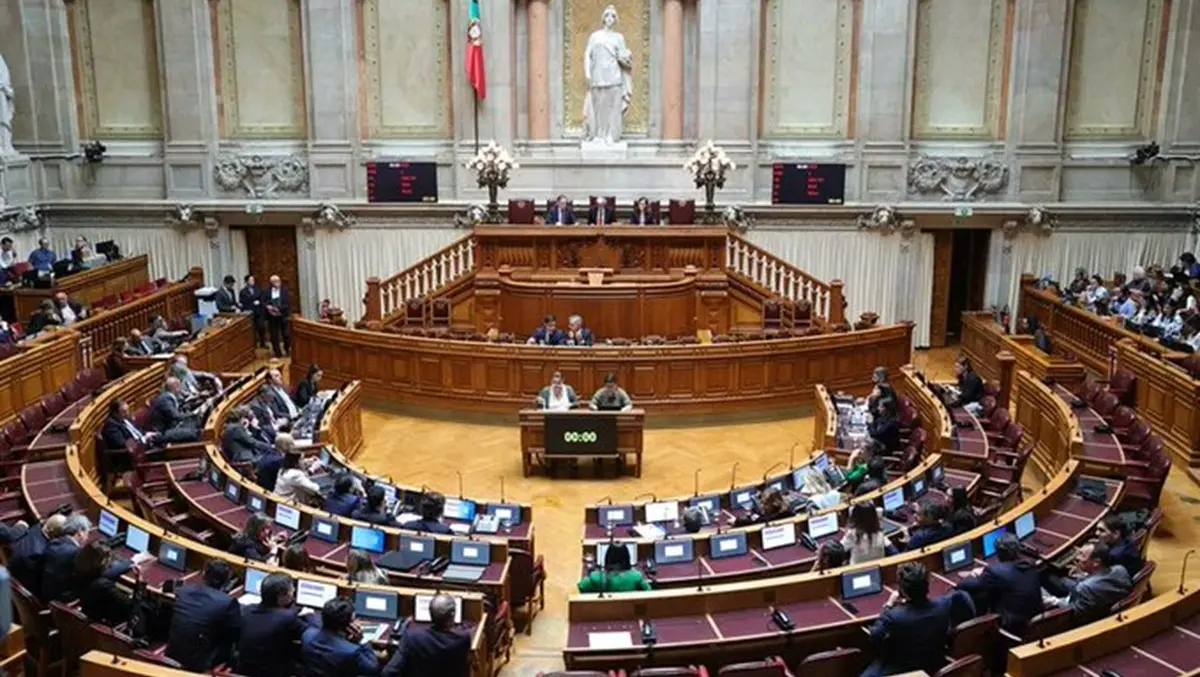
The security forces utilized direct physical violence to evict the large crowd gathered outside the Assembly of the Republic. This police intervention culminated in the throwing of objects, forceful dispersal, and the arrest of three peaceful demonstrators.
Tiago Oliveira, General Secretary of the General Confederation of Portuguese Workers-National Intersyndical (CGTP-IN), stated that this is the crucial moment to reject the legislation.
“We must stand against this regressive assault”, Oliveira declared during the mobilization. The CGTP-IN, which is one of the largest union coalitions in Portugal, vowed to continue mobilizations against the conservative administration’s economic policies.
Attack Against Rights
Prime Minister Luís Montenegro defends the initiative. His right-wing cabinet insists that the reform is indispensable to increase economic competitiveness, boost national productivity, and eventually improve the overall wage structure across the country.
However, João Queirós, coordinator of the Union of Workers of Shows, Audiovisual and Musicians (CENA-STE), criticized the official stance, stating that the Executive Power refuses to listen to the people and promotes structural precarious work.
Demonstrators warn that while the Executive Power uses productivity as a pretext during economic growth and near full employment, the real objective is to weaken trade unions, deregulate schedules and completely dismantle the constitutional right to strike.
The proposed bill aims to modify more than 100 articles of the Portuguese labor code, which are compared with to the severe neo-liberal austerity packages imposed by the European Troika back in 2012.
Among the most controversial changes is the elimination of a worker’s right to reinstatement after an illegal dismissal. Companies could block a court-ordered return by claiming that it causes grave disruptions to their regular operations.
Additionally, the law allows corporations to establish individual time banks. Under this scheme, employees would work up to two extra hours per day, totaling up to 150 additional hours annually, favoring corporate profits over labor dignity.
Author: Laura V. Mor
Source: Agencies