







November 25th: Mobilizing for the Elimination of Violence Against Women
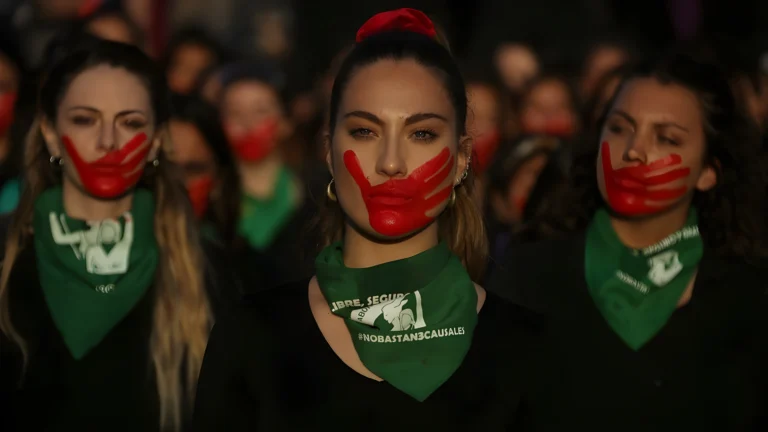
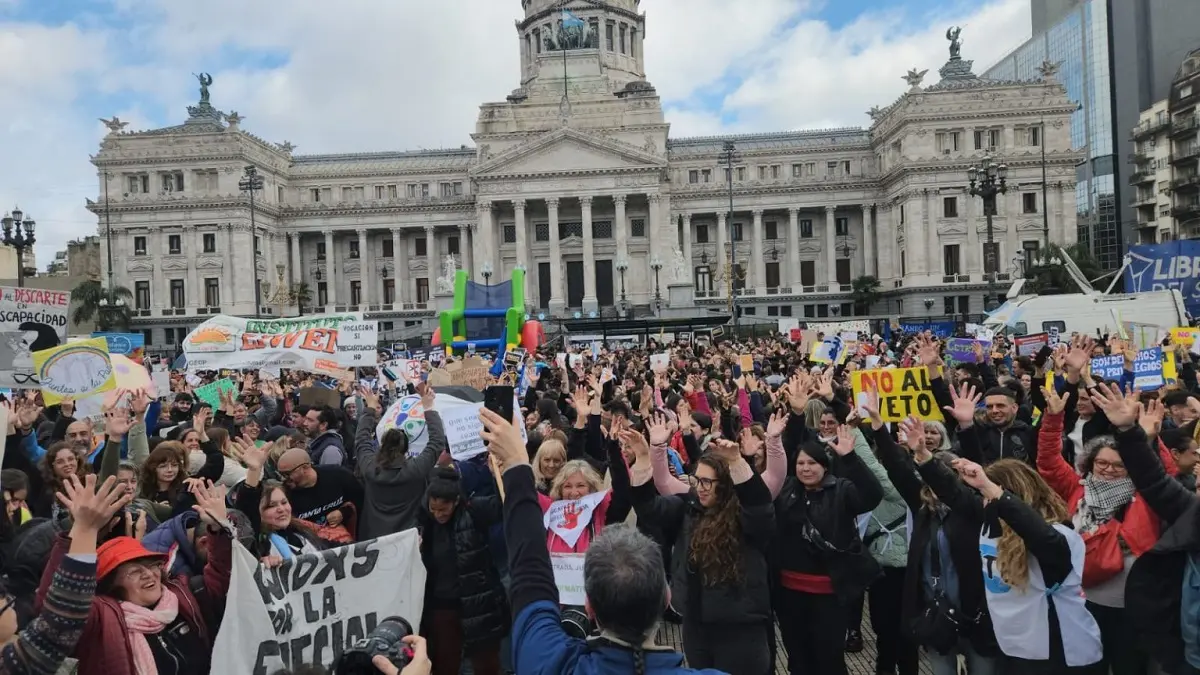
Activist at a march against gender violence. Photo from Pinterest
November 25, 2025 Hour: 2:47 pm
🔗 Comparte este artículo
Latin America faces the largest gap between law and practice. Without de-patriarchalization and economic reparations, legal frameworks remain empty promises.
November 25th marks a significant date in Latin American popular feminism. Since 1981, people have recognized it as the International Day for the Elimination of Violence Against Women.
Violence against women shows the power imbalance in the sex-gender-patriarchy system. This system privileges men and normalizes domination. We must view this violence as a systematic violation of human rights and a state crime, fueled by neglect and inaction.
To address the root causes of this violence, we need women’s participation. This article examines the political origins of November 25th, the difference between femicide and feminicide, ECLAC’s data on lethal violence, and the gap between advanced laws and the impunity we face.
The Subversive History of November 25th: The Mirabal Sisters
Politics roots the story of November 25th. It takes us back to the mid-20th-century Dominican Republic under Rafael Leónidas Trujillo. In this climate of fear, three women—Patria, Minerva, and María Teresa Mirabal—emerged.
Known as “The Butterflies” in the resistance, they were not passive victims but active opponents of the regime. They were killed not in a “crime of passion,” but because they posed a real threat to Trujillo’s power.
The Dominican state itself committed the violence it faced. Trujillo, a symbol of machismo and authoritarianism, pursued Minerva both politically and through sexual harassment. When faced with her resistance, the state plotted her murder.
On November 25, 1960, an ambush led to the deaths of the Mirabal sisters and their driver, Rufino de la Cruz. The regime tried to portray it as an accident, a tactic to hide its terrorism.
The Institutionalization of the Struggle: Bogotá, 1981
November 25th is a key date in Latin American feminism. At the First Feminist Encounter of Latin America and the Caribbean in Bogotá in 1981, a Dominican delegation proposed reclaiming this date.
This decision honored the Mirabals as symbols of women’s resistance against political and social violence. The UN General Assembly adopted the date in 2000, but its origins come from grassroots movements.
Feminicide as a State Crime: The Gap Between Law and Structural Impunity
Latin America and the Caribbean have advanced laws on gender violence. Yet, a critical analysis reveals a troubling paradox: these laws exist alongside high rates of violence.
The term feminicide, coined by Marcela Lagarde, helps to address this contradiction.
- State Responsibility: Feminicide goes beyond individual killings; it highlights state impunity. It shows a breakdown in the rule of law when the state fails to protect women and conduct thorough investigations of crimes. Feminicide is a crime that the state fundamentally commits.
- The Implementation Gap: Radical feminism calls this “legal fetishism,” the vast difference between “first-class” laws and “third-class” judicial systems. Key issues include:
- The Impunity Gap: A huge divide between reported cases and actual convictions. With a lack of due diligence that is common in many judicial systems.
- Lack of Resources: Many countries do not allocate enough funds to implement laws. Leaving shelters and support programs underfunded.
- Structural Corruption: A lack of gender training for judges and prosecutors, along with state corruption, turns legal promises into empty words.
The Historical Debt: Integral Reparation
The state’s failure is evident not only in punishment but also in the absence of reparations. A UN Women report states that even when authorities jail perpetrators, they rarely provide comprehensive economic reparations for indirect victims.
Laws like Argentina’s Brisa Law aim to ensure economic reparations and non-repetition, addressing the historical debt owed to women.
The Tragedy in Numbers: The Map of Lethal Violence (2024-2025 Data)
The Latin America and Caribbean region persists as a humanitarian emergency zone for women. According to the ECLAC Bulletin (2025), feminicidal violence shows no sign of relenting, confirming itself as a structural crisis.}
Indicators of Lethal Violence (Feminicide)
The most recent data, corresponding to the end of 2024, reveals a terrifying reality. At least 3,828 women were victims of feminicide (or femicide) across 26 countries and territories in the region.
This figure demonstrates that, on average, 11 women are murdered every day in our region due to gender-based violence.
The dimension of this extermination becomes undeniable when observing the cumulative total: over the last five years, ECLAC has registered at least 19,254 feminicides.
This accumulation of deaths exposes the failure of state measures to halt the patriarchal machinery of death.
The Aggressor and Patterns of Violence
The report confirms that the danger is at home. The victims’ partners or ex-partners perpetrate the majority of violent female deaths, dismantling the myth of the “dangerous stranger in the street”. And pointing to the patriarchal family as the nucleus of the violence.
About geographical distribution, Honduras continues to report the highest feminicide rate in the region, with 4.3 victims per 100,000 women, while countries like Chile present the lowest rates (0.4).
Lethal violence primarily targets women during their productive and reproductive years, with the highest incidence occurring in the age group of 30 to 44, which accounts for 29.2% of cases.
These official figures represent only the “absolute minimum.” The ongoing issue of missing standard data and state underreporting hides many gender-motivated crimes as regular homicides. This situation represents a kind of institutional violence.
This systemic erasure obscures the memory of the victims and invisibilizes the gendered component of their murders.
The Implementation Gap: Advanced Laws and Structural Challenges
Latin America and the Caribbean lead in legislation, thanks to the Belém do Pará Convention. Yet, this formal progress coexists with extreme violence. Most countries now classify feminicide/femicide as a specific crime, moving away from viewing it as a “crime of passion.”
Laws like Venezuela’s Organic Law on the Right of Women to a Life Free of Violence recognize violence as a public health and human rights issue. This legislation identifies 25 forms of violence, including:
- Patrimonial and Economic Violence: Limiting resources or controlling finances.
- Obstetric Violence: Health personnel appropriating women’s bodies and reproductive processes.
- Symbolic Violence: Media messages that reinforce domination.
- Institutional Violence: Delays, omissions, or mistreatment by public officials.
New laws are emerging to address digital violence and vicarious violence, reflecting the evolving nature of patriarchy.
Towards a Feminist Socialism
The violence remembered on November 25th is not isolated. It stems from the intertwined issues of capitalism, patriarchy, and colonialism.
Claudia Korol notes that society imposed European capitalism on women through sexual violence and designed the patriarchal family to protect wealth and capital.
Power-sharing or attempts to “humanize” capitalism are insufficient. Women’s emancipation cannot wait until after the seizure of power. Without feminism, socialism cannot exist.
This November 25th, we honor the Mirabal Sisters’ legacy and call for collective action from both the state and the people to dismantle systems of domination.
Sources: UN Women – ECLAC – TatuyTv – Marcela Lagarde – Rita Segato – Venezuelan Law on the Right of Women to a Life Free of Violence
Author: Silvana Solano
Source: teleSUR